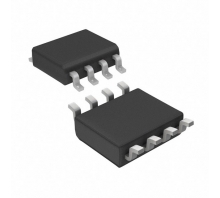
Factory Lead Time
10 Weeks
Lifecycle Status
ACTIVE (Last Updated: 7 months ago)
Mounting Type
Mounting Type refers to the method by which an electronic component is attached to a printed circuit board (PCB) or other surface. Common mounting types include:
* Through-hole: Component leads are inserted into holes in the PCB and soldered on the other side.
* Surface-mount: Component is placed on the surface of the PCB and soldered in place.
* Press-fit: Component is pressed into place on the PCB without soldering.
* Socket: Component is inserted into a socket on the PCB, allowing for easy replacement.
The mounting type is determined by factors such as the component's size, shape, and power requirements.
Surface Mount
Package / Case
Package / Case refers to the physical housing or enclosure that encapsulates an electronic component. It provides protection, facilitates handling, and enables electrical connections. The package type determines the component's size, shape, pin configuration, and mounting options. Common package types include DIP (dual in-line package), SOIC (small outline integrated circuit), and BGA (ball grid array). The package also influences the component's thermal and electrical performance.
8-SOIC (0.154, 3.90mm Width)
Number of Pins
Number of Pins: Indicates the number of electrical connections available on the component. These pins are used to connect the component to other components or circuits on a printed circuit board (PCB). The number of pins determines the functionality and connectivity options of the component. It is important to ensure that the component has the correct number of pins for the intended application.
8
Operating Temperature
Operating Temperature is the range of temperatures at which an electronic component can function properly. It is typically specified in degrees Celsius (°C) and indicates the minimum and maximum temperatures at which the component can operate without experiencing damage or degradation. Operating Temperature is an important parameter to consider when designing electronic circuits, as it ensures that the components will function reliably in the intended operating environment.
-40°C~150°C TJ
Packaging
Tape & Reel (TR)
Series
Series, in the context of electronic components, refers to the arrangement of components in a circuit. When components are connected in series, they form a single path for current to flow through. The total resistance of a series circuit is the sum of the individual resistances of each component. Series connections are often used to control the flow of current in a circuit, as the total resistance can be adjusted by changing the number or type of components in the series.
Automotive, AEC-Q100
Part Status
Part Status is an electronic component parameter that indicates the availability and production status of a component. It is typically used to inform customers about the availability of a component, whether it is in production, end-of-life, or obsolete. Part Status can also provide information about any restrictions or limitations on the component's use, such as whether it is only available for certain applications or if it has been discontinued.
Active
Moisture Sensitivity Level (MSL)
Moisture Sensitivity Level (MSL) is a measure of the susceptibility of a surface mount electronic component to moisture-induced damage during soldering. It is classified into six levels, from 1 (least sensitive) to 6 (most sensitive). MSL is determined by the materials used in the component's construction, including the solderability of its terminals and the presence of moisture-absorbing materials. Components with higher MSL ratings require more stringent handling and storage conditions to prevent moisture absorption and subsequent damage during soldering.
3 (168 Hours)
Function
Function refers to the primary purpose or role of an electronic component within a circuit. It describes the specific task or operation that the component is designed to perform. For example, a resistor's function is to limit current flow, a capacitor's function is to store electrical energy, and a transistor's function is to amplify or switch signals. Understanding the function of a component is crucial for selecting the appropriate component for a particular application and ensuring its proper operation within the circuit.
Step-Down
Number of Outputs
Number of Outputs refers to the number of independent output signals or channels that an electronic component can provide. It indicates the capability of the component to drive multiple external devices or circuits simultaneously. A higher number of outputs allows for greater flexibility and connectivity in electronic systems.
1
Output Voltage
Output Voltage is the voltage level produced by an electronic component when it is operating. It is typically measured in volts (V) and can be either positive or negative. The output voltage of a component is determined by its design and the input voltage applied to it. For example, a voltage regulator will produce a fixed output voltage regardless of the input voltage, while an amplifier will produce an output voltage that is proportional to the input voltage.
36V
Output Type
Output type refers to the type of signal or power that an electronic component can produce. It can be analog or digital, AC or DC, and can vary in voltage, current, or power levels. The output type is determined by the component's design and is crucial for matching it with other components in a circuit. Understanding the output type ensures proper signal processing, power delivery, and overall system functionality.
Adjustable
Operating Supply Voltage
36V
Analog IC - Other Type
SWITCHING REGULATOR
Output Configuration
Output Configuration refers to the arrangement of output terminals or pins on an electronic component. It specifies the number, type, and arrangement of these terminals, allowing for various connection options. This parameter is crucial for determining the component's compatibility with other devices and ensuring proper signal flow within a circuit.
Positive
Voltage - Output (Min/Fixed)
1.235V
Control Mode
CURRENT-MODE
Frequency - Switching
250kHz
Control Technique
PULSE WIDTH MODULATION
Length
Length, in the context of electronic components, refers to the physical dimension of a component along its longest axis. It is typically measured in millimeters (mm) or inches (in). Length is a crucial parameter for determining the physical size and space requirements of a component on a printed circuit board (PCB) or other assembly. It also affects the component's electrical characteristics, such as inductance and capacitance, which can be influenced by the length of conductors or traces within the component.
4.9mm
RoHS Status
ROHS3 Compliant
Description
The A5970D is a step-down monolithic power switching regulator with a minimum switch current limit of 1.35 A, enabling it to deliver up to 1 A DC current to the load based on application conditions. The output voltage is adjustable from 1.235 V to VIN.
The device utilizes an internal p-channel DMOS transistor (with a typical Ros(on) of 250 mΩ) as a switching element to minimize the size of external components. An internal oscillator fixes the switching frequency at 250 kHz. With a minimum input voltage of 4 V, it is suitable for automotive applications requiring device operation even in cold crank conditions. Pulse-by-pulse current limit with internal frequency modulation provides effective constant current short-circuit protection.
Features
Qualified following the AEC-Q100 requirements
1 A DC output current
Operating input voltage from 4 V to 36 V
3.3 V (±2%) reference voltage
Output voltage adjustable from 1.235 V to VIN
Low dropout operation: 100% duty cycle
250 kHz internally fixed frequency
Voltage feed-forward
Zero load current operation
Internal current limiting
Inhibit for zero current consumption
Synchronization
Protection against feedback disconnection
Thermal shutdown
Applications
Dedicated to automotive applications
-
Image
Part Number
Manufacturer
Factory Lead Time
Lifecycle Status
Contact Plating
Mount
Mounting Type
Package / Case
Number of Pins
Weight
Operating Temperature
Packaging
Series
Part Status
Moisture Sensitivity Level (MSL)
Number of Terminations
ECCN Code
Terminal Position
Terminal Form
Base Part Number
Function
Number of Outputs
Efficiency
Output Voltage
Output Type
Operating Supply Voltage
Voltage - Input (Min)
Input Voltage-Nom
Analog IC - Other Type
Output Configuration
Current - Output
Voltage - Output (Min/Fixed)
Topology
Control Mode
Frequency - Switching
Control Technique
Synchronous Rectifier
Length
Width
RoHS Status
Voltage - Input (Max)
Max Output Current
Max Output Voltage
Min Output Voltage
JESD-609 Code
Subcategory
Peak Reflow Temperature (Cel)
Lead Free
View Compare
-
A5970D013TR
10 Weeks
ACTIVE (Last Updated: 7 months ago)
Gold
Surface Mount
Surface Mount
8-SOIC (0.154, 3.90mm Width)
8
506.605978mg
-40°C~150°C TJ
Tape & Reel (TR)
Automotive, AEC-Q100
Active
3 (168 Hours)
8
EAR99
DUAL
GULL WING
A5970
Step-Down
1
90 %
36V
Adjustable
36V
4V
12V
SWITCHING REGULATOR
Positive
1A
1.235V
Buck
CURRENT-MODE
250kHz
PULSE WIDTH MODULATION
No
4.9mm
3.9mm
ROHS3 Compliant
-
-
-
-
-
-
-
-
-
-
11 Weeks
ACTIVE (Last Updated: 8 months ago)
-
Surface Mount
Surface Mount
8-SOIC (0.154, 3.90mm Width) Exposed Pad
8
-
-40°C~150°C TJ
Tube
Automotive, AEC-Q100
Active
3 (168 Hours)
-
EAR99
-
-
A5974
Step-Down
1
-
35V
Adjustable
36V
4V
-
SWITCHING REGULATOR
Positive
-
-
Buck
-
250kHz
-
No
-
-
ROHS3 Compliant
36V
2.5A
35V
1.235V
-
-
-
-
-
11 Weeks
ACTIVE (Last Updated: 7 months ago)
Tin
Surface Mount
Surface Mount
8-SOIC (0.154, 3.90mm Width) Exposed Pad
8
-
-40°C~150°C TJ
Tape & Reel (TR)
Automotive, AEC-Q100
Active
3 (168 Hours)
8
EAR99
DUAL
GULL WING
A5975
Step-Down
1
-
35V
Adjustable
36V
4V
12V
SWITCHING REGULATOR
Positive
-
1.235V
Buck
VOLTAGE-MODE
500kHz
PULSE WIDTH MODULATION
No
4.9mm
-
ROHS3 Compliant
36V
2.5A
-
-
e3
Switching Regulator or Controllers
260
Lead Free