Factory Lead Time
8 Weeks
Lifecycle Status
PRODUCTION (Last Updated: 3 weeks ago)
Mounting Type
Mounting Type refers to the method by which an electronic component is attached to a printed circuit board (PCB) or other surface. Common mounting types include:
* Through-hole: Component leads are inserted into holes in the PCB and soldered on the other side.
* Surface-mount: Component is placed on the surface of the PCB and soldered in place.
* Press-fit: Component is pressed into place on the PCB without soldering.
* Socket: Component is inserted into a socket on the PCB, allowing for easy replacement.
The mounting type is determined by factors such as the component's size, shape, and power requirements.
Surface Mount
Package / Case
Package / Case refers to the physical housing or enclosure that encapsulates an electronic component. It provides protection, facilitates handling, and enables electrical connections. The package type determines the component's size, shape, pin configuration, and mounting options. Common package types include DIP (dual in-line package), SOIC (small outline integrated circuit), and BGA (ball grid array). The package also influences the component's thermal and electrical performance.
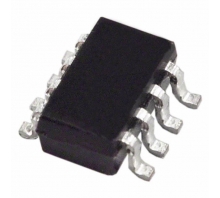
SOT-23-8
Number of Pins
Number of Pins: Indicates the number of electrical connections available on the component. These pins are used to connect the component to other components or circuits on a printed circuit board (PCB). The number of pins determines the functionality and connectivity options of the component. It is important to ensure that the component has the correct number of pins for the intended application.
8
Operating Temperature
Operating Temperature is the range of temperatures at which an electronic component can function properly. It is typically specified in degrees Celsius (°C) and indicates the minimum and maximum temperatures at which the component can operate without experiencing damage or degradation. Operating Temperature is an important parameter to consider when designing electronic circuits, as it ensures that the components will function reliably in the intended operating environment.
-40°C~85°C TA
Packaging
Tape & Reel (TR)
Part Status
Part Status is an electronic component parameter that indicates the availability and production status of a component. It is typically used to inform customers about the availability of a component, whether it is in production, end-of-life, or obsolete. Part Status can also provide information about any restrictions or limitations on the component's use, such as whether it is only available for certain applications or if it has been discontinued.
Active
Moisture Sensitivity Level (MSL)
Moisture Sensitivity Level (MSL) is a measure of the susceptibility of a surface mount electronic component to moisture-induced damage during soldering. It is classified into six levels, from 1 (least sensitive) to 6 (most sensitive). MSL is determined by the materials used in the component's construction, including the solderability of its terminals and the presence of moisture-absorbing materials. Components with higher MSL ratings require more stringent handling and storage conditions to prevent moisture absorption and subsequent damage during soldering.
1 (Unlimited)
Resistance
Resistance is a measure of the opposition to the flow of electric current in a conductor. It is measured in ohms (Ω). The higher the resistance, the more difficult it is for current to flow. Resistance is caused by the collisions of electrons with atoms and molecules in the conductor. The more collisions that occur, the higher the resistance.
6.5Ohm
Subcategory
Multiplexer or Switches
Max Power Dissipation
10μW
Technology
Technology, in the context of electronic components, refers to the specific manufacturing process and materials used to create the component. It encompasses the semiconductor fabrication techniques, such as the type of transistor used (e.g., MOSFET, BJT), the gate oxide thickness, and the interconnect materials. Technology also includes the packaging type, such as surface mount or through-hole, and the leadframe or substrate material. The technology used impacts the component's performance characteristics, such as speed, power consumption, and reliability.
CMOS
Peak Reflow Temperature (Cel)
260
Supply Voltage
Supply Voltage is the voltage required to power an electronic component. It is typically measured in volts (V) and is specified in the component's datasheet. The supply voltage must be within the specified range for the component to function properly. If the supply voltage is too low, the component may not function at all. If the supply voltage is too high, the component may be damaged.
5V
Reflow Temperature-Max (s)
40
Number of Outputs
Number of Outputs refers to the number of independent output signals or channels that an electronic component can provide. It indicates the capability of the component to drive multiple external devices or circuits simultaneously. A higher number of outputs allows for greater flexibility and connectivity in electronic systems.
2
Polarity
Polarity refers to the direction of current flow through an electronic component. It is typically indicated by a plus (+) or minus (-) sign on the component's body. Components with polarity must be connected correctly in a circuit to function properly. For example, a diode will only allow current to flow in one direction, from the positive terminal to the negative terminal. If a diode is connected backwards, it will not conduct current.
Non-Inverting
Number of Channels
Number of Channels refers to the number of independent signal paths within an electronic component. It indicates how many separate signals can be processed or transmitted simultaneously. For example, an audio amplifier with two channels can amplify two separate audio signals, while a multi-channel data converter can convert multiple analog signals into digital data. The number of channels is a crucial parameter for determining the component's functionality and application.
1
Interface
In electronics, an interface refers to the connection point or boundary between two or more electronic systems or devices. It defines the physical, electrical, and logical characteristics that enable communication and data exchange between them.
An interface specifies the protocols, pinouts, voltage levels, data formats, and other parameters necessary for the systems to interact seamlessly. It ensures compatibility and interoperability between different components or devices, allowing them to exchange information and perform their intended functions.
Parallel
Power Dissipation
Power Dissipation is the maximum amount of power that an electronic component can safely dissipate without being damaged. It is typically measured in watts (W) and is determined by the component's physical size, material properties, and design. Exceeding the power dissipation rating can lead to overheating, reduced performance, and even component failure.
10μW
Turn On Delay Time
120 ns
Voltage - Supply, Single/Dual (±)
2.7V~5.5V ±2.7V~5.5V
Bandwidth
Bandwidth, in the context of electronic components, refers to the range of frequencies over which a component can operate effectively. It is typically measured in Hertz (Hz) and indicates the component's ability to pass signals within a specific frequency range without significant attenuation or distortion. A higher bandwidth indicates a wider range of frequencies that the component can handle, while a lower bandwidth indicates a narrower range. Bandwidth is a crucial parameter for components such as amplifiers, filters, and communication systems, as it determines the frequency range over which they can perform their intended functions.
190MHz
Neg Supply Voltage-Nom (Vsup)
-5V
Turn-Off Delay Time
Turn-off Delay Time (t_d(off)) is the time it takes for a transistor to switch from the on state to the off state after the gate voltage has been removed. It is the time it takes for the collector current to fall to 10% of its initial value. t_d(off) is an important parameter for power transistors, as it affects the efficiency of the circuit. A shorter t_d(off) means that the transistor can switch more quickly, which reduces power loss.
75 ns
Max Dual Supply Voltage
5.5V
On-State Resistance (Max)
6.5Ohm
Min Dual Supply Voltage
2.7V
High Level Output Current
50mA
Multiplexer/Demultiplexer Circuit
A multiplexer (MUX) combines multiple input signals into a single output signal, while a demultiplexer (DEMUX) does the reverse, splitting a single input signal into multiple output signals. These circuits are used in various applications, such as data transmission, signal processing, and communication systems. Multiplexers allow for efficient use of transmission channels by combining multiple signals into a single stream, while demultiplexers enable the separation of signals that have been combined.
2:1
Off-state Isolation-Nom
67 dB
Current - Leakage (IS(off)) (Max)
250pA
Channel Capacitance (CS(off), CD(off))
25pF
On-state Resistance Match-Nom
0.7Ohm
Switch Circuit
Switch Circuit is an electronic component parameter that refers to the electrical circuit that controls the switching action of a switch. It includes the components and connections that determine the conditions under which the switch opens or closes, such as the type of switch, the voltage or current applied, and any additional circuitry for logic or protection. The switch circuit ensures that the switch operates reliably and efficiently within the intended application.
SPDT
Switch Time (Ton, Toff) (Max)
120ns, 75ns
Channel-to-Channel Matching (ΔRon)
700m Ω
Crosstalk
Crosstalk is an electronic component parameter that measures the unwanted transfer of energy from one circuit or channel to another. It is typically expressed in decibels (dB) and is a measure of the amount of interference that one signal causes on another. Crosstalk can be caused by a variety of factors, including capacitive coupling, inductive coupling, and electromagnetic interference. It can be a significant problem in high-speed electronic circuits, where it can cause errors and reduce the overall performance of the system.
-67dB @ 1MHz
Switching
BREAK-BEFORE-MAKE
Height
Height, in the context of electronic components, refers to the vertical dimension of the component. It is typically measured in millimeters (mm) or inches (in). Height is an important parameter to consider when designing and assembling electronic circuits, as it affects the overall size and form factor of the device. Components with a smaller height are often preferred for applications where space is limited, such as in portable devices or embedded systems.
1.3mm
Length
Length, in the context of electronic components, refers to the physical dimension of a component along its longest axis. It is typically measured in millimeters (mm) or inches (in). Length is a crucial parameter for determining the physical size and space requirements of a component on a printed circuit board (PCB) or other assembly. It also affects the component's electrical characteristics, such as inductance and capacitance, which can be influenced by the length of conductors or traces within the component.
2.9mm
RoHS Status
ROHS3 Compliant