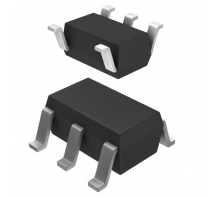
Factory Lead Time
5 Weeks
Mounting Type
Mounting Type refers to the method by which an electronic component is attached to a printed circuit board (PCB) or other surface. Common mounting types include:
* Through-hole: Component leads are inserted into holes in the PCB and soldered on the other side.
* Surface-mount: Component is placed on the surface of the PCB and soldered in place.
* Press-fit: Component is pressed into place on the PCB without soldering.
* Socket: Component is inserted into a socket on the PCB, allowing for easy replacement.
The mounting type is determined by factors such as the component's size, shape, and power requirements.
Surface Mount
Package / Case
Package / Case refers to the physical housing or enclosure that encapsulates an electronic component. It provides protection, facilitates handling, and enables electrical connections. The package type determines the component's size, shape, pin configuration, and mounting options. Common package types include DIP (dual in-line package), SOIC (small outline integrated circuit), and BGA (ball grid array). The package also influences the component's thermal and electrical performance.
SC-74A, SOT-753
Supplier Device Package
SOT-23-5
Operating Temperature
Operating Temperature is the range of temperatures at which an electronic component can function properly. It is typically specified in degrees Celsius (°C) and indicates the minimum and maximum temperatures at which the component can operate without experiencing damage or degradation. Operating Temperature is an important parameter to consider when designing electronic circuits, as it ensures that the components will function reliably in the intended operating environment.
-40°C~85°C TA
Packaging
Tape & Reel (TR)
Part Status
Part Status is an electronic component parameter that indicates the availability and production status of a component. It is typically used to inform customers about the availability of a component, whether it is in production, end-of-life, or obsolete. Part Status can also provide information about any restrictions or limitations on the component's use, such as whether it is only available for certain applications or if it has been discontinued.
Obsolete
Moisture Sensitivity Level (MSL)
Moisture Sensitivity Level (MSL) is a measure of the susceptibility of a surface mount electronic component to moisture-induced damage during soldering. It is classified into six levels, from 1 (least sensitive) to 6 (most sensitive). MSL is determined by the materials used in the component's construction, including the solderability of its terminals and the presence of moisture-absorbing materials. Components with higher MSL ratings require more stringent handling and storage conditions to prevent moisture absorption and subsequent damage during soldering.
3 (168 Hours)
Max Operating Temperature
85°C
Min Operating Temperature
-40°C
Function
Function refers to the primary purpose or role of an electronic component within a circuit. It describes the specific task or operation that the component is designed to perform. For example, a resistor's function is to limit current flow, a capacitor's function is to store electrical energy, and a transistor's function is to amplify or switch signals. Understanding the function of a component is crucial for selecting the appropriate component for a particular application and ensuring its proper operation within the circuit.
Step-Down
Number of Outputs
Number of Outputs refers to the number of independent output signals or channels that an electronic component can provide. It indicates the capability of the component to drive multiple external devices or circuits simultaneously. A higher number of outputs allows for greater flexibility and connectivity in electronic systems.
1
Voltage - Input (Max)
5.5V
Output Type
Output type refers to the type of signal or power that an electronic component can produce. It can be analog or digital, AC or DC, and can vary in voltage, current, or power levels. The output type is determined by the component's design and is crucial for matching it with other components in a circuit. Understanding the output type ensures proper signal processing, power delivery, and overall system functionality.
Adjustable
Voltage - Input (Min)
2.5V
Output Configuration
Output Configuration refers to the arrangement of output terminals or pins on an electronic component. It specifies the number, type, and arrangement of these terminals, allowing for various connection options. This parameter is crucial for determining the component's compatibility with other devices and ensuring proper signal flow within a circuit.
Positive
Voltage - Output (Min/Fixed)
0.6V
Frequency - Switching
1.1MHz
Synchronous Rectifier
Yes
Voltage - Output (Max)
5.5V
RoHS Status
ROHS3 Compliant
Description
1.1MHz fixed frequency, current mode, PWM synchronous buck (step-down) DC-DC converter
Drives a 650mA load with high efficiency and excellent line and load regulation
Integrates a main switch and a synchronous switch without an external Schottky diode
Ideal for powering portable equipment from a single Li-ion battery
Standard series of inductors available from various manufacturers optimized for use with the AP3406
Features
High efficiency: up to 95%
Output current: 650mA
Input voltage range: 2.5V to 5.5V
Fixed 1.1MHz frequency
Current mode control
100% duty cycle in dropout
Built-in short circuit protection
Built-in thermal shutdown function
Built-in current limit function
Shutdown current: <1μA
Applications
GPS
WiFi cards
Portable media players
Digital still and video cameras
-
Image
Part Number
Manufacturer
Factory Lead Time
Mount
Mounting Type
Package / Case
Supplier Device Package
Operating Temperature
Packaging
Published
Part Status
Moisture Sensitivity Level (MSL)
Max Operating Temperature
Min Operating Temperature
Function
Number of Outputs
Voltage - Input (Max)
Output Type
Voltage - Input (Min)
Output Configuration
Current - Output
Max Output Voltage
Voltage - Output (Min/Fixed)
Topology
Min Input Voltage
Frequency - Switching
Max Input Voltage
Synchronous Rectifier
Min Output Voltage
Voltage - Output (Max)
RoHS Status
Number of Pins
Weight
Efficiency
Output Voltage
Max Output Current
Lead Free
JESD-609 Code
Number of Terminations
ECCN Code
Terminal Finish
Subcategory
Terminal Position
Terminal Form
Peak Reflow Temperature (Cel)
Reflow Temperature-Max (s)
Operating Supply Voltage
Input Voltage-Nom
Max Supply Voltage
Min Supply Voltage
Analog IC - Other Type
Operating Supply Current
Nominal Supply Current
Control Mode
Control Technique
Max Duty Cycle
Max Junction Temperature (Tj)
Height
Length
View Compare
-
AP3406K-ADJTRG1
5 Weeks
Surface Mount
Surface Mount
SC-74A, SOT-753
SOT-23-5
-40°C~85°C TA
Tape & Reel (TR)
2009
Obsolete
3 (168 Hours)
85°C
-40°C
Step-Down
1
5.5V
Adjustable
2.5V
Positive
650mA
5.5V
0.6V
Buck
2.5V
1.1MHz
5.5V
Yes
600mV
5.5V
ROHS3 Compliant
-
-
-
-
-
-
-
-
-
-
-
-
-
-
-
-
-
-
-
-
-
-
-
-
-
-
-
-
-
-
5 Weeks
Surface Mount
Surface Mount
TO-263-6, D2Pak (5 Leads Tab), TO-263BA
TO-263-5
-40°C~85°C TA
Tape & Reel (TR)
2002
Obsolete
3 (168 Hours)
85°C
-40°C
Step-Down
1
25V
Adjustable
4.5V
Positive
3A
25V
1.23V
Buck
4.5V
150kHz
25V
No
1.23V
25V
ROHS3 Compliant
5
1.59999g
90 %
1.267V
3A
Lead Free
-
-
-
-
-
-
-
-
-
-
-
-
-
-
-
-
-
-
-
-
-
-
-
23 Weeks
Surface Mount
Surface Mount
SC-74A, SOT-753
-
-40°C~85°C TA
Tape & Reel (TR)
2002
Active
3 (168 Hours)
-
-
Step-Up
1
-
Adjustable
2.6V
Positive
500mA Switch
29V
-
Boost
-
1.5MHz
-
No
1.25V
-
ROHS3 Compliant
5
29.993795mg
85 %
29V
500mA
Lead Free
e3
5
EAR99
Matte Tin (Sn)
Switching Regulator or Controllers
DUAL
GULL WING
260
30
16V
3V
16V
2.6V
SWITCHING REGULATOR
100nA
2.5mA
CURRENT-MODE
PULSE WIDTH MODULATION
90 %
150°C
1.4mm
2.92mm