Series
Series, in the context of electronic components, refers to the arrangement of components in a circuit. When components are connected in series, they form a single path for current to flow through. The total resistance of a series circuit is the sum of the individual resistances of each component. Series connections are often used to control the flow of current in a circuit, as the total resistance can be adjusted by changing the number or type of components in the series.
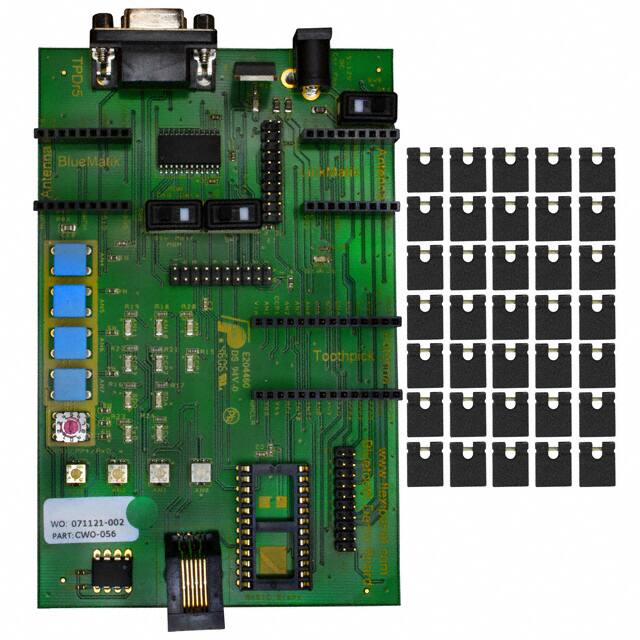
Toothpick™ & LinkMatik 2.0™
Part Status
Part Status is an electronic component parameter that indicates the availability and production status of a component. It is typically used to inform customers about the availability of a component, whether it is in production, end-of-life, or obsolete. Part Status can also provide information about any restrictions or limitations on the component's use, such as whether it is only available for certain applications or if it has been discontinued.
Discontinued
Moisture Sensitivity Level (MSL)
Moisture Sensitivity Level (MSL) is a measure of the susceptibility of a surface mount electronic component to moisture-induced damage during soldering. It is classified into six levels, from 1 (least sensitive) to 6 (most sensitive). MSL is determined by the materials used in the component's construction, including the solderability of its terminals and the presence of moisture-absorbing materials. Components with higher MSL ratings require more stringent handling and storage conditions to prevent moisture absorption and subsequent damage during soldering.
Not Applicable
Frequency
Frequency, in the context of electronic components, refers to the rate at which an alternating current or voltage changes direction per second. It is measured in Hertz (Hz), which represents one cycle per second. Frequency is a crucial parameter for various electronic components, such as capacitors, inductors, and resonators. It determines the component's ability to store or release energy, filter signals, and resonate at specific frequencies. Understanding the frequency characteristics of electronic components is essential for designing and optimizing electronic circuits.
2.4GHz
Operating Supply Voltage
12V
Interface
In electronics, an interface refers to the connection point or boundary between two or more electronic systems or devices. It defines the physical, electrical, and logical characteristics that enable communication and data exchange between them.
An interface specifies the protocols, pinouts, voltage levels, data formats, and other parameters necessary for the systems to interact seamlessly. It ensures compatibility and interoperability between different components or devices, allowing them to exchange information and perform their intended functions.
I2C, RS-232
Supplied Contents
Board(s)
RoHS Status
RoHS Compliant
EVAL-BT Overview
Transceiver; Bluetooth® Classic RF Type from the Evaluation board.The RF Board is a kind of the well-known Toothpick™ & LinkMatik 2.0™ series of products.
EVAL-BT Features
Transceiver; Bluetooth® Classic Type
EVAL-BT Applications
There are a lot of Flexipanel
EVAL-BT RF Boards applications.
Radio Transceiver
Embedded Processor
Networking Software
Forming a Self-Healing
Mesh Network
MCU
Transceiver
Modem
MAC
PA