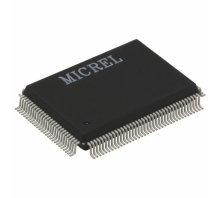
Factory Lead Time
8 Weeks
Mounting Type
Mounting Type refers to the method by which an electronic component is attached to a printed circuit board (PCB) or other surface. Common mounting types include:
* Through-hole: Component leads are inserted into holes in the PCB and soldered on the other side.
* Surface-mount: Component is placed on the surface of the PCB and soldered in place.
* Press-fit: Component is pressed into place on the PCB without soldering.
* Socket: Component is inserted into a socket on the PCB, allowing for easy replacement.
The mounting type is determined by factors such as the component's size, shape, and power requirements.
Surface Mount
Package / Case
Package / Case refers to the physical housing or enclosure that encapsulates an electronic component. It provides protection, facilitates handling, and enables electrical connections. The package type determines the component's size, shape, pin configuration, and mounting options. Common package types include DIP (dual in-line package), SOIC (small outline integrated circuit), and BGA (ball grid array). The package also influences the component's thermal and electrical performance.
128-BFQFP
Number of Pins
Number of Pins: Indicates the number of electrical connections available on the component. These pins are used to connect the component to other components or circuits on a printed circuit board (PCB). The number of pins determines the functionality and connectivity options of the component. It is important to ensure that the component has the correct number of pins for the intended application.
128
Part Status
Part Status is an electronic component parameter that indicates the availability and production status of a component. It is typically used to inform customers about the availability of a component, whether it is in production, end-of-life, or obsolete. Part Status can also provide information about any restrictions or limitations on the component's use, such as whether it is only available for certain applications or if it has been discontinued.
Active
Moisture Sensitivity Level (MSL)
Moisture Sensitivity Level (MSL) is a measure of the susceptibility of a surface mount electronic component to moisture-induced damage during soldering. It is classified into six levels, from 1 (least sensitive) to 6 (most sensitive). MSL is determined by the materials used in the component's construction, including the solderability of its terminals and the presence of moisture-absorbing materials. Components with higher MSL ratings require more stringent handling and storage conditions to prevent moisture absorption and subsequent damage during soldering.
3 (168 Hours)
Number of Terminations
128
Terminal Finish
Matte Tin (Sn) - annealed
Max Operating Temperature
85°C
Min Operating Temperature
-40°C
Applications
Port Switch/Network Interface
Max Power Dissipation
800mW
Peak Reflow Temperature (Cel)
260
Supply Voltage
Supply Voltage is the voltage required to power an electronic component. It is typically measured in volts (V) and is specified in the component's datasheet. The supply voltage must be within the specified range for the component to function properly. If the supply voltage is too low, the component may not function at all. If the supply voltage is too high, the component may be damaged.
1.8V
Operating Supply Voltage
3.3V
Temperature Grade
INDUSTRIAL
Max Supply Voltage
3.465V
Min Supply Voltage
3.135V
Number of Ports
Number of Ports refers to the number of electrical connections or terminals available on an electronic component. It indicates the number of external devices or signals that can be connected to the component. For example, a transistor may have three ports (emitter, base, and collector), while a resistor has two ports (terminals). The number of ports determines the functionality and connectivity options of the component within a circuit.
3
Nominal Supply Current
92mA
Power Dissipation
Power Dissipation is the maximum amount of power that an electronic component can safely dissipate without being damaged. It is typically measured in watts (W) and is determined by the component's physical size, material properties, and design. Exceeding the power dissipation rating can lead to overheating, reduced performance, and even component failure.
800mW
Data Rate
Data rate, measured in bits per second (bps), is the rate at which data is transferred from one device to another. It is a measure of the speed of data transmission and is influenced by factors such as the bandwidth of the communication channel and the efficiency of the data encoding scheme. A higher data rate indicates faster data transfer, allowing for the transmission of more data in a given amount of time.
100 Mbps
Height
Height, in the context of electronic components, refers to the vertical dimension of the component. It is typically measured in millimeters (mm) or inches (in). Height is an important parameter to consider when designing and assembling electronic circuits, as it affects the overall size and form factor of the device. Components with a smaller height are often preferred for applications where space is limited, such as in portable devices or embedded systems.
2.72mm
Length
Length, in the context of electronic components, refers to the physical dimension of a component along its longest axis. It is typically measured in millimeters (mm) or inches (in). Length is a crucial parameter for determining the physical size and space requirements of a component on a printed circuit board (PCB) or other assembly. It also affects the component's electrical characteristics, such as inductance and capacitance, which can be influenced by the length of conductors or traces within the component.
20mm
RoHS Status
ROHS3 Compliant
Description
Highly integrated Layer 2 managed switch
Designed for low port count, cost-sensitive 10/100 Mbps switch systems
Extensive feature set includes:
Tag/port-based VLAN
Quality of service (QoS) priority
Management
Management information base (MIB) counters
MII/SNI
CPU control/data interfaces
Contains two 10/100 transceivers with patented mixed-signal low-power technology
Three media access control (MAC) units
High-speed non-blocking switch fabric
Dedicated address lookup engine
On-chip frame buffer memory
Both PHY units support 10BASE-T and 100BASE-TX
One PHY unit supports 100BASE-FX
Features
Tag/port-based VLAN
Quality of service (QoS) priority
Management
Management information base (MIB) counters
MII/SNI
CPU control/data interfaces
Two 10/100 transceivers with patented mixed-signal low-power technology
Three media access control (MAC) units
High-speed non-blocking switch fabric
Dedicated address lookup engine
On-chip frame buffer memory
Support for 10BASE-T, 100BASE-TX, and 100BASE-FX
Applications
Current and emerging Fast Ethernet applications