Voltage - Supply, Single/Dual (±):
3 V ~ 26 V, ±1.5 V ~ 13 V
Voltage - Input Offset:
2mV
Supplier Device Package:
14-SOIC
Slew Rate:
Slew rate is a measure of how quickly an electronic component's output voltage can change in response to a change in its input voltage. It is typically expressed in volts per microsecond (V/µs). A higher slew rate indicates that the component can respond more quickly to changes in its input voltage, which can be important in applications where fast signal processing is required.
0.5 V/µs
Series:
Series, in the context of electronic components, refers to the arrangement of components in a circuit. When components are connected in series, they form a single path for current to flow through. The total resistance of a series circuit is the sum of the individual resistances of each component. Series connections are often used to control the flow of current in a circuit, as the total resistance can be adjusted by changing the number or type of components in the series.
-
Package / Case:
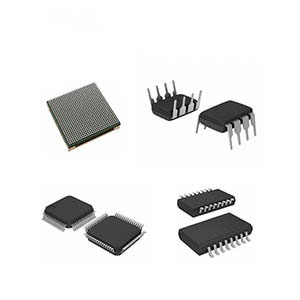
Package / Case refers to the physical housing or enclosure that encapsulates an electronic component. It provides protection, facilitates handling, and enables electrical connections. The package type determines the component's size, shape, pin configuration, and mounting options. Common package types include DIP (dual in-line package), SOIC (small outline integrated circuit), and BGA (ball grid array). The package also influences the component's thermal and electrical performance.
14-SOIC (0.154", 3.90mm Width)
Output Type:
Output type refers to the type of signal or power that an electronic component can produce. It can be analog or digital, AC or DC, and can vary in voltage, current, or power levels. The output type is determined by the component's design and is crucial for matching it with other components in a circuit. Understanding the output type ensures proper signal processing, power delivery, and overall system functionality.
-
Operating Temperature:
Operating Temperature is the range of temperatures at which an electronic component can function properly. It is typically specified in degrees Celsius (°C) and indicates the minimum and maximum temperatures at which the component can operate without experiencing damage or degradation. Operating Temperature is an important parameter to consider when designing electronic circuits, as it ensures that the components will function reliably in the intended operating environment.
-40°C ~ 85°C
Number of Circuits:
Number of Circuits refers to the number of independent signal paths within an electronic component. It indicates how many separate circuits or channels the component can handle simultaneously. For example, an operational amplifier with a Number of Circuits of 2 can amplify two separate input signals independently. This parameter is crucial for determining the component's functionality and its suitability for specific applications.
4
Mounting Type:
Mounting Type refers to the method by which an electronic component is attached to a printed circuit board (PCB) or other surface. Common mounting types include:
* Through-hole: Component leads are inserted into holes in the PCB and soldered on the other side.
* Surface-mount: Component is placed on the surface of the PCB and soldered in place.
* Press-fit: Component is pressed into place on the PCB without soldering.
* Socket: Component is inserted into a socket on the PCB, allowing for easy replacement.
The mounting type is determined by factors such as the component's size, shape, and power requirements.
Surface Mount
Gain Bandwidth Product:
1MHz
Current - Output / Channel:
40mA
Current - Input Bias:
45nA
Amplifier Type:
Amplifier Type refers to the classification of amplifiers based on their circuit configuration and the type of transistors or other active devices used.
General Purpose
-3db Bandwidth:
-3dB Bandwidth is a measure of the frequency range over which an electronic component or system maintains a specified level of performance. It is defined as the frequency at which the output power of the component or system has dropped by 3 decibels (dB) from its maximum value. The -3dB bandwidth is often used to characterize the frequency response of amplifiers, filters, and other electronic components.
-
Description
The LM324/LM324A, LM2902/LM2902A are quad operational amplifiers designed for single power supply operation. They feature:
Internally frequency compensated for unity gain
High DC voltage gain (100dB)
Wide power supply range (3V-32V for LM324/LM324A, 3V-26V for LM2902/LM2902A)
Input common mode voltage range includes ground
Large output voltage swing (0V to VCC - 1.5V)
Low power drain suitable for battery operation
Features
Internally frequency compensated for unity gain
Large DC voltage gain: 100dB
Wide power supply range:
LM324/LM324A: 3V-32V (or ±1.5-16V)
LM2902/LM2902A: 3V-26V (or ±1.5V-13V)
Input common mode voltage range includes ground
Large output voltage swing: 0V to VCC - 1.5V
Power drain suitable for battery operation
Applications
Transducer amplifiers
DC gain blocks
Conventional OP Amp circuits in single power supply systems