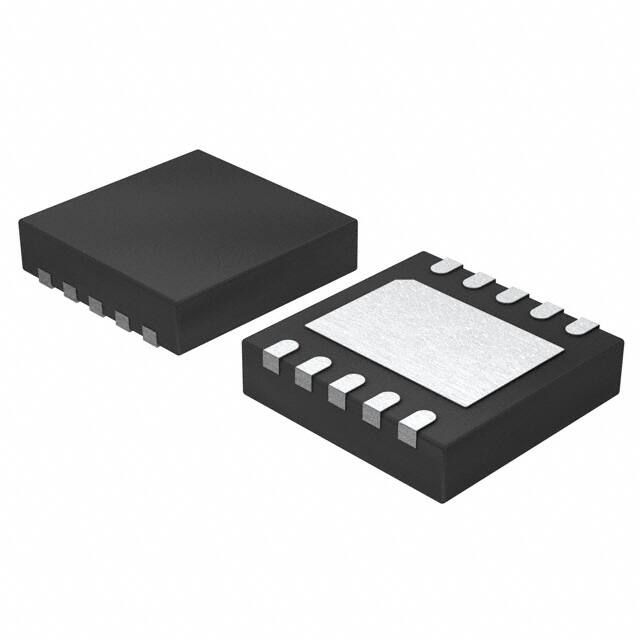
Mounting Type
Mounting Type refers to the method by which an electronic component is attached to a printed circuit board (PCB) or other surface. Common mounting types include:
* Through-hole: Component leads are inserted into holes in the PCB and soldered on the other side.
* Surface-mount: Component is placed on the surface of the PCB and soldered in place.
* Press-fit: Component is pressed into place on the PCB without soldering.
* Socket: Component is inserted into a socket on the PCB, allowing for easy replacement.
The mounting type is determined by factors such as the component's size, shape, and power requirements.
Surface Mount
Package / Case
Package / Case refers to the physical housing or enclosure that encapsulates an electronic component. It provides protection, facilitates handling, and enables electrical connections. The package type determines the component's size, shape, pin configuration, and mounting options. Common package types include DIP (dual in-line package), SOIC (small outline integrated circuit), and BGA (ball grid array). The package also influences the component's thermal and electrical performance.
10-VFDFN Exposed Pad, 10-MLF®
Supplier Device Package
10-MLF® (3x3)
Operating Temperature
Operating Temperature is the range of temperatures at which an electronic component can function properly. It is typically specified in degrees Celsius (°C) and indicates the minimum and maximum temperatures at which the component can operate without experiencing damage or degradation. Operating Temperature is an important parameter to consider when designing electronic circuits, as it ensures that the components will function reliably in the intended operating environment.
-40°C~125°C
Packaging
Tape & Reel (TR)
Part Status
Part Status is an electronic component parameter that indicates the availability and production status of a component. It is typically used to inform customers about the availability of a component, whether it is in production, end-of-life, or obsolete. Part Status can also provide information about any restrictions or limitations on the component's use, such as whether it is only available for certain applications or if it has been discontinued.
Obsolete
Moisture Sensitivity Level (MSL)
Moisture Sensitivity Level (MSL) is a measure of the susceptibility of a surface mount electronic component to moisture-induced damage during soldering. It is classified into six levels, from 1 (least sensitive) to 6 (most sensitive). MSL is determined by the materials used in the component's construction, including the solderability of its terminals and the presence of moisture-absorbing materials. Components with higher MSL ratings require more stringent handling and storage conditions to prevent moisture absorption and subsequent damage during soldering.
1 (Unlimited)
Voltage - Input (Max)
5.5V
Output Type
Output type refers to the type of signal or power that an electronic component can produce. It can be analog or digital, AC or DC, and can vary in voltage, current, or power levels. The output type is determined by the component's design and is crucial for matching it with other components in a circuit. Understanding the output type ensures proper signal processing, power delivery, and overall system functionality.
Fixed
Output Configuration
Output Configuration refers to the arrangement of output terminals or pins on an electronic component. It specifies the number, type, and arrangement of these terminals, allowing for various connection options. This parameter is crucial for determining the component's compatibility with other devices and ensuring proper signal flow within a circuit.
Positive
Current - Output
150mA 300mA
Voltage - Output (Min/Fixed)
1.8V 2.5V
Number of Regulators
Number of Regulators refers to the quantity of voltage regulators present within an electronic component. Voltage regulators are circuits that maintain a constant voltage level, regardless of fluctuations in the input voltage or load current. The number of regulators indicates how many independent voltage regulation circuits are integrated into the component. This parameter is crucial for determining the component's ability to provide stable voltage to multiple circuits or devices.
2
Protection Features
Over Current, Over Temperature
Current - Quiescent (Iq)
80μA
Voltage Dropout (Max)
0.25V @ 150mA 0.42V @ 300mA
PSRR
60dB ~ 40dB (1KHz ~ 20kHz)
RoHS Status
Non-RoHS Compliant
MIC2211-GJBML TR Overview
In the case of Tape & Reel (TR) cases, the regulater IC is delivered. Packaging of the Liner regulator IC takes the form of a 10-VFDFN Exposed Pad, 10-MLF® case. Fixed is the Voltage Regulator Chip's output type. Linear IC consists of 2 battery regulators. The range of operating temperatures of Surface Mount are programmable in the Voltage Regulator Chip, so that the temperature can be varied as desired. Keeping the temperature at -40°C~125°C degrees is necessary for this regulator to function. There is an output function of Positive configured for this regulator. Currently, 150mA 300mA are being output by it at the moment. Here's the basic part number for this IC regulator: MIC2211.
MIC2211-GJBML TR Applications
There are a lot of Microchip Technology
MIC2211-GJBML TR Linear Voltage Regulators applications.
Switching regulator
Multiple-power supply system
Digital audio player
Digital TV
Smartcard
Industrial equipment
DVD and CD-ROM drive
Quick charge protocols
Measurement and control euipment
Aging system
MIC2211-GJBML TR More Descriptions
IC REG LDO 1.8V/2.5V 10MLF