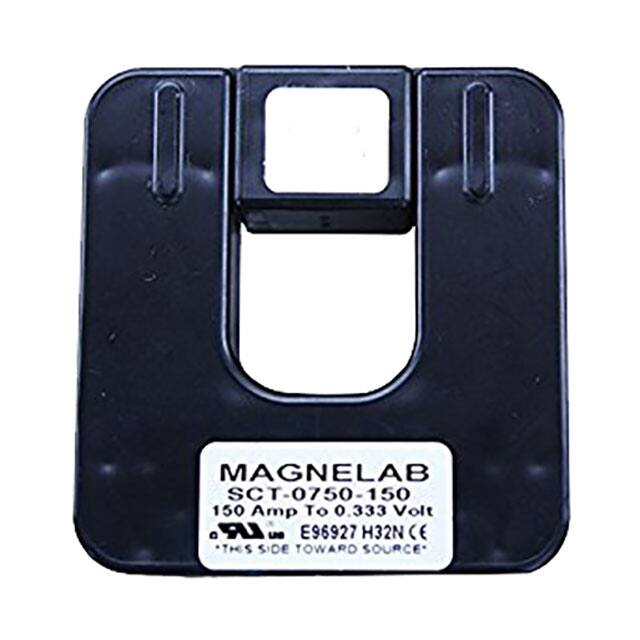
Mounting Type
Mounting Type refers to the method by which an electronic component is attached to a printed circuit board (PCB) or other surface. Common mounting types include:
* Through-hole: Component leads are inserted into holes in the PCB and soldered on the other side.
* Surface-mount: Component is placed on the surface of the PCB and soldered in place.
* Press-fit: Component is pressed into place on the PCB without soldering.
* Socket: Component is inserted into a socket on the PCB, allowing for easy replacement.
The mounting type is determined by factors such as the component's size, shape, and power requirements.
Free Hanging
Package / Case
Package / Case refers to the physical housing or enclosure that encapsulates an electronic component. It provides protection, facilitates handling, and enables electrical connections. The package type determines the component's size, shape, pin configuration, and mounting options. Common package types include DIP (dual in-line package), SOIC (small outline integrated circuit), and BGA (ball grid array). The package also influences the component's thermal and electrical performance.
Module, Single Pass Through
Operating Temperature
Operating Temperature is the range of temperatures at which an electronic component can function properly. It is typically specified in degrees Celsius (°C) and indicates the minimum and maximum temperatures at which the component can operate without experiencing damage or degradation. Operating Temperature is an important parameter to consider when designing electronic circuits, as it ensures that the components will function reliably in the intended operating environment.
-20°C~110°C
Series
Series, in the context of electronic components, refers to the arrangement of components in a circuit. When components are connected in series, they form a single path for current to flow through. The total resistance of a series circuit is the sum of the individual resistances of each component. Series connections are often used to control the flow of current in a circuit, as the total resistance can be adjusted by changing the number or type of components in the series.
SCT-0750
Part Status
Part Status is an electronic component parameter that indicates the availability and production status of a component. It is typically used to inform customers about the availability of a component, whether it is in production, end-of-life, or obsolete. Part Status can also provide information about any restrictions or limitations on the component's use, such as whether it is only available for certain applications or if it has been discontinued.
Active
Moisture Sensitivity Level (MSL)
Moisture Sensitivity Level (MSL) is a measure of the susceptibility of a surface mount electronic component to moisture-induced damage during soldering. It is classified into six levels, from 1 (least sensitive) to 6 (most sensitive). MSL is determined by the materials used in the component's construction, including the solderability of its terminals and the presence of moisture-absorbing materials. Components with higher MSL ratings require more stringent handling and storage conditions to prevent moisture absorption and subsequent damage during soldering.
1 (Unlimited)
Frequency
Frequency, in the context of electronic components, refers to the rate at which an alternating current or voltage changes direction per second. It is measured in Hertz (Hz), which represents one cycle per second. Frequency is a crucial parameter for various electronic components, such as capacitors, inductors, and resonators. It determines the component's ability to store or release energy, filter signals, and resonate at specific frequencies. Understanding the frequency characteristics of electronic components is essential for designing and optimizing electronic circuits.
30Hz~1kHz
Output
Ratiometric, Voltage
Number of Channels
Number of Channels refers to the number of independent signal paths within an electronic component. It indicates how many separate signals can be processed or transmitted simultaneously. For example, an audio amplifier with two channels can amplify two separate audio signals, while a multi-channel data converter can convert multiple analog signals into digital data. The number of channels is a crucial parameter for determining the component's functionality and application.
1
Polarization
Polarization in electronic components refers to the orientation of the electric field within the component. It is a measure of the component's ability to store electrical energy. A polarized component has a positive and a negative terminal, and the electric field is oriented from the positive to the negative terminal. When a polarized component is connected to a voltage source, the electric field is established and the component stores electrical energy.
Unidirectional
Accuracy
Accuracy refers to the closeness of a measured value to the true value. In electronic components, accuracy is typically expressed as a percentage of the full-scale range. For example, a component with an accuracy of ±2% would have a measured value that is within 2% of the true value. Accuracy is important in electronic components because it ensures that the component will perform as expected.
±1%
Linearity
Linearity is a measure of how closely the output of an electronic component follows a straight line when the input is varied. It is expressed as a percentage of the full-scale output. A linearity of 1% means that the output will be within 1% of the ideal straight line over the entire input range. Linearity is important in many applications, such as amplifiers, analog-to-digital converters, and digital-to-analog converters.
±1%
SCT-0750-050 Overview
In order to ensure safety, the current sensors are packaged in Module, Single Pass Through packages.
SCT-0750-050 Features
Moisture Sensitivity Level: 1 (Unlimited)
Operating Temperature: -20°C~110°C
1 Channels
Mounting Type: Free Hanging
Frequency: 30Hz~1kHz
Sensing Current: 50A
Module, Single Pass Through Package
SCT-0750-050 Applications
There are a lot of Aim Dynamics
SCT-0750-050 Current Sensors applications.
Frequency, Voltage, and Solar Inverters
Electrical drives
General purpose inverters
AC variable speed drives
Static converters for DC motor drives
Battery supplied applications
Uninterruptible Power Supplies(UPS)
Switched Mode Power Supplies(SMPS)
Power supplies for welding applications
AC variabel speed drives and servo motor drives
SCT-0750-050 More Descriptions
CURRENT SENSE MAGNALAB 50A:333MV
0.75" SPLIT-CORE CT 50A:333MV