Factory Lead Time
18 Weeks
Mounting Type
Mounting Type refers to the method by which an electronic component is attached to a printed circuit board (PCB) or other surface. Common mounting types include:
* Through-hole: Component leads are inserted into holes in the PCB and soldered on the other side.
* Surface-mount: Component is placed on the surface of the PCB and soldered in place.
* Press-fit: Component is pressed into place on the PCB without soldering.
* Socket: Component is inserted into a socket on the PCB, allowing for easy replacement.
The mounting type is determined by factors such as the component's size, shape, and power requirements.
Free Hanging (In-Line)
Part Status
Part Status is an electronic component parameter that indicates the availability and production status of a component. It is typically used to inform customers about the availability of a component, whether it is in production, end-of-life, or obsolete. Part Status can also provide information about any restrictions or limitations on the component's use, such as whether it is only available for certain applications or if it has been discontinued.
Active
Moisture Sensitivity Level (MSL)
Moisture Sensitivity Level (MSL) is a measure of the susceptibility of a surface mount electronic component to moisture-induced damage during soldering. It is classified into six levels, from 1 (least sensitive) to 6 (most sensitive). MSL is determined by the materials used in the component's construction, including the solderability of its terminals and the presence of moisture-absorbing materials. Components with higher MSL ratings require more stringent handling and storage conditions to prevent moisture absorption and subsequent damage during soldering.
Not Applicable
Connector Type
Connector Type refers to the physical interface used to connect an electronic component to other devices or systems. It specifies the shape, size, pin configuration, and mating mechanism of the connector. Common connector types include USB, HDMI, Ethernet, and power connectors. The choice of connector type depends on factors such as signal type, data rate, power requirements, and environmental conditions.
Plug to Cable
Cable Type
Flat, Straight Cable
Number of Positions/Contacts
6p4c (RJ11, RJ14)
Length
Length, in the context of electronic components, refers to the physical dimension of a component along its longest axis. It is typically measured in millimeters (mm) or inches (in). Length is a crucial parameter for determining the physical size and space requirements of a component on a printed circuit board (PCB) or other assembly. It also affects the component's electrical characteristics, such as inductance and capacitance, which can be influenced by the length of conductors or traces within the component.
25.00' 7.62m
RoHS Status
ROHS3 Compliant
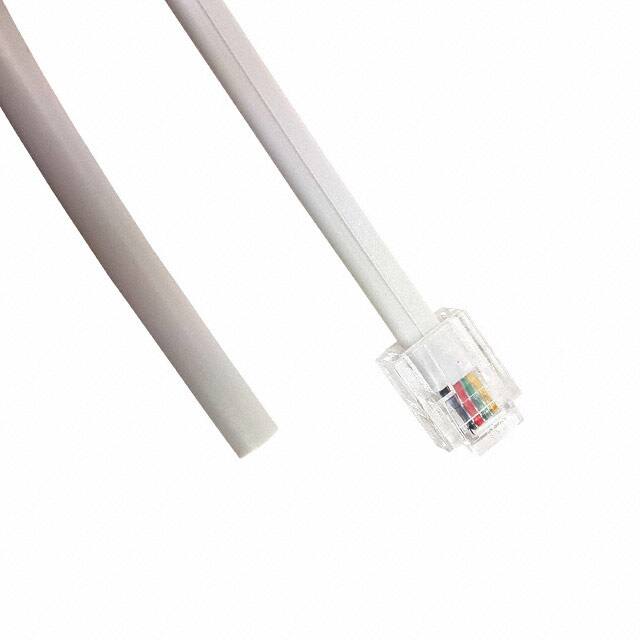
513-26-6400-WH-0025F OverviewThe product in question is manufactured by CNC Tech and falls under the category of Modular Cables. It has a mounting type of Free Hanging (In-Line). This product is currently active and does not have a moisture sensitivity level (MSL). The connector type is a plug-to-cable configuration, with a white color scheme. The shielding is unshielded, and the cable type is a flat, straight cable. The number of positions or contacts is six for both RJ11 and RJ14 connectors. The length of this cable measures 25 feet or 7.62 meters. Additionally, it is worth mentioning that this product complies with the ROHS3 standard.
513-26-6400-WH-0025F More Descriptions
MODULAR CBL, STRAIGHT, 7 FT, REVERSED
CABLE MOD 6P4C PLUG TO CABLE 25'