Factory Lead Time
12 Weeks
Mounting Type
Mounting Type refers to the method by which an electronic component is attached to a printed circuit board (PCB) or other surface. Common mounting types include:
* Through-hole: Component leads are inserted into holes in the PCB and soldered on the other side.
* Surface-mount: Component is placed on the surface of the PCB and soldered in place.
* Press-fit: Component is pressed into place on the PCB without soldering.
* Socket: Component is inserted into a socket on the PCB, allowing for easy replacement.
The mounting type is determined by factors such as the component's size, shape, and power requirements.
Surface Mount
Package / Case
Package / Case refers to the physical housing or enclosure that encapsulates an electronic component. It provides protection, facilitates handling, and enables electrical connections. The package type determines the component's size, shape, pin configuration, and mounting options. Common package types include DIP (dual in-line package), SOIC (small outline integrated circuit), and BGA (ball grid array). The package also influences the component's thermal and electrical performance.
2-SMD, No Lead
Diode Element Material
SILICON
Packaging
Tape & Reel (TR)
Series
Series, in the context of electronic components, refers to the arrangement of components in a circuit. When components are connected in series, they form a single path for current to flow through. The total resistance of a series circuit is the sum of the individual resistances of each component. Series connections are often used to control the flow of current in a circuit, as the total resistance can be adjusted by changing the number or type of components in the series.
Automotive, AEC-Q101
Part Status
Part Status is an electronic component parameter that indicates the availability and production status of a component. It is typically used to inform customers about the availability of a component, whether it is in production, end-of-life, or obsolete. Part Status can also provide information about any restrictions or limitations on the component's use, such as whether it is only available for certain applications or if it has been discontinued.
Active
Moisture Sensitivity Level (MSL)
Moisture Sensitivity Level (MSL) is a measure of the susceptibility of a surface mount electronic component to moisture-induced damage during soldering. It is classified into six levels, from 1 (least sensitive) to 6 (most sensitive). MSL is determined by the materials used in the component's construction, including the solderability of its terminals and the presence of moisture-absorbing materials. Components with higher MSL ratings require more stringent handling and storage conditions to prevent moisture absorption and subsequent damage during soldering.
1 (Unlimited)
Peak Reflow Temperature (Cel)
260
Time@Peak Reflow Temperature-Max (s)
30
Operating Temperature (Max)
175°C
Speed
Speed, in the context of electronic components, refers to the rate at which the component can process or transmit data. It is typically measured in units of bits per second (bps), megabits per second (Mbps), or gigabits per second (Gbps). The speed of a component is determined by its internal design and the technology used to manufacture it. Faster components can handle more data in a given amount of time, which can improve the overall performance of a system.
Fast Recovery =< 500ns, > 200mA (Io)
Diode Type
Diode Type refers to the specific type of diode used in an electronic circuit. Diodes are semiconductor devices that allow current to flow in only one direction. Different types of diodes have different characteristics and applications.
Standard
Current - Reverse Leakage @ Vr
5μA @ 400V
Voltage - Forward (Vf) (Max) @ If
1V @ 3A
Operating Temperature - Junction
-65°C~175°C
Application
Application is a parameter that specifies the intended use of an electronic component. It provides information about the specific function or purpose for which the component is designed. This parameter helps engineers and designers select the most appropriate component for their application, ensuring optimal performance and reliability.
GENERAL PURPOSE
Voltage - DC Reverse (Vr) (Max)
400V
Max Reverse Voltage (DC)
400V
Average Rectified Current
Average Rectified Current (IAR) is a parameter that measures the average value of the rectified current flowing through an electronic component. It is typically used to characterize diodes and other rectifying devices. IAR is calculated by taking the average of the absolute value of the rectified current over a specified period of time. It is expressed in units of amperes (A). A higher IAR indicates that the component is more efficient at rectifying current.
3A
Capacitance @ Vr, F
23pF @ 4V 1MHz
Non-rep Pk Forward Current-Max
100A
RoHS Status
ROHS3 Compliant
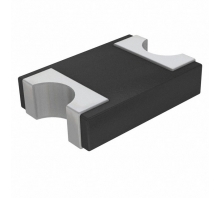
ACGRCT302-HF Overview
This device has an average rectified current of 3A volts.When the maximum reverse current is allowed, it reaches 5μA.The maximum output current is 3A.
ACGRCT302-HF Features
an average rectified current of 3A volts
A maximum reverse current of 5μA
3A is the maximum value
ACGRCT302-HF Applications
There are a lot of Comchip Technology
ACGRCT302-HF applications of single-phase diode rectifier.
DC motor control and drives
Battery chargers
Welders
Power converters
Reverse Polarity Protection
Ultra High-Speed Switching
Freewheeling
Polarity Protection Diode
Recirculating Diode
Switching Diode
ACGRCT302-HF More Descriptions
DIODE GEN PURP 400V 3A 3220
Rectifiers 3A 400V AEC-Q101