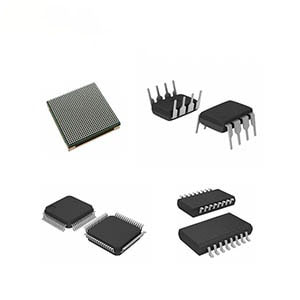
Factory Lead Time
6 Weeks
Lifecycle Status
ACTIVE (Last Updated: 4 days ago)
Contact Plating
Gold, Tin
Mounting Type
Mounting Type refers to the method by which an electronic component is attached to a printed circuit board (PCB) or other surface. Common mounting types include:
* Through-hole: Component leads are inserted into holes in the PCB and soldered on the other side.
* Surface-mount: Component is placed on the surface of the PCB and soldered in place.
* Press-fit: Component is pressed into place on the PCB without soldering.
* Socket: Component is inserted into a socket on the PCB, allowing for easy replacement.
The mounting type is determined by factors such as the component's size, shape, and power requirements.
Surface Mount
Package / Case
Package / Case refers to the physical housing or enclosure that encapsulates an electronic component. It provides protection, facilitates handling, and enables electrical connections. The package type determines the component's size, shape, pin configuration, and mounting options. Common package types include DIP (dual in-line package), SOIC (small outline integrated circuit), and BGA (ball grid array). The package also influences the component's thermal and electrical performance.
128-LQFP Exposed Pad
Number of Pins
Number of Pins: Indicates the number of electrical connections available on the component. These pins are used to connect the component to other components or circuits on a printed circuit board (PCB). The number of pins determines the functionality and connectivity options of the component. It is important to ensure that the component has the correct number of pins for the intended application.
128
Operating Temperature
Operating Temperature is the range of temperatures at which an electronic component can function properly. It is typically specified in degrees Celsius (°C) and indicates the minimum and maximum temperatures at which the component can operate without experiencing damage or degradation. Operating Temperature is an important parameter to consider when designing electronic circuits, as it ensures that the components will function reliably in the intended operating environment.
-40°C~85°C
Feature
Simultaneous Sampling
Part Status
Part Status is an electronic component parameter that indicates the availability and production status of a component. It is typically used to inform customers about the availability of a component, whether it is in production, end-of-life, or obsolete. Part Status can also provide information about any restrictions or limitations on the component's use, such as whether it is only available for certain applications or if it has been discontinued.
Active
Moisture Sensitivity Level (MSL)
Moisture Sensitivity Level (MSL) is a measure of the susceptibility of a surface mount electronic component to moisture-induced damage during soldering. It is classified into six levels, from 1 (least sensitive) to 6 (most sensitive). MSL is determined by the materials used in the component's construction, including the solderability of its terminals and the presence of moisture-absorbing materials. Components with higher MSL ratings require more stringent handling and storage conditions to prevent moisture absorption and subsequent damage during soldering.
3 (168 Hours)
Number of Terminations
128
Terminal Finish
Matte Tin (Sn)
Subcategory
Analog to Digital Converters
Technology
Technology, in the context of electronic components, refers to the specific manufacturing process and materials used to create the component. It encompasses the semiconductor fabrication techniques, such as the type of transistor used (e.g., MOSFET, BJT), the gate oxide thickness, and the interconnect materials. Technology also includes the packaging type, such as surface mount or through-hole, and the leadframe or substrate material. The technology used impacts the component's performance characteristics, such as speed, power consumption, and reliability.
CMOS
Peak Reflow Temperature (Cel)
260
Supply Voltage
Supply Voltage is the voltage required to power an electronic component. It is typically measured in volts (V) and is specified in the component's datasheet. The supply voltage must be within the specified range for the component to function properly. If the supply voltage is too low, the component may not function at all. If the supply voltage is too high, the component may be damaged.
1.9V
Reflow Temperature-Max (s)
NOT SPECIFIED
Base Part Number
ADC08D502
Qualification Status
Not Qualified
Operating Supply Voltage
1.9V
Configuration
MUX-S/H-ADC
Interface
In electronics, an interface refers to the connection point or boundary between two or more electronic systems or devices. It defines the physical, electrical, and logical characteristics that enable communication and data exchange between them.
An interface specifies the protocols, pinouts, voltage levels, data formats, and other parameters necessary for the systems to interact seamlessly. It ensures compatibility and interoperability between different components or devices, allowing them to exchange information and perform their intended functions.
LVDS, Parallel
Input Type
Input Type refers to the type of signal that an electronic component can accept as input.
Differential
Architecture
Architecture refers to the internal design and organization of an electronic component. It encompasses the arrangement of functional blocks, their interconnections, and the overall data flow within the component. The architecture determines the component's performance characteristics, such as speed, power consumption, and functionality. It also influences the component's size, cost, and reliability.
Folding Interpolating
Converter Type
Converter Type refers to the type of conversion performed by an electronic component, such as an analog-to-digital converter (ADC) or a digital-to-analog converter (DAC). It specifies the input and output signal types that the converter can handle.
ADC, PROPRIETARY METHOD
Reference Type
Reference type is a parameter that specifies the type of reference used in an electronic component. It can be either a voltage reference or a current reference. A voltage reference provides a stable voltage output, while a current reference provides a stable current output. The type of reference used depends on the application. For example, a voltage reference is used in a voltage regulator to provide a stable voltage output, while a current reference is used in a current source to provide a stable current output.
Internal
Data Interface
Data Interface refers to the physical and logical means by which an electronic component communicates with other components or systems. It defines the protocols, pinouts, and signal characteristics used for data exchange. The Data Interface parameter specifies the type of interface supported by the component, such as SPI, I2C, UART, or Ethernet. It ensures compatibility and proper communication between different devices within a system.
LVDS - Parallel
Sampling Rate
Sampling rate refers to the number of times per second that an analog signal is measured and converted into a digital signal. It is expressed in Hertz (Hz) and determines the maximum frequency that can be accurately represented in the digital signal. A higher sampling rate results in a more accurate representation of the analog signal, but also increases the amount of data that needs to be processed. The sampling rate must be at least twice the highest frequency component of the analog signal to avoid aliasing, where high-frequency components are incorrectly represented as lower-frequency components.
500 Msps
Voltage - Supply, Analog
1.8V~2V
Voltage - Supply, Digital
1.8V~2V
Number of Analog In Channels
2
Sampling Rate (Per Second)
500M
Output Bit Code
OFFSET BINARY
Linearity Error-Max (EL)
0.3516%
Integral Nonlinearity (INL)
0.9 LSB
Sample and Hold / Track and Hold
SAMPLE
Number of Converters
Number of Converters refers to the quantity of analog-to-digital converters (ADCs) or digital-to-analog converters (DACs) present in an electronic component. ADCs convert analog signals into digital form, while DACs perform the reverse operation. The number of converters determines the component's ability to handle multiple analog or digital signals simultaneously. A higher number of converters allows for increased data acquisition or signal generation capabilities.
2
Ratio - S/H:ADC
Ratio - S/H:ADC is an electronic component parameter that specifies the ratio of the output voltage of a sample-and-hold (S/H) circuit to the input voltage of the analog-to-digital converter (ADC). It is expressed as a percentage and indicates the accuracy of the ADC's conversion process. A higher ratio indicates better accuracy, as it means that the ADC is able to convert the analog input signal into a digital representation with less error.
1:1
Analog Input Voltage-Max
0.95V
Signal to Noise Ratio (SNR)
48 dB
Max Supply Voltage (DC)
2V
Differential Nonlinearity
0.6 LSB
Min Supply Voltage (DC)
1.8V
Spurious-free dynamic range (SFDR)
55 dB
Height
Height, in the context of electronic components, refers to the vertical dimension of the component. It is typically measured in millimeters (mm) or inches (in). Height is an important parameter to consider when designing and assembling electronic circuits, as it affects the overall size and form factor of the device. Components with a smaller height are often preferred for applications where space is limited, such as in portable devices or embedded systems.
1.6mm
Length
Length, in the context of electronic components, refers to the physical dimension of a component along its longest axis. It is typically measured in millimeters (mm) or inches (in). Length is a crucial parameter for determining the physical size and space requirements of a component on a printed circuit board (PCB) or other assembly. It also affects the component's electrical characteristics, such as inductance and capacitance, which can be influenced by the length of conductors or traces within the component.
20mm
Thickness
Thickness, in the context of electronic components, refers to the vertical distance between two opposing surfaces of a component. It is typically measured in millimeters (mm) or inches (in). Thickness is a crucial parameter that affects the component's physical dimensions, weight, and performance characteristics. It influences factors such as heat dissipation, electrical insulation, and mechanical stability. Thinner components generally offer better heat dissipation and space efficiency, while thicker components may provide enhanced durability and structural integrity.
1.4mm
RoHS Status
ROHS3 Compliant