Tolerance:
Tolerance in electronic components refers to the allowable deviation from the specified value. It indicates the range within which the actual value of the component can vary while still meeting the manufacturer's specifications. Tolerance is typically expressed as a percentage of the nominal value, such as ±5% or ±10%. A lower tolerance indicates a tighter range of acceptable values, resulting in more precise and consistent performance.
-30%, 40%
Supplier Device Package:
P 3.3 x 2.6
Series:
Series, in the context of electronic components, refers to the arrangement of components in a circuit. When components are connected in series, they form a single path for current to flow through. The total resistance of a series circuit is the sum of the individual resistances of each component. Series connections are often used to control the flow of current in a circuit, as the total resistance can be adjusted by changing the number or type of components in the series.
B65491
Minimum Core Cross Section (Amin) mm²:
-
Material:
In electronic components, "Material" refers to the substance or composition used to construct the component. It determines the electrical, mechanical, and thermal properties of the component.
K1
Length:
Length, in the context of electronic components, refers to the physical dimension of a component along its longest axis. It is typically measured in millimeters (mm) or inches (in). Length is a crucial parameter for determining the physical size and space requirements of a component on a printed circuit board (PCB) or other assembly. It also affects the component's electrical characteristics, such as inductance and capacitance, which can be influenced by the length of conductors or traces within the component.
-
Initial Permeability (µi):
80
Inductance Factor (Al):
25nH
Height:
Height, in the context of electronic components, refers to the vertical dimension of the component. It is typically measured in millimeters (mm) or inches (in). Height is an important parameter to consider when designing and assembling electronic circuits, as it affects the overall size and form factor of the device. Components with a smaller height are often preferred for applications where space is limited, such as in portable devices or embedded systems.
1.30mm
Effective Permeability (µe):
75
Effective Magnetic Volume (Ve) mm³:
7
Effective Length (le) mm:
5.1
Effective Area (Ae) mm²:
1.37
Core Type:
Core Type refers to the physical construction and material composition of the magnetic core used in an electronic component, such as an inductor or transformer. It describes the shape, size, and material of the core, which determines its magnetic properties and performance characteristics. Common core types include toroidal, E-core, pot core, and bobbin core, each with its own advantages and applications. The choice of core type depends on factors such as inductance value, frequency response, and power handling capabilities.
P
Core Factor (ΣI/A) mm-1:
3.72
part No. B65491CY1 Is this available? : YesShipped from : HK warehouseSame model may have different manufacturers, images only for reference.
B65491CY1 More Descriptions
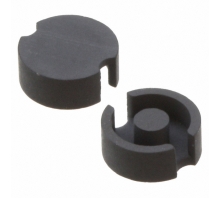
FERRITE CORE P 25NH K1 2PCS
FERRITE CORES & ACCESSORIES
P 3,3X2,6 K 1 25 40%-30%