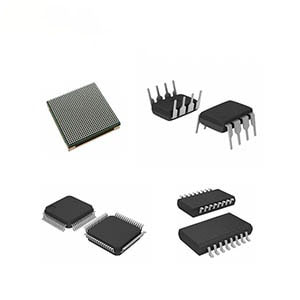
Factory Lead Time
8 Weeks
Lifecycle Status
ACTIVE (Last Updated: 5 days ago)
Mount
Surface Mount, Through Hole
Mounting Type
Mounting Type refers to the method by which an electronic component is attached to a printed circuit board (PCB) or other surface. Common mounting types include:
* Through-hole: Component leads are inserted into holes in the PCB and soldered on the other side.
* Surface-mount: Component is placed on the surface of the PCB and soldered in place.
* Press-fit: Component is pressed into place on the PCB without soldering.
* Socket: Component is inserted into a socket on the PCB, allowing for easy replacement.
The mounting type is determined by factors such as the component's size, shape, and power requirements.
Through Hole
Package / Case
Package / Case refers to the physical housing or enclosure that encapsulates an electronic component. It provides protection, facilitates handling, and enables electrical connections. The package type determines the component's size, shape, pin configuration, and mounting options. Common package types include DIP (dual in-line package), SOIC (small outline integrated circuit), and BGA (ball grid array). The package also influences the component's thermal and electrical performance.
149-BFCPGA Exposed Pad
Number of Pins
Number of Pins: Indicates the number of electrical connections available on the component. These pins are used to connect the component to other components or circuits on a printed circuit board (PCB). The number of pins determines the functionality and connectivity options of the component. It is important to ensure that the component has the correct number of pins for the intended application.
149
Part Status
Part Status is an electronic component parameter that indicates the availability and production status of a component. It is typically used to inform customers about the availability of a component, whether it is in production, end-of-life, or obsolete. Part Status can also provide information about any restrictions or limitations on the component's use, such as whether it is only available for certain applications or if it has been discontinued.
Active
Moisture Sensitivity Level (MSL)
Moisture Sensitivity Level (MSL) is a measure of the susceptibility of a surface mount electronic component to moisture-induced damage during soldering. It is classified into six levels, from 1 (least sensitive) to 6 (most sensitive). MSL is determined by the materials used in the component's construction, including the solderability of its terminals and the presence of moisture-absorbing materials. Components with higher MSL ratings require more stringent handling and storage conditions to prevent moisture absorption and subsequent damage during soldering.
1 (Unlimited)
Number of Terminations
149
Max Operating Temperature
90°C
Min Operating Temperature
-20°C
Applications
3D, Medical Imaging
Terminal Position
PERPENDICULAR
Frequency
Frequency, in the context of electronic components, refers to the rate at which an alternating current or voltage changes direction per second. It is measured in Hertz (Hz), which represents one cycle per second. Frequency is a crucial parameter for various electronic components, such as capacitors, inductors, and resonators. It determines the component's ability to store or release energy, filter signals, and resonate at specific frequencies. Understanding the frequency characteristics of electronic components is essential for designing and optimizing electronic circuits.
200MHz
Operating Supply Voltage
8.5V
Supply Voltage-Max (Vsup)
3.6V
Supply Voltage-Min (Vsup)
3V
Operating Supply Current
Operating Supply Current is the amount of current drawn by an electronic component when it is operating under normal conditions. It is typically measured in milliamps (mA) or microamps (µA). The operating supply current is important because it can affect the power consumption of the component and the overall system. A higher operating supply current will result in higher power consumption, which can lead to overheating and reduced battery life.
750mA
Height
Height, in the context of electronic components, refers to the vertical dimension of the component. It is typically measured in millimeters (mm) or inches (in). Height is an important parameter to consider when designing and assembling electronic circuits, as it affects the overall size and form factor of the device. Components with a smaller height are often preferred for applications where space is limited, such as in portable devices or embedded systems.
5.4mm
Length
Length, in the context of electronic components, refers to the physical dimension of a component along its longest axis. It is typically measured in millimeters (mm) or inches (in). Length is a crucial parameter for determining the physical size and space requirements of a component on a printed circuit board (PCB) or other assembly. It also affects the component's electrical characteristics, such as inductance and capacitance, which can be influenced by the length of conductors or traces within the component.
22.3mm
Thickness
Thickness, in the context of electronic components, refers to the vertical distance between two opposing surfaces of a component. It is typically measured in millimeters (mm) or inches (in). Thickness is a crucial parameter that affects the component's physical dimensions, weight, and performance characteristics. It influences factors such as heat dissipation, electrical insulation, and mechanical stability. Thinner components generally offer better heat dissipation and space efficiency, while thicker components may provide enhanced durability and structural integrity.
4mm
RoHS Status
ROHS3 Compliant
Description
The DLP5500 Digital Micromirror Device (DMD) is a digitally controlled MOEMS (micro-opto-electromechanical system) spatial light modulator (SLM). When coupled to an appropriate optical system, the DLP5500 can be used to modulate the amplitude, direction, and or phase of incoming (illumination) light.
Architecturally, the DLP5500 is a latchable, electrical-in, optical-out semiconductor device. This architecture makes the DLP5500 well suited for use in applications such as structured lighting, 3D optical metrology. Industrial and Medical imaging, microscopy, and spectroscopy. The compact physical size of the DLP5500 enables integration into portable equipment.
The DLP5500 is one of three components in the DLP 0.55 XGA chip-set. Proper function and operation of the DLP5500 requires that it be used in conjunction with the other components of the chip-set. The DLPC200 and DLPA200 control and coordinate the data loading and micromirror switching to ensure reliable operation. Refer to DLP 0.55 XGA chip-set datasheet for further details. DLPR200F is DLPC200 firmware code provided to enable Video and Structured Lighting Applications.
Electrically, the DLP5500 consists of a two-dimensional array of 1-bit CMOS memory cells, organized in a square grid of 1024 memory cell columns by 768 memory cell rows. The CMOS memory array is written to on a column-by-column basis, over a 16-bit Low Voltage Differential Signaling (LVDS) double data rate (DDR) bus. Row addressing is handled via a serial control bus. The specific CMOS memory access protocol is handled by the DLPC200 Digital Controller.
Features
0.55-Inch Micromirror Array Diagonal
1024 x 768 Array of Aluminum, Micrometer-Sized Mirrors (XGA Resolution)
10.8-μm Micromirror Pitch
±12° Micromirror Tilt Angle (Relative to Flat State)
Designed for Corner Illumination
Designed for Use With Broadband Visible Light (420 nm-700 nm):
Window Transmission 97% (Single Pass, Through Two Window Surfaces)
Micromirror Reflectivity 88%
Array Diffraction Efficiency 86%
Array Fill Factor 92%
16-Bit, Low Voltage Differential Signaling (LVDS) Double Data Rate (DDR) input data bus
200 MHz Input Data Clock Rate
Series 450 Package Characteristics:
Thermal Area 18 mm by 12 mm enabling high on screen lumens (>2000 Im)
149 Micro Pin Grid Array
Robust electrical connection
32.2 mm by 22.3 mm Package Footprint
Package Mates to Amphenol InterConSystems 450-2.700-L-13.25-149 Socket
Applications
3D Machine Vision
3D Optical Measurement
Industrial and Medical Imaging
Medical Instrumentation
Digital Exposure systems