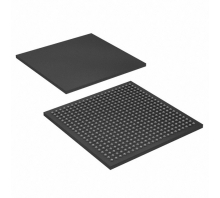
Mounting Type
Mounting Type refers to the method by which an electronic component is attached to a printed circuit board (PCB) or other surface. Common mounting types include:
* Through-hole: Component leads are inserted into holes in the PCB and soldered on the other side.
* Surface-mount: Component is placed on the surface of the PCB and soldered in place.
* Press-fit: Component is pressed into place on the PCB without soldering.
* Socket: Component is inserted into a socket on the PCB, allowing for easy replacement.
The mounting type is determined by factors such as the component's size, shape, and power requirements.
Surface Mount
Package / Case
Package / Case refers to the physical housing or enclosure that encapsulates an electronic component. It provides protection, facilitates handling, and enables electrical connections. The package type determines the component's size, shape, pin configuration, and mounting options. Common package types include DIP (dual in-line package), SOIC (small outline integrated circuit), and BGA (ball grid array). The package also influences the component's thermal and electrical performance.
484-BBGA
Operating Temperature
Operating Temperature is the range of temperatures at which an electronic component can function properly. It is typically specified in degrees Celsius (°C) and indicates the minimum and maximum temperatures at which the component can operate without experiencing damage or degradation. Operating Temperature is an important parameter to consider when designing electronic circuits, as it ensures that the components will function reliably in the intended operating environment.
0°C~70°C TA
Series
Series, in the context of electronic components, refers to the arrangement of components in a circuit. When components are connected in series, they form a single path for current to flow through. The total resistance of a series circuit is the sum of the individual resistances of each component. Series connections are often used to control the flow of current in a circuit, as the total resistance can be adjusted by changing the number or type of components in the series.
ACEX-1K®
Part Status
Part Status is an electronic component parameter that indicates the availability and production status of a component. It is typically used to inform customers about the availability of a component, whether it is in production, end-of-life, or obsolete. Part Status can also provide information about any restrictions or limitations on the component's use, such as whether it is only available for certain applications or if it has been discontinued.
Obsolete
Moisture Sensitivity Level (MSL)
Moisture Sensitivity Level (MSL) is a measure of the susceptibility of a surface mount electronic component to moisture-induced damage during soldering. It is classified into six levels, from 1 (least sensitive) to 6 (most sensitive). MSL is determined by the materials used in the component's construction, including the solderability of its terminals and the presence of moisture-absorbing materials. Components with higher MSL ratings require more stringent handling and storage conditions to prevent moisture absorption and subsequent damage during soldering.
3 (168 Hours)
Number of Terminations
484
Terminal Finish
Tin/Lead (Sn/Pb)
Subcategory
Field Programmable Gate Arrays
Technology
Technology, in the context of electronic components, refers to the specific manufacturing process and materials used to create the component. It encompasses the semiconductor fabrication techniques, such as the type of transistor used (e.g., MOSFET, BJT), the gate oxide thickness, and the interconnect materials. Technology also includes the packaging type, such as surface mount or through-hole, and the leadframe or substrate material. The technology used impacts the component's performance characteristics, such as speed, power consumption, and reliability.
CMOS
Voltage - Supply
2.375V~2.625V
Peak Reflow Temperature (Cel)
220
Supply Voltage
Supply Voltage is the voltage required to power an electronic component. It is typically measured in volts (V) and is specified in the component's datasheet. The supply voltage must be within the specified range for the component to function properly. If the supply voltage is too low, the component may not function at all. If the supply voltage is too high, the component may be damaged.
2.5V
Time@Peak Reflow Temperature-Max (s)
30
Number of Outputs
Number of Outputs refers to the number of independent output signals or channels that an electronic component can provide. It indicates the capability of the component to drive multiple external devices or circuits simultaneously. A higher number of outputs allows for greater flexibility and connectivity in electronic systems.
249
Qualification Status
Not Qualified
Power Supplies
2.52.5/3.3V
Clock Frequency
Clock Frequency, measured in Hertz (Hz), is the rate at which an electronic component, such as a microprocessor or oscillator, generates electrical pulses. It determines the speed at which the component can process data and execute instructions. A higher clock frequency generally indicates faster performance, but also higher power consumption and heat generation. Clock Frequency is a crucial parameter for timing-sensitive applications, such as digital signal processing and real-time systems.
90MHz
Number of Inputs
The number of inputs of an electronic component refers to the number of separate signals or data streams that the component can receive and process simultaneously. It indicates the maximum number of external connections that can be made to the component to provide input signals. This parameter is crucial for determining the functionality and connectivity of the component within a circuit or system.
249
Programmable Logic Type
LOADABLE PLD
Number of Logic Elements/Cells
2880
Total RAM Bits
Total Ram Bits is a parameter that specifies the total number of bits that can be stored in a random access memory (RAM) chip. It is typically expressed in megabits (Mb) or gigabits (Gb). The higher the Total Ram Bits, the more data the RAM chip can store. This parameter is important for determining the amount of memory that is available to a computer system.
40960
Number of LABs/CLBs
Number of Labs/Clbs (Number of Laboratories/Clubs) is a parameter that specifies the number of laboratories or clubs that are associated with a particular electronic component. This parameter is typically used to indicate the level of support that is available for the component, as well as the number of people who are familiar with its use. A higher number of labs/clubs indicates that the component is more widely used and supported, which can be beneficial for users who need assistance with its implementation or troubleshooting.
360
Length
Length, in the context of electronic components, refers to the physical dimension of a component along its longest axis. It is typically measured in millimeters (mm) or inches (in). Length is a crucial parameter for determining the physical size and space requirements of a component on a printed circuit board (PCB) or other assembly. It also affects the component's electrical characteristics, such as inductance and capacitance, which can be influenced by the length of conductors or traces within the component.
23mm
Height Seated (Max)
2.1mm
RoHS Status
Non-RoHS Compliant
Description
The ACEX 1K family of programmable logic devices (PLDs) offers a cost-effective system-on-a-programmable-chip (SOPC) integration solution. These devices feature an enhanced embedded array for implementing megafunctions such as efficient memory and specialized logic functions. The dual-port capability with up to 16-bit width per embedded array block (EAB) and the logic array for general logic functions provide high density and flexibility.
Features
Typical gates: 10,000 to 100,000
Maximum system gates: 56,000 to 257,000
Logic elements (LEs): 576 to 4,992
EABs: 3 to 12
Total RAM bits: 12,288 to 49,152
Maximum user I/O pins: 136 to 333
MultiVolt™ I/O pins for compatibility with 2.5-V, 3.3-V, and 5.0-V devices
Low power consumption
Bidirectional I/O performance up to 250 MHz
PCI Local Bus Specification compliance for 3.3-V operation at 33 MHz or 66 MHz
Extended temperature range
Applications
The ACEX 1K family is suitable for a wide range of applications, including:
High-volume, cost-sensitive designs
Communications applications
System-level integration
Memory and logic function implementation