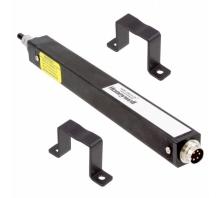
Factory Lead Time
18 Weeks
Mount
Chassis Mount, Screw
Mounting Type
Mounting Type refers to the method by which an electronic component is attached to a printed circuit board (PCB) or other surface. Common mounting types include:
* Through-hole: Component leads are inserted into holes in the PCB and soldered on the other side.
* Surface-mount: Component is placed on the surface of the PCB and soldered in place.
* Press-fit: Component is pressed into place on the PCB without soldering.
* Socket: Component is inserted into a socket on the PCB, allowing for easy replacement.
The mounting type is determined by factors such as the component's size, shape, and power requirements.
Chassis Mount
Package / Case
Package / Case refers to the physical housing or enclosure that encapsulates an electronic component. It provides protection, facilitates handling, and enables electrical connections. The package type determines the component's size, shape, pin configuration, and mounting options. Common package types include DIP (dual in-line package), SOIC (small outline integrated circuit), and BGA (ball grid array). The package also influences the component's thermal and electrical performance.
Rectangular
Housing Material
Housing Material refers to the material used to construct the outer casing or enclosure of an electronic component.
Aluminium
Operating Temperature
Operating Temperature is the range of temperatures at which an electronic component can function properly. It is typically specified in degrees Celsius (°C) and indicates the minimum and maximum temperatures at which the component can operate without experiencing damage or degradation. Operating Temperature is an important parameter to consider when designing electronic circuits, as it ensures that the components will function reliably in the intended operating environment.
-65°C~105°C
Series
Series, in the context of electronic components, refers to the arrangement of components in a circuit. When components are connected in series, they form a single path for current to flow through. The total resistance of a series circuit is the sum of the individual resistances of each component. Series connections are often used to control the flow of current in a circuit, as the total resistance can be adjusted by changing the number or type of components in the series.
SLF
Tolerance
Tolerance in electronic components refers to the allowable deviation from the specified value. It indicates the range within which the actual value of the component can vary while still meeting the manufacturer's specifications. Tolerance is typically expressed as a percentage of the nominal value, such as ±5% or ±10%. A lower tolerance indicates a tighter range of acceptable values, resulting in more precise and consistent performance.
20%
Part Status
Part Status is an electronic component parameter that indicates the availability and production status of a component. It is typically used to inform customers about the availability of a component, whether it is in production, end-of-life, or obsolete. Part Status can also provide information about any restrictions or limitations on the component's use, such as whether it is only available for certain applications or if it has been discontinued.
Obsolete
Moisture Sensitivity Level (MSL)
Moisture Sensitivity Level (MSL) is a measure of the susceptibility of a surface mount electronic component to moisture-induced damage during soldering. It is classified into six levels, from 1 (least sensitive) to 6 (most sensitive). MSL is determined by the materials used in the component's construction, including the solderability of its terminals and the presence of moisture-absorbing materials. Components with higher MSL ratings require more stringent handling and storage conditions to prevent moisture absorption and subsequent damage during soldering.
1 (Unlimited)
Termination
Termination refers to the electrical characteristics of a component or circuit at its input or output terminals. It describes how the component or circuit interacts with external signals or devices. Termination can involve matching impedance, providing voltage or current regulation, or filtering unwanted signals. Proper termination ensures efficient signal transfer, minimizes reflections, and prevents damage to components. It is crucial for maintaining signal integrity and optimizing circuit performance.
Connector
Resistance
Resistance is a measure of the opposition to the flow of electric current in a conductor. It is measured in ohms (Ω). The higher the resistance, the more difficult it is for current to flow. Resistance is caused by the collisions of electrons with atoms and molecules in the conductor. The more collisions that occur, the higher the resistance.
9kOhms
Max Operating Temperature
105°C
Min Operating Temperature
-65°C
Technology
Technology, in the context of electronic components, refers to the specific manufacturing process and materials used to create the component. It encompasses the semiconductor fabrication techniques, such as the type of transistor used (e.g., MOSFET, BJT), the gate oxide thickness, and the interconnect materials. Technology also includes the packaging type, such as surface mount or through-hole, and the leadframe or substrate material. The technology used impacts the component's performance characteristics, such as speed, power consumption, and reliability.
Resistive
Termination Style
Termination Style refers to the method used to connect an electronic component to a circuit board or other components. It describes the physical form and electrical characteristics of the connection point. Common termination styles include through-hole, surface mount, and press-fit. Through-hole components have leads that are inserted into holes on the circuit board and soldered in place. Surface mount components are soldered directly onto the surface of the circuit board. Press-fit components are inserted into holes on the circuit board and held in place by friction.
Connector
Actuator Type
Actuator Type refers to the type of mechanism used in an actuator to convert electrical signals into physical movement.
Round Shaft
Linearity
Linearity is a measure of how closely the output of an electronic component follows a straight line when the input is varied. It is expressed as a percentage of the full-scale output. A linearity of 1% means that the output will be within 1% of the ideal straight line over the entire input range. Linearity is important in many applications, such as amplifiers, analog-to-digital converters, and digital-to-analog converters.
±0.1%
Resistance Tolerance
±20%
For Measuring
Linear Position
Linear Range
0 ~ 152.40mm (0 ~ 6.00)
RoHS Status
RoHS Compliant
F56105103 Overview
To protect the linear position measuring sensors from damage, they are packaged in Rectangular packages. The Bulk package contains this electronic component. For the angle position measuring sensors to function normally, the minimum operating temperature can be set to -65°C. Angle position measuring sensors, however, cannot operate above 105°C. Linear position sensors can oppose current flow in the 9kOhms direction. For safe operation, the linear position measurement sensor's supply voltage cannot exceed 40V.
F56105103 Features
Supply Voltage: 40V
Operating Temperature: -65°C~105°C
SLF Series
Mount: Chassis Mount, Screw
Package / Case: Rectangular
Mounting Type: Chassis Mount
Linear Range: 0 ~ 152.40mm (0 ~ 6.00)
Resistance Tolerance: ±20%
F56105103 Applications
There are a lot of Honeywell Sensing and Productivity Solutions
F56105103 Angle & Linear Position Measuring Sensors applications.
Control elements
Electric meters (anti tampering)
Volume control on audio equipment
Motion controllers
Dishwasher control systems
Automotive temperature range
Robotic joint position detection
Industrial motor position control
Medical robots and fitness equipment
Absolute Rotary Position Sensor
F56105103 More Descriptions
Anodised Aluminium Linear Transducer, 34.5mm Stroke, 40 V dc | Honeywell F56105103
Linear Position Sensor 40V 1000MCycles
POSITION TRANSDUCER-XDCR SLF 6 IN 9K/0.1% 1/4-28