Voltage - Supply:
13 V ~ 20 V
Type:
In the context of electronic components, "Type" refers to the specific model or variation of a component within a product line. It distinguishes between different versions or configurations of the same basic component.
For example, a resistor may have different types based on its resistance value, tolerance, or physical size. Similarly, a transistor may have different types based on its gain, frequency response, or packaging.
Understanding the "Type" of a component is crucial for selecting the correct part for a specific application and ensuring compatibility with other components in a circuit.
Ballast Controller
Supplier Device Package:
8-SOP
Series:
Series, in the context of electronic components, refers to the arrangement of components in a circuit. When components are connected in series, they form a single path for current to flow through. The total resistance of a series circuit is the sum of the individual resistances of each component. Series connections are often used to control the flow of current in a circuit, as the total resistance can be adjusted by changing the number or type of components in the series.
-
Packaging:
Tape & Reel (TR)
Package / Case:
Package / Case refers to the physical housing or enclosure that encapsulates an electronic component. It provides protection, facilitates handling, and enables electrical connections. The package type determines the component's size, shape, pin configuration, and mounting options. Common package types include DIP (dual in-line package), SOIC (small outline integrated circuit), and BGA (ball grid array). The package also influences the component's thermal and electrical performance.
8-SOIC (0.154", 3.90mm Width)
Operating Temperature:
Operating Temperature is the range of temperatures at which an electronic component can function properly. It is typically specified in degrees Celsius (°C) and indicates the minimum and maximum temperatures at which the component can operate without experiencing damage or degradation. Operating Temperature is an important parameter to consider when designing electronic circuits, as it ensures that the components will function reliably in the intended operating environment.
-40°C ~ 125°C
Mounting Type:
Mounting Type refers to the method by which an electronic component is attached to a printed circuit board (PCB) or other surface. Common mounting types include:
* Through-hole: Component leads are inserted into holes in the PCB and soldered on the other side.
* Surface-mount: Component is placed on the surface of the PCB and soldered in place.
* Press-fit: Component is pressed into place on the PCB without soldering.
* Socket: Component is inserted into a socket on the PCB, allowing for easy replacement.
The mounting type is determined by factors such as the component's size, shape, and power requirements.
Surface Mount
Frequency:
Frequency, in the context of electronic components, refers to the rate at which an alternating current or voltage changes direction per second. It is measured in Hertz (Hz), which represents one cycle per second. Frequency is a crucial parameter for various electronic components, such as capacitors, inductors, and resonators. It determines the component's ability to store or release energy, filter signals, and resonate at specific frequencies. Understanding the frequency characteristics of electronic components is essential for designing and optimizing electronic circuits.
250kHz ~ 350kHz
Dimming:
Dimming refers to the ability of an electronic component to adjust its light output. It is typically measured in percentage, with 0% representing no light output and 100% representing full light output. Dimming is often used to create different lighting effects or to adjust the brightness of a light source to suit different needs.
No
Current - Output Source/Sink:
-
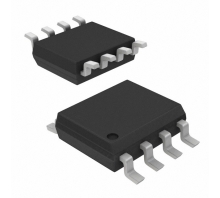
Images are for reference only.See Product Specifications for product details.If you are interested to buy FL7930BMX_G.
FL7930BMX_G More Descriptions
Power Factor Correction Controller 0.12mA 350kHz 8-Pin SOIC N T/R