Factory Lead Time
2 Weeks
Mounting Type
Mounting Type refers to the method by which an electronic component is attached to a printed circuit board (PCB) or other surface. Common mounting types include:
* Through-hole: Component leads are inserted into holes in the PCB and soldered on the other side.
* Surface-mount: Component is placed on the surface of the PCB and soldered in place.
* Press-fit: Component is pressed into place on the PCB without soldering.
* Socket: Component is inserted into a socket on the PCB, allowing for easy replacement.
The mounting type is determined by factors such as the component's size, shape, and power requirements.
Through Hole
Series
Series, in the context of electronic components, refers to the arrangement of components in a circuit. When components are connected in series, they form a single path for current to flow through. The total resistance of a series circuit is the sum of the individual resistances of each component. Series connections are often used to control the flow of current in a circuit, as the total resistance can be adjusted by changing the number or type of components in the series.
H3FA
Part Status
Part Status is an electronic component parameter that indicates the availability and production status of a component. It is typically used to inform customers about the availability of a component, whether it is in production, end-of-life, or obsolete. Part Status can also provide information about any restrictions or limitations on the component's use, such as whether it is only available for certain applications or if it has been discontinued.
Active
Moisture Sensitivity Level (MSL)
Moisture Sensitivity Level (MSL) is a measure of the susceptibility of a surface mount electronic component to moisture-induced damage during soldering. It is classified into six levels, from 1 (least sensitive) to 6 (most sensitive). MSL is determined by the materials used in the component's construction, including the solderability of its terminals and the presence of moisture-absorbing materials. Components with higher MSL ratings require more stringent handling and storage conditions to prevent moisture absorption and subsequent damage during soldering.
1 (Unlimited)
Termination
Termination refers to the electrical characteristics of a component or circuit at its input or output terminals. It describes how the component or circuit interacts with external signals or devices. Termination can involve matching impedance, providing voltage or current regulation, or filtering unwanted signals. Proper termination ensures efficient signal transfer, minimizes reflections, and prevents damage to components. It is crucial for maintaining signal integrity and optimizing circuit performance.
PC Pin
Termination Style
Termination Style refers to the method used to connect an electronic component to a circuit board or other components. It describes the physical form and electrical characteristics of the connection point. Common termination styles include through-hole, surface mount, and press-fit. Through-hole components have leads that are inserted into holes on the circuit board and soldered in place. Surface mount components are soldered directly onto the surface of the circuit board. Press-fit components are inserted into holes on the circuit board and held in place by friction.
PC Pin
Function
Function refers to the primary purpose or role of an electronic component within a circuit. It describes the specific task or operation that the component is designed to perform. For example, a resistor's function is to limit current flow, a capacitor's function is to store electrical energy, and a transistor's function is to amplify or switch signals. Understanding the function of a component is crucial for selecting the appropriate component for a particular application and ensuring its proper operation within the circuit.
On-Delay
Circuit
Circuit is a term used in electronics to describe a complete path for electrical current to flow. It consists of a source of electrical energy, such as a battery or power supply, a load, such as a resistor or motor, and a conducting path, such as wires or traces on a printed circuit board. The circuit provides a closed loop for the current to flow, allowing the electrical energy to be transferred from the source to the load.
DPST-NO/NC (1 Form A and B)
Throw Configuration
DPST, SPST
Relay Type
Mechanical Relay
Contact Rating @ Voltage
3A @ 250VAC
Delay Time
Delay Time is a parameter that measures the time it takes for a signal to pass through an electronic component. It is typically measured in nanoseconds (ns) or picoseconds (ps). Delay Time is important because it can affect the timing of a circuit and can cause problems if it is not taken into account. For example, if a signal is delayed too long, it may not reach its destination in time and could cause the circuit to malfunction.
0.1 Sec ~ 10 Min
Timing Adjustment Method
Screwdriver Slot
Timing Initiate Method
Input Voltage, Trigger Signal
RoHS Status
RoHS Compliant
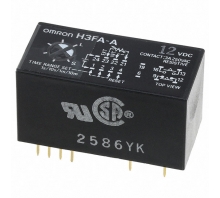
H3FA-A-DC12 OverviewThis product is manufactured by Omron Automation and Safety and belongs to the category of Time Delay Relays. The images we provide are for reference only, for detailed product information please see specification sheet H3FA-A-DC12 or the datasheet in PDF format. As a professional electronic components distributor, Zeano has five million electronic components available. Additionally, we have over 500,000 electronic components in stock ready for immediate shipment. If you have requirements, you can send us a quotation form to get the price of H3FA-A-DC12. We attach great importance to our customers' purchasing experience and are willing to establish a long-term cooperative relationship with you. If you have any questions or requirements, please feel free to contact us.
H3FA-A-DC12 More Descriptions
Time Delay & Timing Relays TIMER SOLID STATE
RELAY TIME DELAY 10MIN 3A 250V
Timer |Omron Industrial Automation H3FA-A-DC12