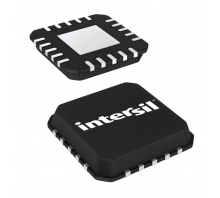
Intersil ISL22346UFRT20Z-TK

Mfr.Part #:

ISL22346UFRT20Z-TK

Manufacturer:

Description:
IC POT DGTL 128TP LN LP 20-TQFN

RoHS Status:

RoHS

Quantity:

- +
Total Price: $3.47

Payment:

Payment

Delivery:

Delivery

Pricing

( In US Dollars )
Quantity
Unit Price
Ext Price

Quick Request Quote

Do you want a lower wholesale price? Please send us an inquiry, and we will respond immediately.

Latest Posts

A switch solenoid converts electrical energy into mechanical movement by using a simple principle:...
Voltage controlled oscillator takes a voltage (like from a battery) and turns it into...
Types of computer cables: USB cables, HDMI cables, Ethernet cables, power cables,VGA and display
A potentiometer is like a dimmer switch for electronic devices - it controls the...
Security

Buy With Confidence

ISO 9001
ISO 9001
ISO 45001
ISO 45001
ISO 13485
ISO 13485
ISO 14001
ISO 14001
SMTA
ASA

Specifications

Product Details

Product Comparison

Factory Lead Time
5 Weeks
Mount
Surface Mount
Published
2004
JESD-609 Code
e3
Part Status

Part Status is an electronic component parameter that indicates the availability and production status of a component. It is typically used to inform customers about the availability of a component, whether it is in production, end-of-life, or obsolete. Part Status can also provide information about any restrictions or limitations on the component's use, such as whether it is only available for certain applications or if it has been discontinued.

Active
Moisture Sensitivity Level (MSL)

Moisture Sensitivity Level (MSL) is a measure of the susceptibility of a surface mount electronic component to moisture-induced damage during soldering. It is classified into six levels, from 1 (least sensitive) to 6 (most sensitive). MSL is determined by the materials used in the component's construction, including the solderability of its terminals and the presence of moisture-absorbing materials. Components with higher MSL ratings require more stringent handling and storage conditions to prevent moisture absorption and subsequent damage during soldering.

1
Number of Terminations
20
ECCN Code
EAR99
Temperature Coefficient

Temperature Coefficient (TC) measures the relative change in a component's value due to temperature variations. It is expressed as a percentage change per degree Celsius (°C). A positive TC indicates an increase in value with increasing temperature, while a negative TC indicates a decrease. TC is crucial for ensuring stable circuit performance over a range of temperatures. It helps designers compensate for temperature-induced changes and maintain desired component characteristics.

80 ppm/°C
Resistance

Resistance is a measure of the opposition to the flow of electric current in a conductor. It is measured in ohms (Ω). The higher the resistance, the more difficult it is for current to flow. Resistance is caused by the collisions of electrons with atoms and molecules in the conductor. The more collisions that occur, the higher the resistance.

50kOhm
Number of Positions

Number of Positions, in the context of electronic components, refers to the number of distinct terminals or connection points available on the component. It indicates the number of individual electrical connections that can be made to the component. A higher number of positions typically allows for more complex functionality and versatility in circuit design.

128
Terminal Finish
Matte Tin (Sn) - annealed
Max Operating Temperature
125°C
Min Operating Temperature
-40°C
Subcategory
Digital Potentiometers
Technology

Technology, in the context of electronic components, refers to the specific manufacturing process and materials used to create the component. It encompasses the semiconductor fabrication techniques, such as the type of transistor used (e.g., MOSFET, BJT), the gate oxide thickness, and the interconnect materials. Technology also includes the packaging type, such as surface mount or through-hole, and the leadframe or substrate material. The technology used impacts the component's performance characteristics, such as speed, power consumption, and reliability.

CMOS
Terminal Position
QUAD
Peak Reflow Temperature (Cel)
260
Number of Functions
4
Supply Voltage

Supply Voltage is the voltage required to power an electronic component. It is typically measured in volts (V) and is specified in the component's datasheet. The supply voltage must be within the specified range for the component to function properly. If the supply voltage is too low, the component may not function at all. If the supply voltage is too high, the component may be damaged.

3.3V
Terminal Pitch
0.5mm
Pin Count
20, 20
JESD-30 Code
S-PQCC-N20
Operating Supply Voltage
5V
Temperature Grade
AUTOMOTIVE
Interface

In electronics, an interface refers to the connection point or boundary between two or more electronic systems or devices. It defines the physical, electrical, and logical characteristics that enable communication and data exchange between them. An interface specifies the protocols, pinouts, voltage levels, data formats, and other parameters necessary for the systems to interact seamlessly. It ensures compatibility and interoperability between different components or devices, allowing them to exchange information and perform their intended functions.

I2C
Number of Circuits

Number of Circuits refers to the number of independent signal paths within an electronic component. It indicates how many separate circuits or channels the component can handle simultaneously. For example, an operational amplifier with a Number of Circuits of 2 can amplify two separate input signals independently. This parameter is crucial for determining the component's functionality and its suitability for specific applications.

4
Max Supply Voltage
5.5V
Min Supply Voltage
2.7V
Nominal Supply Current
3mA
Memory Type

Memory Type refers to the type of memory technology used in an electronic device. It indicates the specific design and architecture of the memory, such as DRAM (Dynamic Random Access Memory), SRAM (Static Random Access Memory), ROM (Read-Only Memory), EEPROM (Electrically Erasable Programmable Read-Only Memory), or Flash memory. Each memory type has unique characteristics, including speed, capacity, volatility, and cost, which determine its suitability for different applications.

Non-Volatile
Converter Type

Converter Type refers to the type of conversion performed by an electronic component, such as an analog-to-digital converter (ADC) or a digital-to-analog converter (DAC). It specifies the input and output signal types that the converter can handle.

DIGITAL POTENTIOMETER
Total Resistance
50000Ohm
Height Seated (Max)
0.8mm
Radiation Hardening
No
RoHS Status
RoHS Compliant
Description
The ISL22346 is a monolithic CMOS integrated circuit that integrates four digitally controlled potentiometers (DCPs) and non-volatile memory. The DCPs are implemented using a combination of resistor elements and CMOS switches, and their wiper positions are controlled via the I²C bus interface. Each potentiometer has a volatile Wiper Register (WR) and a non-volatile Initial Value Register (IVR) that can be directly accessed by the user. At power-up, the device recalls the contents of the DCPs' IVRs to the corresponding WRs.

Features
Four potentiometers in one package
128 resistor taps
I²C serial interface with three address pins, allowing up to eight devices per bus
Non-volatile storage of wiper position
Wiper resistance: 702 typical @ Vcc -3.3V
Shutdown mode with shutdown current of 5μA max
Power supply: 2.7V to 5.5V
50kΩ or 10kΩ total resistance
High reliability:
Endurance: 1,000,000 data changes per bit per register
Register data retention: 50 years @ Ts 55°C
20 Ld TSSOP or 20 Ld TQFN package
Pb-free (RoHS compliant)

Applications
The ISL22346 can be used as a three-terminal potentiometer or as a two-terminal variable resistor in a wide variety of applications, including:
Control
Parameter adjustments
Signal processing
No Product Comparison

Recommended Offers

Infineon Technologies
IRIS4013
Texas Instruments
TPS65290LMRHFT
Texas Instruments
LM9830VJD/NOPB
Microchip Technology
ATECC108A-MXHDA-T
NXP USA Inc.
MPC9350FA
Analog Devices Inc.
AD7248AAPZ
Microchip Technology
PIC16F1614-E/P
Microchip Technology
PIC16HV753-E/ML
Microchip Technology
ATSAMD21G16B-MF
Microchip Technology
PIC18F23K20T-I/SS