Factory Lead Time
14 Weeks
Mount
Chassis Mount, Panel
Mounting Type
Mounting Type refers to the method by which an electronic component is attached to a printed circuit board (PCB) or other surface. Common mounting types include:
* Through-hole: Component leads are inserted into holes in the PCB and soldered on the other side.
* Surface-mount: Component is placed on the surface of the PCB and soldered in place.
* Press-fit: Component is pressed into place on the PCB without soldering.
* Socket: Component is inserted into a socket on the PCB, allowing for easy replacement.
The mounting type is determined by factors such as the component's size, shape, and power requirements.
Chassis Mount
Number of Pins
Number of Pins: Indicates the number of electrical connections available on the component. These pins are used to connect the component to other components or circuits on a printed circuit board (PCB). The number of pins determines the functionality and connectivity options of the component. It is important to ensure that the component has the correct number of pins for the intended application.
5
Operating Temperature
Operating Temperature is the range of temperatures at which an electronic component can function properly. It is typically specified in degrees Celsius (°C) and indicates the minimum and maximum temperatures at which the component can operate without experiencing damage or degradation. Operating Temperature is an important parameter to consider when designing electronic circuits, as it ensures that the components will function reliably in the intended operating environment.
-10°C~60°C With Derating
Series
Series, in the context of electronic components, refers to the arrangement of components in a circuit. When components are connected in series, they form a single path for current to flow through. The total resistance of a series circuit is the sum of the individual resistances of each component. Series connections are often used to control the flow of current in a circuit, as the total resistance can be adjusted by changing the number or type of components in the series.
JWS (50W)
Size / Dimension
6.25Lx3.35W x 1.45 H 158.8mmx85.1mmx36.8mm
Feature
Adjustable Output, DC Input Capable, PFC, Universal Input
Part Status
Part Status is an electronic component parameter that indicates the availability and production status of a component. It is typically used to inform customers about the availability of a component, whether it is in production, end-of-life, or obsolete. Part Status can also provide information about any restrictions or limitations on the component's use, such as whether it is only available for certain applications or if it has been discontinued.
Obsolete
Moisture Sensitivity Level (MSL)
Moisture Sensitivity Level (MSL) is a measure of the susceptibility of a surface mount electronic component to moisture-induced damage during soldering. It is classified into six levels, from 1 (least sensitive) to 6 (most sensitive). MSL is determined by the materials used in the component's construction, including the solderability of its terminals and the presence of moisture-absorbing materials. Components with higher MSL ratings require more stringent handling and storage conditions to prevent moisture absorption and subsequent damage during soldering.
Not Applicable
Applications
ITE (Commercial)
Subcategory
Power Supply Modules
Max Power Dissipation
50W
Number of Outputs
Number of Outputs refers to the number of independent output signals or channels that an electronic component can provide. It indicates the capability of the component to drive multiple external devices or circuits simultaneously. A higher number of outputs allows for greater flexibility and connectivity in electronic systems.
1
Voltage - Isolation
Voltage - Isolation refers to the maximum voltage that can be applied between two points in an electronic component without causing electrical breakdown. It is a measure of the component's ability to withstand high voltages without allowing current to flow between the points. A higher voltage isolation rating indicates that the component can withstand higher voltages without failing.
3kV
Output Voltage
Output Voltage is the voltage level produced by an electronic component when it is operating. It is typically measured in volts (V) and can be either positive or negative. The output voltage of a component is determined by its design and the input voltage applied to it. For example, a voltage regulator will produce a fixed output voltage regardless of the input voltage, while an amplifier will produce an output voltage that is proportional to the input voltage.
12V
Voltage - Input
85V~265VAC
Output Current
Output Current is the maximum amount of current that an electronic component can deliver to a load without exceeding its specified operating limits. It is typically measured in amperes (A) or milliamperes (mA). Output Current is a critical parameter for selecting electronic components, as it determines the amount of power that the component can provide to a load.
4.3A
Output Power
Output Power is a measure of the electrical power delivered by an electronic component to a load. It is typically expressed in watts (W) or milliwatts (mW). The output power of a component is determined by its design and the voltage and current applied to it.
Output power is an important parameter for many electronic components, such as amplifiers, power supplies, and transmitters. It is used to determine the component's efficiency and to ensure that it can provide enough power to drive the load.
51.6W
Protections
OUTPUT OVER CURRENT; OUTPUT OVER VOLTAGE
Nominal Output Voltage
12V
Min Input Voltage (AC)
85V
Max Input Voltage (AC)
265V
Height
Height, in the context of electronic components, refers to the vertical dimension of the component. It is typically measured in millimeters (mm) or inches (in). Height is an important parameter to consider when designing and assembling electronic circuits, as it affects the overall size and form factor of the device. Components with a smaller height are often preferred for applications where space is limited, such as in portable devices or embedded systems.
36.83mm
RoHS Status
RoHS Compliant
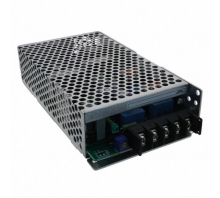
JWS5012/A OverviewThis product is manufactured by TDK-Lambda Americas Inc. and belongs to the category of AC DC Converters. The images we provide are for reference only, for detailed product information please see specification sheet JWS5012/A or the datasheet in PDF format. As a professional electronic components distributor, Zeano has five million electronic components available. Additionally, we have over 500,000 electronic components in stock ready for immediate shipment. If you have requirements, you can send us a quotation form to get the price of JWS5012/A. We attach great importance to our customers' purchasing experience and are willing to establish a long-term cooperative relationship with you. If you have any questions or requirements, please feel free to contact us.
JWS5012/A More Descriptions
Power Supply,AC-DC,12V,4.3A,85-265V In,Enclosed,Panel Mount,PFC,52W,JWS Series
AC/DC Power Supply Single-OUT 12V 4.3A 51.6W 5-Pin
50 W, SINGLE OUTPUT, 12 VDC@4.3 A AC-DC POWER SUPPLY
Switch Mode Power Supply Output Voltage:
French Electronic Distributor since 1988
Ac-Dc Converter, Enclosed, 1 O/p, 51.6W, 4.3A, 12V; Power Supply Approvals:ite; No. Of Outputs:1Outputs; Output Power Max:51.6W; Output Voltage - Output 1:12V; Output Current - Output 1:4.3A; Output Voltage - Output 2:- Rohs Compliant: Yes