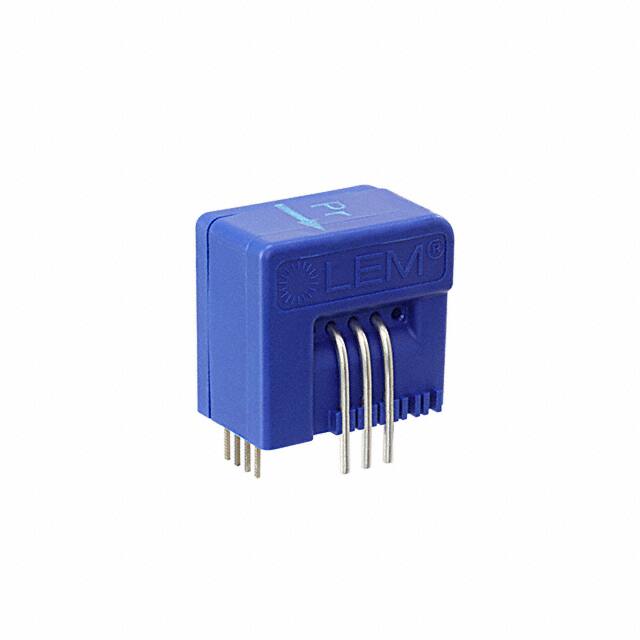
LEM USA Inc. LESR 15-NP

Mfr.Part #:

LESR 15-NP

Manufacturer:

Description:
LESR Series Hall Effect, Closed Loop Sensor 1-Channel Bidirectional -40°C~105°C TA 4.75V~5.25V 300kHz 15A Accuracy-±1.25% Linearity-±0.1%

RoHS Status:

RoHS

Datasheet:

Payment:

Payment

Delivery:

Delivery

Quick Request Quote

Do you want a lower wholesale price? Please send us an inquiry, and we will respond immediately.

Latest Posts

A switch solenoid converts electrical energy into mechanical movement by using a simple principle:...
Voltage controlled oscillator takes a voltage (like from a battery) and turns it into...
Types of computer cables: USB cables, HDMI cables, Ethernet cables, power cables,VGA and display
A potentiometer is like a dimmer switch for electronic devices - it controls the...
Security

Buy With Confidence

ISO 9001
ISO 9001
ISO 45001
ISO 45001
ISO 13485
ISO 13485
ISO 14001
ISO 14001
SMTA
ASA

Specifications

Product Details

Product Comparison

Factory Lead Time
8 Weeks
Mounting Type

Mounting Type refers to the method by which an electronic component is attached to a printed circuit board (PCB) or other surface. Common mounting types include: * Through-hole: Component leads are inserted into holes in the PCB and soldered on the other side. * Surface-mount: Component is placed on the surface of the PCB and soldered in place. * Press-fit: Component is pressed into place on the PCB without soldering. * Socket: Component is inserted into a socket on the PCB, allowing for easy replacement. The mounting type is determined by factors such as the component's size, shape, and power requirements.

Through Hole
Package / Case

Package / Case refers to the physical housing or enclosure that encapsulates an electronic component. It provides protection, facilitates handling, and enables electrical connections. The package type determines the component's size, shape, pin configuration, and mounting options. Common package types include DIP (dual in-line package), SOIC (small outline integrated circuit), and BGA (ball grid array). The package also influences the component's thermal and electrical performance.

Module
Operating Temperature

Operating Temperature is the range of temperatures at which an electronic component can function properly. It is typically specified in degrees Celsius (°C) and indicates the minimum and maximum temperatures at which the component can operate without experiencing damage or degradation. Operating Temperature is an important parameter to consider when designing electronic circuits, as it ensures that the components will function reliably in the intended operating environment.

-40°C~105°C TA
Packaging
Tray
Series

Series, in the context of electronic components, refers to the arrangement of components in a circuit. When components are connected in series, they form a single path for current to flow through. The total resistance of a series circuit is the sum of the individual resistances of each component. Series connections are often used to control the flow of current in a circuit, as the total resistance can be adjusted by changing the number or type of components in the series.

LESR
Part Status

Part Status is an electronic component parameter that indicates the availability and production status of a component. It is typically used to inform customers about the availability of a component, whether it is in production, end-of-life, or obsolete. Part Status can also provide information about any restrictions or limitations on the component's use, such as whether it is only available for certain applications or if it has been discontinued.

Active
Moisture Sensitivity Level (MSL)

Moisture Sensitivity Level (MSL) is a measure of the susceptibility of a surface mount electronic component to moisture-induced damage during soldering. It is classified into six levels, from 1 (least sensitive) to 6 (most sensitive). MSL is determined by the materials used in the component's construction, including the solderability of its terminals and the presence of moisture-absorbing materials. Components with higher MSL ratings require more stringent handling and storage conditions to prevent moisture absorption and subsequent damage during soldering.

1 (Unlimited)
Voltage - Supply
4.75V~5.25V
Frequency

Frequency, in the context of electronic components, refers to the rate at which an alternating current or voltage changes direction per second. It is measured in Hertz (Hz), which represents one cycle per second. Frequency is a crucial parameter for various electronic components, such as capacitors, inductors, and resonators. It determines the component's ability to store or release energy, filter signals, and resonate at specific frequencies. Understanding the frequency characteristics of electronic components is essential for designing and optimizing electronic circuits.

300kHz
Output
Ratiometric, Voltage
Current - Supply (Max)
27.5mA
Number of Channels

Number of Channels refers to the number of independent signal paths within an electronic component. It indicates how many separate signals can be processed or transmitted simultaneously. For example, an audio amplifier with two channels can amplify two separate audio signals, while a multi-channel data converter can convert multiple analog signals into digital data. The number of channels is a crucial parameter for determining the component's functionality and application.

1
Polarization

Polarization in electronic components refers to the orientation of the electric field within the component. It is a measure of the component's ability to store electrical energy. A polarized component has a positive and a negative terminal, and the electric field is oriented from the positive to the negative terminal. When a polarized component is connected to a voltage source, the electric field is established and the component stores electrical energy.

Bidirectional
Accuracy

Accuracy refers to the closeness of a measured value to the true value. In electronic components, accuracy is typically expressed as a percentage of the full-scale range. For example, a component with an accuracy of ±2% would have a measured value that is within 2% of the true value. Accuracy is important in electronic components because it ensures that the component will perform as expected.

±1.25%
Response Time

Response time is the time it takes for an electronic component to react to a change in input. It is typically measured in nanoseconds (ns) or microseconds (µs). A shorter response time indicates that the component can react more quickly to changes in input, which can be important for applications that require fast processing speeds.

400ns
Sensor Type

Sensor Type refers to the physical principle or mechanism used by a sensor to detect and measure a specific physical quantity or phenomenon. It indicates the underlying technology or method employed by the sensor to convert the measured quantity into an electrical signal.

Hall Effect, Closed Loop
Linearity

Linearity is a measure of how closely the output of an electronic component follows a straight line when the input is varied. It is expressed as a percentage of the full-scale output. A linearity of 1% means that the output will be within 1% of the ideal straight line over the entire input range. Linearity is important in many applications, such as amplifiers, analog-to-digital converters, and digital-to-analog converters.

±0.1%
Sensitivity

Sensitivity is a measure of how much the output of an electronic component changes in response to a change in the input. It is typically expressed in units of volts per volt (V/V), amps per amp (A/A), or decibels (dB). A high sensitivity indicates that the component will produce a large output change for a small input change. This is desirable in many applications, such as amplifiers and sensors. A low sensitivity indicates that the component will produce a small output change for a large input change. This is desirable in some applications, such as voltage regulators and current limiters.

41.67mV/A
For Measuring
AC/DC
Current - Sensing
15A
RoHS Status
RoHS Compliant
LESR 15-NP Overview
To ensure safety, current sensors are encapsulated in Module packages. A protective Tray is placed over these current sensors in order to prevent damage to the devices. This current sensor should be able to provide a maximum current of 27.5mA.

LESR 15-NP Features
Moisture Sensitivity Level: 1 (Unlimited)
Operating Temperature: -40°C~105°C TA
1 Channels
Mounting Type: Through Hole
Sensor Type: Hall Effect, Closed Loop
Supply Voltage: 4.75V~5.25V
Frequency: 300kHz
Sensing Current: 15A
Module Package


LESR 15-NP Applications
There are a lot of LEM USA Inc.
LESR 15-NP Current Sensors applications.


DC and AC power monitoring
Closed-L oop DC- and AC-Current Sensor Modules
Leakage Current Sensors
Industrial Monitoring and Control Systems
Overcurrent Detection
Frequency, Voltage, and Solar Inverters
Electrical drives
General purpose inverters
AC variable speed drives
Static converters for DC motor drives
LESR 15-NP More Descriptions
Current Sensor, Voltage, -51A To 51A Rohs Compliant: Yes |Lem LESR 15-NP
CURRENT SENSOR, VOLTAGE, -51A TO 51A;
SENSOR CURRENT HALL 15A UNIPOLAR
Sensor Measuring Range = 51 A / Primary Current = 15 A / Current Type = AC / Current Type = DC / Output Voltage Min. mV = 250 / Output Voltage Max. V = 4.75 / Operating Voltage Min. V = 4.75 / Operating Voltage Max. V = 5.25 / Frequency Min. kHz = 300 / Accuracy (%) % = 0.5 / Linearity (±) % = 0.1 / Mounting Type = PCB / Series = LESR / Operating Temperature Min. °C = -40 / Operating Temperature Max. °C = 105
  • Image
    Part Number
    Manufacturer
    Factory Lead Time
    Mounting Type
    Package / Case
    Operating Temperature
    Packaging
    Series
    Part Status
    Moisture Sensitivity Level (MSL)
    Voltage - Supply
    Frequency
    Output
    Current - Supply (Max)
    Number of Channels
    Polarization
    Accuracy
    Response Time
    Sensor Type
    Linearity
    Sensitivity
    For Measuring
    Current - Sensing
    RoHS Status
    View Compare
  • LESR 15-NP
    LESR 15-NP
    8 Weeks
    Through Hole
    Module
    -40°C~105°C TA
    Tray
    LESR
    Active
    1 (Unlimited)
    4.75V~5.25V
    300kHz
    Ratiometric, Voltage
    27.5mA
    1
    Bidirectional
    ±1.25%
    400ns
    Hall Effect, Closed Loop
    ±0.1%
    41.67mV/A
    AC/DC
    15A
    RoHS Compliant
    -
  • LES 15-NP
    8 Weeks
    Through Hole
    Module
    -40°C~105°C TA
    Tray
    LES
    Active
    1 (Unlimited)
    4.75V~5.25V
    300kHz
    Ratiometric, Voltage
    20.8mA
    1
    Bidirectional
    ±2.25%
    400ns
    Hall Effect, Closed Loop
    ±0.1%
    41.67mV/A
    AC/DC
    15A
    RoHS Compliant
  • LESR 50-NP
    8 Weeks
    Through Hole
    Module
    -40°C~105°C TA
    Tray
    LESR
    Active
    1 (Unlimited)
    4.75V~5.25V
    300kHz
    Ratiometric, Voltage
    51.3mA
    1
    Bidirectional
    ±1.25%
    400ns
    Hall Effect, Closed Loop
    ±0.1%
    12.5mV/A
    AC/DC
    50A
    RoHS Compliant

Recommended Offers

Texas Instruments
LM4051CIM3-ADJ/NOPB
Fairchild/ON Semiconductor
KA431SAMF2TF
Active-Semi International Inc.
ACT8810QJ3EB-T
Maxim Integrated
MAX1765EUE
Analog Devices Inc.
AD5170BRM10-RL7
Texas Instruments
TPS65233RTER
Maxim Integrated
DS1867E-050+T&R
STMicroelectronics
STOD03BTPUR
Linear Technology
LTC4367CDD#TRPBF
STMicroelectronics
STLUX325ATR
Maxim Integrated
MAX8667ETEAC+T
Rohm Semiconductor
BD8151EFV-E2