Factory Lead Time
6 Weeks
Lifecycle Status
ACTIVE (Last Updated: 1 week ago)
Mounting Type
Mounting Type refers to the method by which an electronic component is attached to a printed circuit board (PCB) or other surface. Common mounting types include:
* Through-hole: Component leads are inserted into holes in the PCB and soldered on the other side.
* Surface-mount: Component is placed on the surface of the PCB and soldered in place.
* Press-fit: Component is pressed into place on the PCB without soldering.
* Socket: Component is inserted into a socket on the PCB, allowing for easy replacement.
The mounting type is determined by factors such as the component's size, shape, and power requirements.
Surface Mount
Package / Case
Package / Case refers to the physical housing or enclosure that encapsulates an electronic component. It provides protection, facilitates handling, and enables electrical connections. The package type determines the component's size, shape, pin configuration, and mounting options. Common package types include DIP (dual in-line package), SOIC (small outline integrated circuit), and BGA (ball grid array). The package also influences the component's thermal and electrical performance.
30-WFBGA, DSBGA
Number of Pins
Number of Pins: Indicates the number of electrical connections available on the component. These pins are used to connect the component to other components or circuits on a printed circuit board (PCB). The number of pins determines the functionality and connectivity options of the component. It is important to ensure that the component has the correct number of pins for the intended application.
30
Operating Temperature
Operating Temperature is the range of temperatures at which an electronic component can function properly. It is typically specified in degrees Celsius (°C) and indicates the minimum and maximum temperatures at which the component can operate without experiencing damage or degradation. Operating Temperature is an important parameter to consider when designing electronic circuits, as it ensures that the components will function reliably in the intended operating environment.
-40°C~85°C
Packaging
Tape & Reel (TR)
Part Status
Part Status is an electronic component parameter that indicates the availability and production status of a component. It is typically used to inform customers about the availability of a component, whether it is in production, end-of-life, or obsolete. Part Status can also provide information about any restrictions or limitations on the component's use, such as whether it is only available for certain applications or if it has been discontinued.
Active
Moisture Sensitivity Level (MSL)
Moisture Sensitivity Level (MSL) is a measure of the susceptibility of a surface mount electronic component to moisture-induced damage during soldering. It is classified into six levels, from 1 (least sensitive) to 6 (most sensitive). MSL is determined by the materials used in the component's construction, including the solderability of its terminals and the presence of moisture-absorbing materials. Components with higher MSL ratings require more stringent handling and storage conditions to prevent moisture absorption and subsequent damage during soldering.
1 (Unlimited)
Number of Terminations
30
Terminal Finish
Tin/Silver/Copper (Sn/Ag/Cu)
Applications
Controller/Converter, Multimedia Processors
Peak Reflow Temperature (Cel)
260
Supply Voltage
Supply Voltage is the voltage required to power an electronic component. It is typically measured in volts (V) and is specified in the component's datasheet. The supply voltage must be within the specified range for the component to function properly. If the supply voltage is too low, the component may not function at all. If the supply voltage is too high, the component may be damaged.
3.6V
Reflow Temperature-Max (s)
NOT SPECIFIED
Number of Outputs
Number of Outputs refers to the number of independent output signals or channels that an electronic component can provide. It indicates the capability of the component to drive multiple external devices or circuits simultaneously. A higher number of outputs allows for greater flexibility and connectivity in electronic systems.
9
Supply Voltage-Max (Vsup)
4.5V
Supply Voltage-Min (Vsup)
2.6V
Number of Channels
Number of Channels refers to the number of independent signal paths within an electronic component. It indicates how many separate signals can be processed or transmitted simultaneously. For example, an audio amplifier with two channels can amplify two separate audio signals, while a multi-channel data converter can convert multiple analog signals into digital data. The number of channels is a crucial parameter for determining the component's functionality and application.
9
Analog IC - Other Type
POWER SUPPLY SUPPORT CIRCUIT
Voltage - Input
2.6V~4.5V
Voltage - Output
0.8V~3.3V
Height
Height, in the context of electronic components, refers to the vertical dimension of the component. It is typically measured in millimeters (mm) or inches (in). Height is an important parameter to consider when designing and assembling electronic circuits, as it affects the overall size and form factor of the device. Components with a smaller height are often preferred for applications where space is limited, such as in portable devices or embedded systems.
675μm
Length
Length, in the context of electronic components, refers to the physical dimension of a component along its longest axis. It is typically measured in millimeters (mm) or inches (in). Length is a crucial parameter for determining the physical size and space requirements of a component on a printed circuit board (PCB) or other assembly. It also affects the component's electrical characteristics, such as inductance and capacitance, which can be influenced by the length of conductors or traces within the component.
3mm
Thickness
Thickness, in the context of electronic components, refers to the vertical distance between two opposing surfaces of a component. It is typically measured in millimeters (mm) or inches (in). Thickness is a crucial parameter that affects the component's physical dimensions, weight, and performance characteristics. It influences factors such as heat dissipation, electrical insulation, and mechanical stability. Thinner components generally offer better heat dissipation and space efficiency, while thicker components may provide enhanced durability and structural integrity.
675μm
RoHS Status
ROHS3 Compliant
LP8725TLE-B/NOPB Description
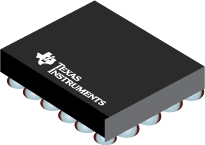
The Texas Instruments brand offers a PMIC - Voltage Regulators - Special Purpose chip. This chip belongs to the PMIC - Voltage Regulators - Special Purpose category. It comes in a 30-WFBGA, DSBGA package/case with 30 pins. The packaging is Tape & Reel (TR) and it is Pbfree. The Moisture Sensitivity Level (MSL) is 1 (Unlimited). The terminal position is at the bottom and the terminal form is a ball. The reflow temperature-max (s) is not specified. The chip has a height of 675μm and a width of 2.8mm.
LP8725TLE-B/NOPB Features
Widely used in Controller/Converter, Multimedia Processors applications
POWER SUPPLY SUPPORT CIRCUIT analog IC
LP8725TLE-B/NOPB Applications
Notebook Computer Displays
Mobile Radios
Broadband, Networking and Optical
Communications Infrastructure
Active Bus Termination
Digital TV's
Industrial controls
Digital Still Cameras
Termination
Personal Digital Assistants (PDAs)
LP8725TLE-B/NOPB More Descriptions
Power Management IC (PMIC)for Application/Multimedia Processors and Sub-Systems 30-DSBGA -40 to 85
IC REG CTRLR/CONV 9OUT 30DSBGA
Power Management Unit 30-Pin DS-BGA T/R
POWER SUPPLY SUPPORT CIRCUIT, FI
LP8725 POWER MANAGEMENT IC (PMIC