Factory Lead Time
6 Weeks
Mounting Type
Mounting Type refers to the method by which an electronic component is attached to a printed circuit board (PCB) or other surface. Common mounting types include:
* Through-hole: Component leads are inserted into holes in the PCB and soldered on the other side.
* Surface-mount: Component is placed on the surface of the PCB and soldered in place.
* Press-fit: Component is pressed into place on the PCB without soldering.
* Socket: Component is inserted into a socket on the PCB, allowing for easy replacement.
The mounting type is determined by factors such as the component's size, shape, and power requirements.
Surface Mount
Package / Case
Package / Case refers to the physical housing or enclosure that encapsulates an electronic component. It provides protection, facilitates handling, and enables electrical connections. The package type determines the component's size, shape, pin configuration, and mounting options. Common package types include DIP (dual in-line package), SOIC (small outline integrated circuit), and BGA (ball grid array). The package also influences the component's thermal and electrical performance.
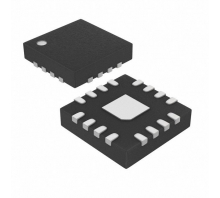
16-WQFN Exposed Pad
Operating Temperature
Operating Temperature is the range of temperatures at which an electronic component can function properly. It is typically specified in degrees Celsius (°C) and indicates the minimum and maximum temperatures at which the component can operate without experiencing damage or degradation. Operating Temperature is an important parameter to consider when designing electronic circuits, as it ensures that the components will function reliably in the intended operating environment.
-40°C~85°C TA
Part Status
Part Status is an electronic component parameter that indicates the availability and production status of a component. It is typically used to inform customers about the availability of a component, whether it is in production, end-of-life, or obsolete. Part Status can also provide information about any restrictions or limitations on the component's use, such as whether it is only available for certain applications or if it has been discontinued.
Active
Moisture Sensitivity Level (MSL)
Moisture Sensitivity Level (MSL) is a measure of the susceptibility of a surface mount electronic component to moisture-induced damage during soldering. It is classified into six levels, from 1 (least sensitive) to 6 (most sensitive). MSL is determined by the materials used in the component's construction, including the solderability of its terminals and the presence of moisture-absorbing materials. Components with higher MSL ratings require more stringent handling and storage conditions to prevent moisture absorption and subsequent damage during soldering.
1 (Unlimited)
Number of Terminations
16
Terminal Finish
Matte Tin (Sn)
Subcategory
Multiplexer or Switches
Technology
Technology, in the context of electronic components, refers to the specific manufacturing process and materials used to create the component. It encompasses the semiconductor fabrication techniques, such as the type of transistor used (e.g., MOSFET, BJT), the gate oxide thickness, and the interconnect materials. Technology also includes the packaging type, such as surface mount or through-hole, and the leadframe or substrate material. The technology used impacts the component's performance characteristics, such as speed, power consumption, and reliability.
CMOS
Peak Reflow Temperature (Cel)
260
Supply Voltage
Supply Voltage is the voltage required to power an electronic component. It is typically measured in volts (V) and is specified in the component's datasheet. The supply voltage must be within the specified range for the component to function properly. If the supply voltage is too low, the component may not function at all. If the supply voltage is too high, the component may be damaged.
3V
Reflow Temperature-Max (s)
30
Qualification Status
Not Qualified
Supply Voltage-Max (Vsup)
5.5V
Number of Channels
Number of Channels refers to the number of independent signal paths within an electronic component. It indicates how many separate signals can be processed or transmitted simultaneously. For example, an audio amplifier with two channels can amplify two separate audio signals, while a multi-channel data converter can convert multiple analog signals into digital data. The number of channels is a crucial parameter for determining the component's functionality and application.
2
Number of Circuits
Number of Circuits refers to the number of independent signal paths within an electronic component. It indicates how many separate circuits or channels the component can handle simultaneously. For example, an operational amplifier with a Number of Circuits of 2 can amplify two separate input signals independently. This parameter is crucial for determining the component's functionality and its suitability for specific applications.
2
3db Bandwidth
-3dB Bandwidth is a measure of the frequency range over which an electronic component or system maintains a specified level of performance. It is defined as the frequency at which the output power of the component or system has dropped by 3 decibels (dB) from its maximum value. The -3dB bandwidth is often used to characterize the frequency response of amplifiers, filters, and other electronic components.
250MHz
On-State Resistance (Max)
75Ohm
Multiplexer/Demultiplexer Circuit
A multiplexer (MUX) combines multiple input signals into a single output signal, while a demultiplexer (DEMUX) does the reverse, splitting a single input signal into multiple output signals. These circuits are used in various applications, such as data transmission, signal processing, and communication systems. Multiplexers allow for efficient use of transmission channels by combining multiple signals into a single stream, while demultiplexers enable the separation of signals that have been combined.
2:2
Off-state Isolation-Nom
76 dB
Current - Leakage (IS(off)) (Max)
500pA
Channel Capacitance (CS(off), CD(off))
8pF
On-state Resistance Match-Nom
2Ohm
Switch Circuit
Switch Circuit is an electronic component parameter that refers to the electrical circuit that controls the switching action of a switch. It includes the components and connections that determine the conditions under which the switch opens or closes, such as the type of switch, the voltage or current applied, and any additional circuitry for logic or protection. The switch circuit ensures that the switch operates reliably and efficiently within the intended application.
DPDT
Switch Time (Ton, Toff) (Max)
35ns, 20ns
Channel-to-Channel Matching (ΔRon)
2 Ω
Crosstalk
Crosstalk is an electronic component parameter that measures the unwanted transfer of energy from one circuit or channel to another. It is typically expressed in decibels (dB) and is a measure of the amount of interference that one signal causes on another. Crosstalk can be caused by a variety of factors, including capacitive coupling, inductive coupling, and electromagnetic interference. It can be a significant problem in high-speed electronic circuits, where it can cause errors and reduce the overall performance of the system.
-79dB @ 1MHz
Switching
BREAK-BEFORE-MAKE
Voltage - Supply, Single (V )
1.8V~5.5V
Height Seated (Max)
0.8mm
Length
Length, in the context of electronic components, refers to the physical dimension of a component along its longest axis. It is typically measured in millimeters (mm) or inches (in). Length is a crucial parameter for determining the physical size and space requirements of a component on a printed circuit board (PCB) or other assembly. It also affects the component's electrical characteristics, such as inductance and capacitance, which can be influenced by the length of conductors or traces within the component.
4mm
RoHS Status
ROHS3 Compliant
MAX4699ETE+ Overview
Surface Mount is a type of electronic component that is designed to be mounted directly onto a printed circuit board. This particular component has a YES surface mount feature, meaning it can be easily mounted onto a PCB. Another important aspect of this component is its operating temperature, which has a range of -40°C to 85°C TA. It is also worth noting that this component is Pbfree, as indicated by its yes Pbfree code. The Moisture Sensitivity Level (MSL) of this component is 1, which means it has an unlimited level of moisture sensitivity. Its Terminal Form is NO LEAD, meaning it does not have any lead terminals. This component has 2 channels and a 2:2 Multiplexer/Demultiplexer circuit. Its maximum current leakage is 500pA and it has a BREAK-BEFORE-MAKE switching mechanism. Lastly, it is important to mention that this component is ROHS3 Compliant, meaning it is environmentally friendly and does not contain any hazardous materials.
MAX4699ETE+ Features
2 Channels
Switch Circuit: DPDT
-3db Bandwidth: 250MHz
MAX4699ETE+ Applications
There are a lot of Maxim Integrated MAX4699ETE+ Analog Switches & Multiplexers ICs applications.
High-Voltage
Industrial
New designs requiring multiplexer functions
Avionics test equipment
Audio and video signal routing
ISDN NT1/TA
65 V DACs
Precision test equipment
Audio and video switching
MP3 players
MAX4699ETE+ More Descriptions
Low-Voltage, Dual DPDT/Quad SPDT Analog Switches in QFN
Analog Switch Dual DPDT 16-Pin TQFN EP
Low-Voltage, Dual DPDT/Quad SPAnalog Devices
IC SWITCH DPDT X 2 75OHM 16TQFN
Analog Switch ICs 2Ch DPDT Analog Switch
French Electronic Distributor since 1988