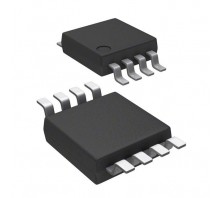
ON Semiconductor MC100EP16VTDT

Mfr.Part #:

MC100EP16VTDT

Manufacturer:

Description:
IC RCVR/DRVR ECL DIFF VAR 8TSSOP

RoHS Status:

RoHS

Datasheet:

Payment:

Payment

Delivery:

Delivery

Quick Request Quote

Do you want a lower wholesale price? Please send us an inquiry, and we will respond immediately.

Latest Posts

A switch solenoid converts electrical energy into mechanical movement by using a simple principle:...
Voltage controlled oscillator takes a voltage (like from a battery) and turns it into...
Types of computer cables: USB cables, HDMI cables, Ethernet cables, power cables,VGA and display
A potentiometer is like a dimmer switch for electronic devices - it controls the...
Security

Buy With Confidence

ISO 9001
ISO 9001
ISO 45001
ISO 45001
ISO 13485
ISO 13485
ISO 14001
ISO 14001
SMTA
ASA

Specifications

Product Details

Product Comparison

Mount
Surface Mount
Mounting Type

Mounting Type refers to the method by which an electronic component is attached to a printed circuit board (PCB) or other surface. Common mounting types include: * Through-hole: Component leads are inserted into holes in the PCB and soldered on the other side. * Surface-mount: Component is placed on the surface of the PCB and soldered in place. * Press-fit: Component is pressed into place on the PCB without soldering. * Socket: Component is inserted into a socket on the PCB, allowing for easy replacement. The mounting type is determined by factors such as the component's size, shape, and power requirements.

Surface Mount
Package / Case

Package / Case refers to the physical housing or enclosure that encapsulates an electronic component. It provides protection, facilitates handling, and enables electrical connections. The package type determines the component's size, shape, pin configuration, and mounting options. Common package types include DIP (dual in-line package), SOIC (small outline integrated circuit), and BGA (ball grid array). The package also influences the component's thermal and electrical performance.

8-TSSOP, 8-MSOP (0.118, 3.00mm Width)
Number of Pins

Number of Pins: Indicates the number of electrical connections available on the component. These pins are used to connect the component to other components or circuits on a printed circuit board (PCB). The number of pins determines the functionality and connectivity options of the component. It is important to ensure that the component has the correct number of pins for the intended application.

8
Operating Temperature

Operating Temperature is the range of temperatures at which an electronic component can function properly. It is typically specified in degrees Celsius (°C) and indicates the minimum and maximum temperatures at which the component can operate without experiencing damage or degradation. Operating Temperature is an important parameter to consider when designing electronic circuits, as it ensures that the components will function reliably in the intended operating environment.

-40°C~85°C
Packaging
Tube
Published
2008
Series

Series, in the context of electronic components, refers to the arrangement of components in a circuit. When components are connected in series, they form a single path for current to flow through. The total resistance of a series circuit is the sum of the individual resistances of each component. Series connections are often used to control the flow of current in a circuit, as the total resistance can be adjusted by changing the number or type of components in the series.

100EP
JESD-609 Code
e0
Part Status

Part Status is an electronic component parameter that indicates the availability and production status of a component. It is typically used to inform customers about the availability of a component, whether it is in production, end-of-life, or obsolete. Part Status can also provide information about any restrictions or limitations on the component's use, such as whether it is only available for certain applications or if it has been discontinued.

Obsolete
Moisture Sensitivity Level (MSL)

Moisture Sensitivity Level (MSL) is a measure of the susceptibility of a surface mount electronic component to moisture-induced damage during soldering. It is classified into six levels, from 1 (least sensitive) to 6 (most sensitive). MSL is determined by the materials used in the component's construction, including the solderability of its terminals and the presence of moisture-absorbing materials. Components with higher MSL ratings require more stringent handling and storage conditions to prevent moisture absorption and subsequent damage during soldering.

3 (168 Hours)
Number of Terminations
8
ECCN Code
EAR99
Terminal Finish
Tin/Lead (Sn/Pb)
Additional Feature
CAN ALSO OPERATE WITH -3V TO -5.5V SUPPLY IN NECL MODE
Subcategory
Line Driver or Receivers
Technology

Technology, in the context of electronic components, refers to the specific manufacturing process and materials used to create the component. It encompasses the semiconductor fabrication techniques, such as the type of transistor used (e.g., MOSFET, BJT), the gate oxide thickness, and the interconnect materials. Technology also includes the packaging type, such as surface mount or through-hole, and the leadframe or substrate material. The technology used impacts the component's performance characteristics, such as speed, power consumption, and reliability.

ECL
Terminal Position
DUAL
Terminal Form
GULL WING
Peak Reflow Temperature (Cel)
235
Number of Functions
1
Supply Voltage

Supply Voltage is the voltage required to power an electronic component. It is typically measured in volts (V) and is specified in the component's datasheet. The supply voltage must be within the specified range for the component to function properly. If the supply voltage is too low, the component may not function at all. If the supply voltage is too high, the component may be damaged.

3V~5.5V
Terminal Pitch
0.65mm
Reach Compliance Code
not_compliant
Reflow Temperature-Max (s)
NOT SPECIFIED
Base Part Number
100EP16
Pin Count
8
Qualification Status
Not Qualified
Operating Supply Voltage
5.5V
Power Supplies
-4.5V
Nominal Supply Current
48mA
Logic Function
AND, Receiver
Data Rate

Data rate, measured in bits per second (bps), is the rate at which data is transferred from one device to another. It is a measure of the speed of data transmission and is influenced by factors such as the bandwidth of the communication channel and the efficiency of the data encoding scheme. A higher data rate indicates faster data transfer, allowing for the transmission of more data in a given amount of time.

4 Tbps
Logic Type

Logic Type refers to the type of logic implemented by an electronic component, such as a logic gate or flip-flop.

Differential Receiver/Driver
Differential Output

Differential Output is a parameter that describes the output signal of an electronic component. It refers to the difference in voltage or current between two output terminals. Differential outputs are commonly used in high-speed circuits and applications where noise immunity is important. By transmitting the signal as a differential pair, the common-mode noise is canceled out, resulting in a more robust and reliable signal.

YES
Interface IC Type
LINE TRANSCEIVER
Driver Number of Bits
1
Interface Standard
GENERAL PURPOSE
Receive Delay-Max
0.35 ns
Negative Supply Voltage-Nom
-4.5V
Transmit Delay-Max
0.35 ns
Number of Receivers
1
Length

Length, in the context of electronic components, refers to the physical dimension of a component along its longest axis. It is typically measured in millimeters (mm) or inches (in). Length is a crucial parameter for determining the physical size and space requirements of a component on a printed circuit board (PCB) or other assembly. It also affects the component's electrical characteristics, such as inductance and capacitance, which can be influenced by the length of conductors or traces within the component.

3mm
Width
3mm
RoHS Status
Non-RoHS Compliant
Lead Free
Contains Lead
Description
The MC100EP16VT is a differential receiver/driver that is functionally equivalent to the 100EP16. It features input pins that control the amplitude of the outputs and provide an internal termination network.

Features
220 ps propagation delay
Maximum frequency > 4 GHz typical
Temperature compensation
PECL mode operating range: Vcc = 3.0 V to 5.5 V with VEE = 0 V
NECL mode operating range: Vcc = 0 V with VEE = -3.0 V to -5.5 V
Open input default state
50 Ω internal termination resistor

Applications
High-speed data transmission
Clock distribution
Level translation
Signal conditioning
No Product Comparison

Recommended Offers

Texas Instruments
LM4051CIM3-ADJ/NOPB
Fairchild/ON Semiconductor
KA431SAMF2TF
Active-Semi International Inc.
ACT8810QJ3EB-T
Maxim Integrated
MAX1765EUE
Analog Devices Inc.
AD5170BRM10-RL7
Texas Instruments
TPS65233RTER
Maxim Integrated
DS1867E-050+T&R
STMicroelectronics
STOD03BTPUR
Linear Technology
LTC4367CDD#TRPBF
STMicroelectronics
STLUX325ATR
Maxim Integrated
MAX8667ETEAC+T
Rohm Semiconductor
BD8151EFV-E2