Factory Lead Time
16 Weeks
Mounting Type
Mounting Type refers to the method by which an electronic component is attached to a printed circuit board (PCB) or other surface. Common mounting types include:
* Through-hole: Component leads are inserted into holes in the PCB and soldered on the other side.
* Surface-mount: Component is placed on the surface of the PCB and soldered in place.
* Press-fit: Component is pressed into place on the PCB without soldering.
* Socket: Component is inserted into a socket on the PCB, allowing for easy replacement.
The mounting type is determined by factors such as the component's size, shape, and power requirements.
Surface Mount
Package / Case
Package / Case refers to the physical housing or enclosure that encapsulates an electronic component. It provides protection, facilitates handling, and enables electrical connections. The package type determines the component's size, shape, pin configuration, and mounting options. Common package types include DIP (dual in-line package), SOIC (small outline integrated circuit), and BGA (ball grid array). The package also influences the component's thermal and electrical performance.
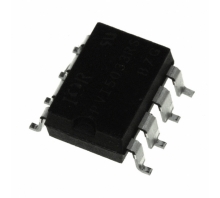
8-SMD, Gull Wing
Operating Temperature
Operating Temperature is the range of temperatures at which an electronic component can function properly. It is typically specified in degrees Celsius (°C) and indicates the minimum and maximum temperatures at which the component can operate without experiencing damage or degradation. Operating Temperature is an important parameter to consider when designing electronic circuits, as it ensures that the components will function reliably in the intended operating environment.
-40°C~85°C
Packaging
Tape & Reel (TR)
Series
Series, in the context of electronic components, refers to the arrangement of components in a circuit. When components are connected in series, they form a single path for current to flow through. The total resistance of a series circuit is the sum of the individual resistances of each component. Series connections are often used to control the flow of current in a circuit, as the total resistance can be adjusted by changing the number or type of components in the series.
PVI
Part Status
Part Status is an electronic component parameter that indicates the availability and production status of a component. It is typically used to inform customers about the availability of a component, whether it is in production, end-of-life, or obsolete. Part Status can also provide information about any restrictions or limitations on the component's use, such as whether it is only available for certain applications or if it has been discontinued.
Last Time Buy
Moisture Sensitivity Level (MSL)
Moisture Sensitivity Level (MSL) is a measure of the susceptibility of a surface mount electronic component to moisture-induced damage during soldering. It is classified into six levels, from 1 (least sensitive) to 6 (most sensitive). MSL is determined by the materials used in the component's construction, including the solderability of its terminals and the presence of moisture-absorbing materials. Components with higher MSL ratings require more stringent handling and storage conditions to prevent moisture absorption and subsequent damage during soldering.
4 (72 Hours)
Terminal Finish
Matte Tin (Sn)
Voltage - Isolation
Voltage - Isolation refers to the maximum voltage that can be applied between two points in an electronic component without causing electrical breakdown. It is a measure of the component's ability to withstand high voltages without allowing current to flow between the points. A higher voltage isolation rating indicates that the component can withstand higher voltages without failing.
3750Vrms
Output Type
Output type refers to the type of signal or power that an electronic component can produce. It can be analog or digital, AC or DC, and can vary in voltage, current, or power levels. The output type is determined by the component's design and is crucial for matching it with other components in a circuit. Understanding the output type ensures proper signal processing, power delivery, and overall system functionality.
Photovoltaic
Number of Channels
Number of Channels refers to the number of independent signal paths within an electronic component. It indicates how many separate signals can be processed or transmitted simultaneously. For example, an audio amplifier with two channels can amplify two separate audio signals, while a multi-channel data converter can convert multiple analog signals into digital data. The number of channels is a crucial parameter for determining the component's functionality and application.
2
Input Type
Input Type refers to the type of signal that an electronic component can accept as input.
DC
Optoelectronic Device Type
OPTOELECTRONIC DEVICE
Current - Output / Channel
1μA
Voltage - Output (Max)
8V
Turn On / Turn Off Time (Typ)
5ms, 250μs (Max)
RoHS Status
ROHS3 Compliant
PVI5013RS-TPBF OverviewThis product is manufactured by Infineon Technologies and belongs to the category of Optoisolators - Transistor, Photovoltaic Output. The images we provide are for reference only, for detailed product information please see specification sheet PVI5013RS-TPBF or the datasheet in PDF format. As a professional electronic components distributor, Zeano has five million electronic components available. Additionally, we have over 500,000 electronic components in stock ready for immediate shipment. If you have requirements, you can send us a quotation form to get the price of PVI5013RS-TPBF. We attach great importance to our customers' purchasing experience and are willing to establish a long-term cooperative relationship with you. If you have any questions or requirements, please feel free to contact us.
PVI5013RS-TPBF More Descriptions
Optocoupler DC-IN 2-CH Photovoltaic DC-OUT 8-Pin PDIP SMT T/R
2 Form A Photovoltaic Isolator in a 8-pin SMT package, SMT8, RoHSInfineon SCT
Photodiode Output Optocouplers 2 Form A Photo Voltaic Isolato
OPTOCOUPLER PHOTVO 3.75KVRMS SMD
OPTOISO 3.75KV 2CH PHVOLT 8-SMT
MOSFET Relay; Relay Terminals:SMD; Contacts:DPST-NO; Leaded Process Compatible:Yes; Load Current:10µA; Peak Reflow Compatible (260 C):Yes ;RoHS Compliant: Yes