Mounting Type
Mounting Type refers to the method by which an electronic component is attached to a printed circuit board (PCB) or other surface. Common mounting types include:
* Through-hole: Component leads are inserted into holes in the PCB and soldered on the other side.
* Surface-mount: Component is placed on the surface of the PCB and soldered in place.
* Press-fit: Component is pressed into place on the PCB without soldering.
* Socket: Component is inserted into a socket on the PCB, allowing for easy replacement.
The mounting type is determined by factors such as the component's size, shape, and power requirements.
Surface Mount
Package / Case
Package / Case refers to the physical housing or enclosure that encapsulates an electronic component. It provides protection, facilitates handling, and enables electrical connections. The package type determines the component's size, shape, pin configuration, and mounting options. Common package types include DIP (dual in-line package), SOIC (small outline integrated circuit), and BGA (ball grid array). The package also influences the component's thermal and electrical performance.
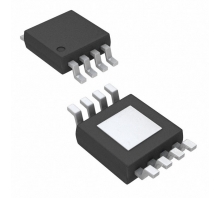
8-SOIC (0.154, 3.90mm Width) Exposed Pad
Operating Temperature
Operating Temperature is the range of temperatures at which an electronic component can function properly. It is typically specified in degrees Celsius (°C) and indicates the minimum and maximum temperatures at which the component can operate without experiencing damage or degradation. Operating Temperature is an important parameter to consider when designing electronic circuits, as it ensures that the components will function reliably in the intended operating environment.
-40°C~85°C TA
Part Status
Part Status is an electronic component parameter that indicates the availability and production status of a component. It is typically used to inform customers about the availability of a component, whether it is in production, end-of-life, or obsolete. Part Status can also provide information about any restrictions or limitations on the component's use, such as whether it is only available for certain applications or if it has been discontinued.
Discontinued
Moisture Sensitivity Level (MSL)
Moisture Sensitivity Level (MSL) is a measure of the susceptibility of a surface mount electronic component to moisture-induced damage during soldering. It is classified into six levels, from 1 (least sensitive) to 6 (most sensitive). MSL is determined by the materials used in the component's construction, including the solderability of its terminals and the presence of moisture-absorbing materials. Components with higher MSL ratings require more stringent handling and storage conditions to prevent moisture absorption and subsequent damage during soldering.
3 (168 Hours)
Subcategory
Switching Regulator or Controllers
Function
Function refers to the primary purpose or role of an electronic component within a circuit. It describes the specific task or operation that the component is designed to perform. For example, a resistor's function is to limit current flow, a capacitor's function is to store electrical energy, and a transistor's function is to amplify or switch signals. Understanding the function of a component is crucial for selecting the appropriate component for a particular application and ensuring its proper operation within the circuit.
Step-Down
Number of Outputs
Number of Outputs refers to the number of independent output signals or channels that an electronic component can provide. It indicates the capability of the component to drive multiple external devices or circuits simultaneously. A higher number of outputs allows for greater flexibility and connectivity in electronic systems.
1
Qualification Status
Not Qualified
Voltage - Input (Max)
5.5V
Output Voltage
Output Voltage is the voltage level produced by an electronic component when it is operating. It is typically measured in volts (V) and can be either positive or negative. The output voltage of a component is determined by its design and the input voltage applied to it. For example, a voltage regulator will produce a fixed output voltage regardless of the input voltage, while an amplifier will produce an output voltage that is proportional to the input voltage.
5V
Output Type
Output type refers to the type of signal or power that an electronic component can produce. It can be analog or digital, AC or DC, and can vary in voltage, current, or power levels. The output type is determined by the component's design and is crucial for matching it with other components in a circuit. Understanding the output type ensures proper signal processing, power delivery, and overall system functionality.
Adjustable
Voltage - Input (Min)
2.7V
Output Configuration
Output Configuration refers to the arrangement of output terminals or pins on an electronic component. It specifies the number, type, and arrangement of these terminals, allowing for various connection options. This parameter is crucial for determining the component's compatibility with other devices and ensuring proper signal flow within a circuit.
Positive
Voltage - Output (Min/Fixed)
0.8V
Control Mode
CURRENT-MODE
Frequency - Switching
200kHz~2MHz
Synchronous Rectifier
Yes
RoHS Status
ROHS3 Compliant
Description
The RT8062 is a high-efficiency synchronous step-down DC/DC converter with an input voltage range of 2.7V to 5.5V. It provides an adjustable regulated output voltage from 0.8V to 5V and delivers up to 2A of output current. The internal synchronous low on-resistance power switches increase efficiency and eliminate the need for an external Schottky diode. The default switching frequency is set at 2MHz, but can be varied from 200kHz to 2MHz by adding an external resistor. Current mode operation with external compensation allows for optimized transient response over a wide range of loads and output capacitors.
Features
High efficiency: Up to 95%
Adjustable frequency: 200kHz to 2MHz
No Schottky diode required
0.8V reference allows low output voltage
Low dropout operation: 100% duty cycle
Enable function
Internal soft-start
RoHS compliant and halogen free
Applications
LCD TVs and monitors
Notebook computers
Distributed power systems
IP phones
Digital cameras