Factory Lead Time
20 Weeks
Mounting Type
Mounting Type refers to the method by which an electronic component is attached to a printed circuit board (PCB) or other surface. Common mounting types include:
* Through-hole: Component leads are inserted into holes in the PCB and soldered on the other side.
* Surface-mount: Component is placed on the surface of the PCB and soldered in place.
* Press-fit: Component is pressed into place on the PCB without soldering.
* Socket: Component is inserted into a socket on the PCB, allowing for easy replacement.
The mounting type is determined by factors such as the component's size, shape, and power requirements.
Surface Mount
Package / Case
Package / Case refers to the physical housing or enclosure that encapsulates an electronic component. It provides protection, facilitates handling, and enables electrical connections. The package type determines the component's size, shape, pin configuration, and mounting options. Common package types include DIP (dual in-line package), SOIC (small outline integrated circuit), and BGA (ball grid array). The package also influences the component's thermal and electrical performance.
Nonstandard, Corner Terminals
Terminal Shape
WRAPAROUND
Number of Pins
Number of Pins: Indicates the number of electrical connections available on the component. These pins are used to connect the component to other components or circuits on a printed circuit board (PCB). The number of pins determines the functionality and connectivity options of the component. It is important to ensure that the component has the correct number of pins for the intended application.
2
Shape/Size Description
RECTANGULAR PACKAGE
Operating Temperature
Operating Temperature is the range of temperatures at which an electronic component can function properly. It is typically specified in degrees Celsius (°C) and indicates the minimum and maximum temperatures at which the component can operate without experiencing damage or degradation. Operating Temperature is an important parameter to consider when designing electronic circuits, as it ensures that the components will function reliably in the intended operating environment.
-40°C~125°C
Packaging
Tape & Reel (TR)
Series
Series, in the context of electronic components, refers to the arrangement of components in a circuit. When components are connected in series, they form a single path for current to flow through. The total resistance of a series circuit is the sum of the individual resistances of each component. Series connections are often used to control the flow of current in a circuit, as the total resistance can be adjusted by changing the number or type of components in the series.
SRR0603
Size / Dimension
0.256Lx0.256W 6.50mmx6.50mm
Tolerance
Tolerance in electronic components refers to the allowable deviation from the specified value. It indicates the range within which the actual value of the component can vary while still meeting the manufacturer's specifications. Tolerance is typically expressed as a percentage of the nominal value, such as ±5% or ±10%. A lower tolerance indicates a tighter range of acceptable values, resulting in more precise and consistent performance.
±10%
Part Status
Part Status is an electronic component parameter that indicates the availability and production status of a component. It is typically used to inform customers about the availability of a component, whether it is in production, end-of-life, or obsolete. Part Status can also provide information about any restrictions or limitations on the component's use, such as whether it is only available for certain applications or if it has been discontinued.
Active
Moisture Sensitivity Level (MSL)
Moisture Sensitivity Level (MSL) is a measure of the susceptibility of a surface mount electronic component to moisture-induced damage during soldering. It is classified into six levels, from 1 (least sensitive) to 6 (most sensitive). MSL is determined by the materials used in the component's construction, including the solderability of its terminals and the presence of moisture-absorbing materials. Components with higher MSL ratings require more stringent handling and storage conditions to prevent moisture absorption and subsequent damage during soldering.
1 (Unlimited)
Termination
Termination refers to the electrical characteristics of a component or circuit at its input or output terminals. It describes how the component or circuit interacts with external signals or devices. Termination can involve matching impedance, providing voltage or current regulation, or filtering unwanted signals. Proper termination ensures efficient signal transfer, minimizes reflections, and prevents damage to components. It is crucial for maintaining signal integrity and optimizing circuit performance.
SMD/SMT
Terminal Finish
Tin (Sn) - with Nickel (Ni) barrier
Current Rating
Current Rating is the maximum amount of current that an electronic component can safely handle without overheating or failing. It is typically expressed in amperes (A) or milliamperes (mA). Exceeding the current rating can damage the component and potentially create a safety hazard. The current rating is determined by the physical characteristics of the component, such as its size, material, and construction.
180mA
Inductance
Inductance is a property of an electrical conductor that opposes changes in current flow. It is measured in henrys (H) and is represented by the symbol L. Inductance is caused by the magnetic field generated by the current flowing through the conductor. When the current changes, the magnetic field also changes, which induces an electromotive force (EMF) in the conductor. This EMF opposes the change in current flow.
330μH
Test Frequency
Test Frequency refers to the frequency at which an electronic component is tested to ensure it meets its specified performance parameters. It is typically expressed in Hertz (Hz) and represents the frequency range over which the component is tested. This parameter is important for ensuring the component's reliability and performance under different operating conditions.
1kHz
DC Resistance (DCR)
DC Resistance (DCR) is a measure of the resistance of an electrical component to the flow of direct current (DC). It is typically measured in ohms (Ω) and is an important parameter for understanding the behavior of electrical components. DCR can affect the efficiency, power consumption, and overall performance of a circuit. It is often used to characterize inductors, capacitors, and other components that have a resistive element.
4.2Ohm Max
Frequency - Self Resonant
4.5MHz
Inductor Application
POWER INDUCTOR
Terminal Placement
DUAL ENDED
Q @ Freq
Q @ Freq is a parameter that describes the quality factor of an electronic component at a specific frequency. It is a measure of the component's ability to store and release energy, and is typically expressed as a ratio of the component's reactance to its resistance. A higher Q factor indicates a more efficient component, with less energy loss. Q @ Freq is important for understanding the performance of electronic circuits, as it can affect factors such as bandwidth, selectivity, and stability.
18 @ 796kHz
Quality Factor-Min (at L-nom)
18
Current - Saturation
240mA
Special Feature
Q MEASURED AT 0.796 MHZ
Height
Height, in the context of electronic components, refers to the vertical dimension of the component. It is typically measured in millimeters (mm) or inches (in). Height is an important parameter to consider when designing and assembling electronic circuits, as it affects the overall size and form factor of the device. Components with a smaller height are often preferred for applications where space is limited, such as in portable devices or embedded systems.
3.3mm
Height Seated (Max)
0.130 3.30mm
RoHS Status
ROHS3 Compliant
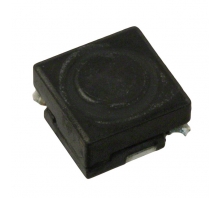
SRR0603-331KL OverviewThis product is manufactured by Bourns Inc. and belongs to the category of Fixed Inductors. The images we provide are for reference only, for detailed product information please see specification sheet SRR0603-331KL or the datasheet in PDF format. As a professional electronic components distributor, Zeano has five million electronic components available. Additionally, we have over 500,000 electronic components in stock ready for immediate shipment. If you have requirements, you can send us a quotation form to get the price of SRR0603-331KL. We attach great importance to our customers' purchasing experience and are willing to establish a long-term cooperative relationship with you. If you have any questions or requirements, please feel free to contact us.
SRR0603-331KL More Descriptions
Inductor Power Shielded Wirewound 330uH 10% 1KHz 18Q-Factor Ferrite 0.18A 4.2Ohm DCR T/R
General Purpose Inductor, 330uH, 10%, 1 Element, Ferrite-Core, SMD, 2626
INDUCTOR, SMD SHIELDED POWER, LOW PROFILE, Q NOM 18, SRF 4.5MHZ, 330 /-20%L UH
Power Inductor (SMD), 330 uH, ± 10%, 180 mA, Shielded, 240 mA, 6.5mm x 6.5mm x 3.1mm
Inductor, Shielded, 330Uh, 240Ma, Smd, Full Reel; Inductance:330Μh; Rms Current (Irms):180Ma; Inductor Construction:Shielded; Saturation Current (Isat):240Ma; Product Range:Srr0603 Series; Inductor Case/Package:- Rohs Compliant: Yes |Bourns SRR0603-331KL