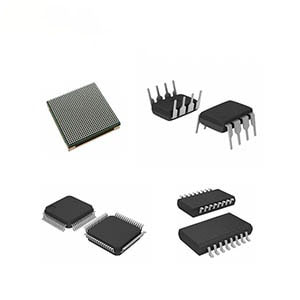
Mounting Type
Mounting Type refers to the method by which an electronic component is attached to a printed circuit board (PCB) or other surface. Common mounting types include:
* Through-hole: Component leads are inserted into holes in the PCB and soldered on the other side.
* Surface-mount: Component is placed on the surface of the PCB and soldered in place.
* Press-fit: Component is pressed into place on the PCB without soldering.
* Socket: Component is inserted into a socket on the PCB, allowing for easy replacement.
The mounting type is determined by factors such as the component's size, shape, and power requirements.
Surface Mount
Package / Case
Package / Case refers to the physical housing or enclosure that encapsulates an electronic component. It provides protection, facilitates handling, and enables electrical connections. The package type determines the component's size, shape, pin configuration, and mounting options. Common package types include DIP (dual in-line package), SOIC (small outline integrated circuit), and BGA (ball grid array). The package also influences the component's thermal and electrical performance.
28-PowerTSSOP (0.173, 4.40mm Width)
Number of Pins
Number of Pins: Indicates the number of electrical connections available on the component. These pins are used to connect the component to other components or circuits on a printed circuit board (PCB). The number of pins determines the functionality and connectivity options of the component. It is important to ensure that the component has the correct number of pins for the intended application.
28
Operating Temperature
Operating Temperature is the range of temperatures at which an electronic component can function properly. It is typically specified in degrees Celsius (°C) and indicates the minimum and maximum temperatures at which the component can operate without experiencing damage or degradation. Operating Temperature is an important parameter to consider when designing electronic circuits, as it ensures that the components will function reliably in the intended operating environment.
0°C~125°C
Part Status
Part Status is an electronic component parameter that indicates the availability and production status of a component. It is typically used to inform customers about the availability of a component, whether it is in production, end-of-life, or obsolete. Part Status can also provide information about any restrictions or limitations on the component's use, such as whether it is only available for certain applications or if it has been discontinued.
Obsolete
Moisture Sensitivity Level (MSL)
Moisture Sensitivity Level (MSL) is a measure of the susceptibility of a surface mount electronic component to moisture-induced damage during soldering. It is classified into six levels, from 1 (least sensitive) to 6 (most sensitive). MSL is determined by the materials used in the component's construction, including the solderability of its terminals and the presence of moisture-absorbing materials. Components with higher MSL ratings require more stringent handling and storage conditions to prevent moisture absorption and subsequent damage during soldering.
2 (1 Year)
Number of Terminations
28
Applications
Controller, DSP
Subcategory
Switching Regulator or Controllers
Peak Reflow Temperature (Cel)
NOT SPECIFIED
Reflow Temperature-Max (s)
NOT SPECIFIED
Number of Outputs
Number of Outputs refers to the number of independent output signals or channels that an electronic component can provide. It indicates the capability of the component to drive multiple external devices or circuits simultaneously. A higher number of outputs allows for greater flexibility and connectivity in electronic systems.
1
Qualification Status
Not Qualified
Analog IC - Other Type
SWITCHING CONTROLLER
Voltage - Input
11.4V~13V
Output Current
Output Current is the maximum amount of current that an electronic component can deliver to a load without exceeding its specified operating limits. It is typically measured in amperes (A) or milliamperes (mA). Output Current is a critical parameter for selecting electronic components, as it determines the amount of power that the component can provide to a load.
400μA
Control Mode
CURRENT-MODE
Control Technique
HYSTERETIC CURRENT MODE
Switcher Configuration
BUCK
Switching Frequency-Max
200kHz
Length
Length, in the context of electronic components, refers to the physical dimension of a component along its longest axis. It is typically measured in millimeters (mm) or inches (in). Length is a crucial parameter for determining the physical size and space requirements of a component on a printed circuit board (PCB) or other assembly. It also affects the component's electrical characteristics, such as inductance and capacitance, which can be influenced by the length of conductors or traces within the component.
9.7mm
RoHS Status
Non-RoHS Compliant
TPS5625PWP Overview
Texas Instruments is a well-known and reputable brand in the electronic industry, known for its high-quality and reliable products. One of its latest offerings is the PMIC - Voltage Regulators - Special Purpose chip, which falls under the PMIC - Voltage Regulators - Special Purpose category. This chip is designed to regulate voltage and provide stable power supply to electronic devices, making it an essential component in various applications.
When it comes to the technical specifications, the Texas Instruments PMIC chip offers a surface mount mounting type, allowing for easy and efficient installation on circuit boards. It has 28 pins, providing multiple connection points for a secure and stable connection. The operating temperature range for this chip is 0°C~125°C, making it suitable for use in a wide range of environments and conditions.
In terms of packaging, the chip comes in a tube packaging, ensuring its protection during transportation and storage. The terminal position for this chip is DUAL, which means it has two terminals for input and output connections. The peak reflow temperature and reflow temperature-max are not specified, indicating that this chip can withstand high temperatures without any adverse effects on its performance.
The Texas Instruments PMIC chip is an analog IC - Other Type, specifically a SWITCHING CONTROLLER. This means that it uses a switching mechanism to regulate and control the output voltage, making it highly efficient and reliable. The voltage input range for this chip is 11.4V~13V, providing a stable and consistent power supply to electronic devices. Additionally, it has a maximum switching frequency of 200kHz, ensuring fast and accurate voltage regulation.
In conclusion, the Texas Instruments PMIC - Voltage Regulators - Special Purpose chip is a top-of-the-line product that offers excellent performance and reliability. With its surface mount mounting type, 28 pins, wide operating temperature range, and other impressive specifications, it is a versatile and essential component in various electronic applications. Its brand reputation and technical parameters make it a preferred choice for engineers and manufacturers worldwide.
TPS5625PWP Features
Widely used in Controller, DSP applications
SWITCHING CONTROLLER analog IC
TPS5625PWP Applications
There are a lot of Texas Instruments TPS5625PWP Specialized Voltage Regulators applications.
Optical Receivers and Modules
LCD-Bias Contrast Control
Server DDR Power
Printers
Digital TV's
Continuously Adjustable GaAsFET Bias
Graphics Processor Core Supplies
TFT Active-Matrix LCD Displays
Distributed power architectures (24 V/48 V bus)
Notebook
TPS5625PWP More Descriptions
IC REG CTRLR DSP 1OUT 28HTSSOP
Regulators - Non-Isolated Switching DC/DC High Current Synch Buck Controller
DC DC CNTRLR SGL-OUT SYNC BUCK 11.4V TO 13V 28HTSSOP
Controller IC; No. of Pins:28; Leaded Process Compatible:Yes; Package/Case:28-TSSOP; Peak Reflow Compatible (260 C):Yes; Mounting Type:Surface Mount ;RoHS Compliant: Yes