Factory Lead Time
6 Weeks
Lifecycle Status
ACTIVE (Last Updated: 6 days ago)
Mounting Type
Mounting Type refers to the method by which an electronic component is attached to a printed circuit board (PCB) or other surface. Common mounting types include:
* Through-hole: Component leads are inserted into holes in the PCB and soldered on the other side.
* Surface-mount: Component is placed on the surface of the PCB and soldered in place.
* Press-fit: Component is pressed into place on the PCB without soldering.
* Socket: Component is inserted into a socket on the PCB, allowing for easy replacement.
The mounting type is determined by factors such as the component's size, shape, and power requirements.
Surface Mount
Package / Case
Package / Case refers to the physical housing or enclosure that encapsulates an electronic component. It provides protection, facilitates handling, and enables electrical connections. The package type determines the component's size, shape, pin configuration, and mounting options. Common package types include DIP (dual in-line package), SOIC (small outline integrated circuit), and BGA (ball grid array). The package also influences the component's thermal and electrical performance.
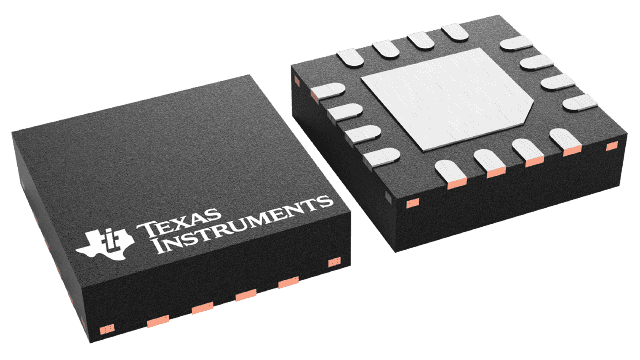
16-WFQFN Exposed Pad
Number of Pins
Number of Pins: Indicates the number of electrical connections available on the component. These pins are used to connect the component to other components or circuits on a printed circuit board (PCB). The number of pins determines the functionality and connectivity options of the component. It is important to ensure that the component has the correct number of pins for the intended application.
16
Operating Temperature
Operating Temperature is the range of temperatures at which an electronic component can function properly. It is typically specified in degrees Celsius (°C) and indicates the minimum and maximum temperatures at which the component can operate without experiencing damage or degradation. Operating Temperature is an important parameter to consider when designing electronic circuits, as it ensures that the components will function reliably in the intended operating environment.
-40°C~85°C
Packaging
Tape & Reel (TR)
Part Status
Part Status is an electronic component parameter that indicates the availability and production status of a component. It is typically used to inform customers about the availability of a component, whether it is in production, end-of-life, or obsolete. Part Status can also provide information about any restrictions or limitations on the component's use, such as whether it is only available for certain applications or if it has been discontinued.
Active
Moisture Sensitivity Level (MSL)
Moisture Sensitivity Level (MSL) is a measure of the susceptibility of a surface mount electronic component to moisture-induced damage during soldering. It is classified into six levels, from 1 (least sensitive) to 6 (most sensitive). MSL is determined by the materials used in the component's construction, including the solderability of its terminals and the presence of moisture-absorbing materials. Components with higher MSL ratings require more stringent handling and storage conditions to prevent moisture absorption and subsequent damage during soldering.
2 (1 Year)
Number of Terminations
16
Terminal Finish
Nickel/Palladium/Gold (Ni/Pd/Au)
Applications
Converter, Satellite Set-Top Box Designs
Supply Voltage
Supply Voltage is the voltage required to power an electronic component. It is typically measured in volts (V) and is specified in the component's datasheet. The supply voltage must be within the specified range for the component to function properly. If the supply voltage is too low, the component may not function at all. If the supply voltage is too high, the component may be damaged.
12V
Base Part Number
TPS65233
Number of Outputs
Number of Outputs refers to the number of independent output signals or channels that an electronic component can provide. It indicates the capability of the component to drive multiple external devices or circuits simultaneously. A higher number of outputs allows for greater flexibility and connectivity in electronic systems.
1
Output Type
Output type refers to the type of signal or power that an electronic component can produce. It can be analog or digital, AC or DC, and can vary in voltage, current, or power levels. The output type is determined by the component's design and is crucial for matching it with other components in a circuit. Understanding the output type ensures proper signal processing, power delivery, and overall system functionality.
Fixed
Operating Supply Voltage
20V
Polarity
Polarity refers to the direction of current flow through an electronic component. It is typically indicated by a plus (+) or minus (-) sign on the component's body. Components with polarity must be connected correctly in a circuit to function properly. For example, a diode will only allow current to flow in one direction, from the positive terminal to the negative terminal. If a diode is connected backwards, it will not conduct current.
Positive
Number of Channels
Number of Channels refers to the number of independent signal paths within an electronic component. It indicates how many separate signals can be processed or transmitted simultaneously. For example, an audio amplifier with two channels can amplify two separate audio signals, while a multi-channel data converter can convert multiple analog signals into digital data. The number of channels is a crucial parameter for determining the component's functionality and application.
1
Analog IC - Other Type
POWER SUPPLY SUPPORT CIRCUIT
Quiescent Current
Quiescent current is the amount of current drawn by an electronic component when it is not actively performing its intended function. It is typically measured in milliamps (mA) or microamps (µA). Quiescent current is important because it can affect the overall power consumption of a circuit, especially in battery-powered devices. Components with high quiescent current can drain batteries more quickly than those with low quiescent current.
10.5mA
Voltage - Output
13.4V 18.6V
Threshold Voltage
Threshold Voltage (Vth) is a critical parameter in electronic components, particularly transistors. It represents the minimum voltage that must be applied to the gate terminal of a transistor to turn it on and allow current to flow between the source and drain terminals. Vth determines the sensitivity of a transistor and influences its switching characteristics. A lower Vth results in a more sensitive transistor that turns on with a smaller gate voltage, while a higher Vth makes the transistor less sensitive and requires a larger gate voltage to turn on.
1.15V
Switching Frequency-Max
528kHz
Height
Height, in the context of electronic components, refers to the vertical dimension of the component. It is typically measured in millimeters (mm) or inches (in). Height is an important parameter to consider when designing and assembling electronic circuits, as it affects the overall size and form factor of the device. Components with a smaller height are often preferred for applications where space is limited, such as in portable devices or embedded systems.
800μm
Length
Length, in the context of electronic components, refers to the physical dimension of a component along its longest axis. It is typically measured in millimeters (mm) or inches (in). Length is a crucial parameter for determining the physical size and space requirements of a component on a printed circuit board (PCB) or other assembly. It also affects the component's electrical characteristics, such as inductance and capacitance, which can be influenced by the length of conductors or traces within the component.
3mm
Thickness
Thickness, in the context of electronic components, refers to the vertical distance between two opposing surfaces of a component. It is typically measured in millimeters (mm) or inches (in). Thickness is a crucial parameter that affects the component's physical dimensions, weight, and performance characteristics. It influences factors such as heat dissipation, electrical insulation, and mechanical stability. Thinner components generally offer better heat dissipation and space efficiency, while thicker components may provide enhanced durability and structural integrity.
750μm
RoHS Status
ROHS3 Compliant
TPS65233-1RTET Overview
The device in question has a total of 16 pins, each with a terminal pitch of 0.5mm and a height of 800μm. The JESD-609 Code for this device is e4, indicating its compliance with industry standards. The terminal position for each pin is QUAD, meaning that they are arranged in a square pattern. The device has a maximum output current of 1A and a positive polarity. Its length is 3mm and its thickness is 750μm. These specifications make it suitable for a variety of electronic applications, providing a compact and efficient solution for power and signal transmission. With its standardized code and precise measurements, this device offers reliability and compatibility for use in a wide range of electronic systems.
TPS65233-1RTET Features
Widely used in Converter, Satellite Set-Top Box Designs applications
POWER SUPPLY SUPPORT CIRCUIT analog IC
Supply voltage: 20V
TPS65233-1RTET Applications
There are a lot of Texas Instruments TPS65233-1RTET Specialized Voltage Regulators applications.
Cell Phones
LCD Bias Generators
SDRAM Termination Voltage for DDR?2 / DDR?3
LCD-TV/PDP-TV
Digital-Still Cameras
Set Top Box
PDAs and Mobile Communicators
Graphics Cards
Digital TV
Desktop Computer
TPS65233-1RTET More Descriptions
LNB Voltage Regulator with 1MHz,I2C Interface Power Management IC (PMIC) 16-WQFN -40 to 85
Power Management IC 4.5V to 20V 16-Pin WQFN EP T/R
TEXAS INSTRUMENTS - TPS65233-1RTET - REG. TENSIONE LNB, 18.6V, WQFN-16
LDO Regulator Pos 18.6V 1A 16-Pin WQFN T/R
Operational Amplifiers - Op Amps Dual General-Purpose Op Amp
LNB VOLTAGE REG, 18.6V, WQFN-16
IC REG CONV SATELLIT 1OUT 16WQFN
LNB VOLTAGE REG, 18.6V, WQFN-16; Tension, alimentation: 20V; Nombre de convertisseurs DC-DC abaisseurs: -; Nombre de régulateurs LDO: 1; Nombre de sorties régulées: 1; Boîtier de CI numérique: WQFN; Nombre de broches: 16Broche