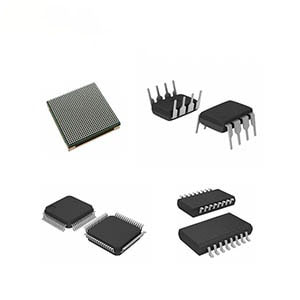
Package / Case
Package / Case refers to the physical housing or enclosure that encapsulates an electronic component. It provides protection, facilitates handling, and enables electrical connections. The package type determines the component's size, shape, pin configuration, and mounting options. Common package types include DIP (dual in-line package), SOIC (small outline integrated circuit), and BGA (ball grid array). The package also influences the component's thermal and electrical performance.
VQFN
Number of Pins
Number of Pins: Indicates the number of electrical connections available on the component. These pins are used to connect the component to other components or circuits on a printed circuit board (PCB). The number of pins determines the functionality and connectivity options of the component. It is important to ensure that the component has the correct number of pins for the intended application.
24
Moisture Sensitivity Level (MSL)
Moisture Sensitivity Level (MSL) is a measure of the susceptibility of a surface mount electronic component to moisture-induced damage during soldering. It is classified into six levels, from 1 (least sensitive) to 6 (most sensitive). MSL is determined by the materials used in the component's construction, including the solderability of its terminals and the presence of moisture-absorbing materials. Components with higher MSL ratings require more stringent handling and storage conditions to prevent moisture absorption and subsequent damage during soldering.
3
Number of Terminations
24
Terminal Finish
Nickel/Palladium/Gold (Ni/Pd/Au)
Max Operating Temperature
85°C
Min Operating Temperature
-40°C
Subcategory
Power Management Circuits
Peak Reflow Temperature (Cel)
260
Supply Voltage
Supply Voltage is the voltage required to power an electronic component. It is typically measured in volts (V) and is specified in the component's datasheet. The supply voltage must be within the specified range for the component to function properly. If the supply voltage is too low, the component may not function at all. If the supply voltage is too high, the component may be damaged.
3.6V
Number of Outputs
Number of Outputs refers to the number of independent output signals or channels that an electronic component can provide. It indicates the capability of the component to drive multiple external devices or circuits simultaneously. A higher number of outputs allows for greater flexibility and connectivity in electronic systems.
3
Temperature Grade
INDUSTRIAL
Analog IC - Other Type
ANALOG CIRCUIT
Quiescent Current
Quiescent current is the amount of current drawn by an electronic component when it is not actively performing its intended function. It is typically measured in milliamps (mA) or microamps (µA). Quiescent current is important because it can affect the overall power consumption of a circuit, especially in battery-powered devices. Components with high quiescent current can drain batteries more quickly than those with low quiescent current.
100nA
RoHS Status
RoHS Compliant
Description
The TPS65290 is a power management integrated circuit (PMIC) designed for battery-powered and energy harvesting applications. It operates over a wide input voltage range of 2.2 V to 5 V and incorporates a low quiescent current always-on power supply, a 500-mA buck/boost converter, a 150-mA low dropout regulator (LDO), and eight power distribution switches. The always-on supply features three factory-selectable options:
30-mA buck converter with 300-nA quiescent current
10-mA LDO with 400-nA quiescent current
10-mA Zero IDDQ drop with 100-nA quiescent current
The buck-boost converter employs PFM/PWM operation with a forced PWM option for maximum overall efficiency. The switches can be used to support different configurations for the various loads supported by the TPS65290. For energy harvesting applications, a programmable input voltage monitor is integrated to allow for connection and disconnection of the different power blocks and switches without the intervention of the master processor.
Features
Operating input voltage range: 2.2 V to 5 V
500-mA buck-boost converter, stand-alone operation or serial bus controlled
PFM/PWM operation with forced PWM option
150-mA LDO, stand-alone or serial bus (SPI or I2C) controlled
Two power distribution switches powered from buck-boost output
One power distribution switch powered from the maximum of buck-boost or battery input
Two power distribution switches powered from LDO output
One power switch powered from battery input
One power switch to connect BB output to LDO output and improve system efficiency
Automatic power max function between battery supply and buck-boost with smart capabilities to maximize system energy management
Low power always-on bias supply for microcontroller sleep mode with three factory selectable options:
10-mA, 100-nA IDDQ deep sleep zero leakage current bias controller with pre-set voltage
10-mA, 400-nA IDDQ LDO MINI
30-mA, 300-nA IDQQ BUCK MINI
Input voltage recovery comparator with selectable threshold
Factory selectable SPI/I2C interface
-40°C to 85°C ambient temperature range
24-pin RHF (QFN) package
Applications
Low power, energy harvesting systems
Battery powered applications