Factory Lead Time
18 Weeks
Mounting Type
Mounting Type refers to the method by which an electronic component is attached to a printed circuit board (PCB) or other surface. Common mounting types include:
* Through-hole: Component leads are inserted into holes in the PCB and soldered on the other side.
* Surface-mount: Component is placed on the surface of the PCB and soldered in place.
* Press-fit: Component is pressed into place on the PCB without soldering.
* Socket: Component is inserted into a socket on the PCB, allowing for easy replacement.
The mounting type is determined by factors such as the component's size, shape, and power requirements.
Through Hole
Package / Case
Package / Case refers to the physical housing or enclosure that encapsulates an electronic component. It provides protection, facilitates handling, and enables electrical connections. The package type determines the component's size, shape, pin configuration, and mounting options. Common package types include DIP (dual in-line package), SOIC (small outline integrated circuit), and BGA (ball grid array). The package also influences the component's thermal and electrical performance.
Disc 20mm
Operating Temperature
Operating Temperature is the range of temperatures at which an electronic component can function properly. It is typically specified in degrees Celsius (°C) and indicates the minimum and maximum temperatures at which the component can operate without experiencing damage or degradation. Operating Temperature is an important parameter to consider when designing electronic circuits, as it ensures that the components will function reliably in the intended operating environment.
-55°C~85°C TA
Series
Series, in the context of electronic components, refers to the arrangement of components in a circuit. When components are connected in series, they form a single path for current to flow through. The total resistance of a series circuit is the sum of the individual resistances of each component. Series connections are often used to control the flow of current in a circuit, as the total resistance can be adjusted by changing the number or type of components in the series.
LC
Part Status
Part Status is an electronic component parameter that indicates the availability and production status of a component. It is typically used to inform customers about the availability of a component, whether it is in production, end-of-life, or obsolete. Part Status can also provide information about any restrictions or limitations on the component's use, such as whether it is only available for certain applications or if it has been discontinued.
Active
Moisture Sensitivity Level (MSL)
Moisture Sensitivity Level (MSL) is a measure of the susceptibility of a surface mount electronic component to moisture-induced damage during soldering. It is classified into six levels, from 1 (least sensitive) to 6 (most sensitive). MSL is determined by the materials used in the component's construction, including the solderability of its terminals and the presence of moisture-absorbing materials. Components with higher MSL ratings require more stringent handling and storage conditions to prevent moisture absorption and subsequent damage during soldering.
1 (Unlimited)
Subcategory
Non-linear Resistors
Technology
Technology, in the context of electronic components, refers to the specific manufacturing process and materials used to create the component. It encompasses the semiconductor fabrication techniques, such as the type of transistor used (e.g., MOSFET, BJT), the gate oxide thickness, and the interconnect materials. Technology also includes the packaging type, such as surface mount or through-hole, and the leadframe or substrate material. The technology used impacts the component's performance characteristics, such as speed, power consumption, and reliability.
METAL OXIDE FILM
Reach Compliance Code
unknown
Rated Power Dissipation (P)
1W
Number of Circuits
Number of Circuits refers to the number of independent signal paths within an electronic component. It indicates how many separate circuits or channels the component can handle simultaneously. For example, an operational amplifier with a Number of Circuits of 2 can amplify two separate input signals independently. This parameter is crucial for determining the component's functionality and its suitability for specific applications.
1
Max Voltage Rating (AC)
150V
Terminal Placement
RADIAL
Max Voltage Rating (DC)
200V
Capacitance @ Frequency
1600pF @ 1MHz
Varistor Voltage (Max)
243V
Varistor Voltage (Min)
216V
Varistor Voltage (Typ)
229.5V
RoHS Status
ROHS3 Compliant
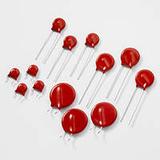
V150LC20BPX10 OverviewThe product in question is manufactured by Littelfuse Inc., and it pertains to a TVS-Varistors, MOVs electronic component. The mounting type is through hole, with the terminal shape being defined as WIRE. This particular part was published in the year 2014, and it belongs to the SeriesLC. Furthermore, the current status of this product is active, and it comes with a total of two terminations. The terminal finish is made up of tin (Sn), while the resistor type is classified under VARISTOR. Lastly, it's worth mentioning that the product has a rated power dissipation (P) of 1W, and its capacitance at a frequency of 1MHz is given to be 1600pF.
V150LC20BPX10 More Descriptions
Radial Varistor 20Mm Rohs/Lead Free/Bulk |Littelfuse V150LC20BPX10
VARISTOR 229.5V 6.5KA DISC 20MM