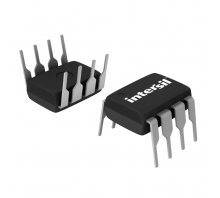
Mounting Type
Mounting Type refers to the method by which an electronic component is attached to a printed circuit board (PCB) or other surface. Common mounting types include:
* Through-hole: Component leads are inserted into holes in the PCB and soldered on the other side.
* Surface-mount: Component is placed on the surface of the PCB and soldered in place.
* Press-fit: Component is pressed into place on the PCB without soldering.
* Socket: Component is inserted into a socket on the PCB, allowing for easy replacement.
The mounting type is determined by factors such as the component's size, shape, and power requirements.
Through Hole
Package / Case
Package / Case refers to the physical housing or enclosure that encapsulates an electronic component. It provides protection, facilitates handling, and enables electrical connections. The package type determines the component's size, shape, pin configuration, and mounting options. Common package types include DIP (dual in-line package), SOIC (small outline integrated circuit), and BGA (ball grid array). The package also influences the component's thermal and electrical performance.
8-DIP (0.300, 7.62mm)
Operating Temperature
Operating Temperature is the range of temperatures at which an electronic component can function properly. It is typically specified in degrees Celsius (°C) and indicates the minimum and maximum temperatures at which the component can operate without experiencing damage or degradation. Operating Temperature is an important parameter to consider when designing electronic circuits, as it ensures that the components will function reliably in the intended operating environment.
0°C~70°C TA
Part Status
Part Status is an electronic component parameter that indicates the availability and production status of a component. It is typically used to inform customers about the availability of a component, whether it is in production, end-of-life, or obsolete. Part Status can also provide information about any restrictions or limitations on the component's use, such as whether it is only available for certain applications or if it has been discontinued.
Obsolete
Moisture Sensitivity Level (MSL)
Moisture Sensitivity Level (MSL) is a measure of the susceptibility of a surface mount electronic component to moisture-induced damage during soldering. It is classified into six levels, from 1 (least sensitive) to 6 (most sensitive). MSL is determined by the materials used in the component's construction, including the solderability of its terminals and the presence of moisture-absorbing materials. Components with higher MSL ratings require more stringent handling and storage conditions to prevent moisture absorption and subsequent damage during soldering.
1 (Unlimited)
Reach Compliance Code
unknown
Output
Open Drain or Open Collector
Reset
Reset is an electronic component parameter that refers to the process of returning a device or system to its initial state. This can be done by applying a specific voltage or signal to the device, or by physically resetting the device. Resetting a device can be used to clear errors, restore default settings, or to start the device over from the beginning.
Active Low
Voltage - Threshold
4.38V
Number of Voltages Monitored
1
Reset Timeout
100ms Minimum
RoHS Status
ROHS3 Compliant
Description
The RENESASX5328 and X5329 devices combine three functions: Power-on Reset Control, Supply Voltage Supervision, and Block Lock Protect Serial EEPROM Memory. This combination reduces system cost, board space requirements, and increases reliability.
Features
Low Vcc detection and reset assertion
Five standard reset threshold voltages
Reprogrammable low Vcc reset threshold voltage
Reset signal valid to Vcc = 1V
Long battery life with low power consumption
<1μA max standby current
<400μA max active current during read
32Kbits of EEPROM
Built-in inadvertent write protection
Power-up/power-down protection circuitry
Block Lock protection for 0, 1/4, 1/2, or all of EEPROM array
In-circuit programmable ROM mode
2MHz SPI interface modes (0,0 & 1,1)
Minimized EEPROM programming time
32-byte page write mode
Self-timed write cycle
5ms write cycle time (typical)
2.7V to 5.5V and 4.5V to 5.5V power supply operation
Available in 8 Ld SOIC package
Pb-free plus anneal available (RoHS compliant)
Applications
Power-on reset control
Supply voltage supervision
Block lock protect serial EEPROM memory
Battery-powered devices
Industrial control systems
Automotive electronics
Medical devices
-
Image
Part Number
Manufacturer
Mounting Type
Package / Case
Operating Temperature
Packaging
Part Status
Moisture Sensitivity Level (MSL)
Reach Compliance Code
Base Part Number
Output
Reset
Voltage - Threshold
Number of Voltages Monitored
Reset Timeout
RoHS Status
Surface Mount
JESD-609 Code
Number of Terminations
Terminal Finish
Additional Feature
Technology
Terminal Position
Peak Reflow Temperature (Cel)
Number of Functions
Supply Voltage
Terminal Pitch
Time@Peak Reflow Temperature-Max (s)
Pin Count
JESD-30 Code
Supply Voltage-Max (Vsup)
Supply Voltage-Min (Vsup)
Number of Channels
Adjustable Threshold
Length
Height Seated (Max)
Width
View Compare
-
X5328PZ
Through Hole
8-DIP (0.300, 7.62mm)
0°C~70°C TA
Tube
Obsolete
1 (Unlimited)
unknown
X5328
Open Drain or Open Collector
Active Low
4.38V
1
100ms Minimum
ROHS3 Compliant
-
-
-
-
-
-
-
-
-
-
-
-
-
-
-
-
-
-
-
-
-
-
-
Surface Mount
8-SOIC (0.154, 3.90mm Width)
-40°C~85°C TA
Tape & Reel (TR)
Obsolete
1 (Unlimited)
-
X5323
Open Drain or Open Collector
Active Low
2.63V
1
100ms Minimum
Non-RoHS Compliant
-
-
-
-
-
-
-
-
-
-
-
-
-
-
-
-
-
-
-
-
-
-
Through Hole
8-DIP (0.300, 7.62mm)
-40°C~85°C TA
Tube
Obsolete
1 (Unlimited)
-
X5323
Open Drain or Open Collector
Active Low
4.38V
1
100ms Minimum
Non-RoHS Compliant
NO
e3
8
Matte Tin (Sn)
DETECTION THRESHOLD VOLTAGE IS 2.92
CMOS
DUAL
NOT SPECIFIED
1
3.6V
2.54mm
NOT SPECIFIED
8
R-PDIP-T8
5.5V
2.7V
1
YES
9.525mm
5.334mm
7.62mm