Factory Lead Time
12 Weeks
Series
Series, in the context of electronic components, refers to the arrangement of components in a circuit. When components are connected in series, they form a single path for current to flow through. The total resistance of a series circuit is the sum of the individual resistances of each component. Series connections are often used to control the flow of current in a circuit, as the total resistance can be adjusted by changing the number or type of components in the series.
Z
Size / Dimension
13.780Lx4.134W x 3.268 H 350.00mmx105.00mmx83.00mm
Feature
GPIB, Programmable, RS232, RS485 and USB Interface
Part Status
Part Status is an electronic component parameter that indicates the availability and production status of a component. It is typically used to inform customers about the availability of a component, whether it is in production, end-of-life, or obsolete. Part Status can also provide information about any restrictions or limitations on the component's use, such as whether it is only available for certain applications or if it has been discontinued.
Active
Moisture Sensitivity Level (MSL)
Moisture Sensitivity Level (MSL) is a measure of the susceptibility of a surface mount electronic component to moisture-induced damage during soldering. It is classified into six levels, from 1 (least sensitive) to 6 (most sensitive). MSL is determined by the materials used in the component's construction, including the solderability of its terminals and the presence of moisture-absorbing materials. Components with higher MSL ratings require more stringent handling and storage conditions to prevent moisture absorption and subsequent damage during soldering.
1 (Unlimited)
Power (Watts)
Power (Watts) is a measure of the rate at which electrical energy is transferred or consumed. In electronic components, it represents the maximum amount of power that the component can handle without being damaged. It is typically expressed in watts (W) and is determined by factors such as the component's voltage and current ratings, as well as its physical design and materials. Understanding the power rating of a component is crucial for ensuring its safe and reliable operation within a circuit.
800W
Max Power Dissipation
800W
Voltage - Supply
85V~265VAC
Number of Outputs
Number of Outputs refers to the number of independent output signals or channels that an electronic component can provide. It indicates the capability of the component to drive multiple external devices or circuits simultaneously. A higher number of outputs allows for greater flexibility and connectivity in electronic systems.
1
Wire/Cable Type
Power Cord
Voltage - Output
0V~20VDC
Display Type
Display Type refers to the type of display technology used in an electronic device. It describes the physical characteristics and functionality of the display.
Digital
Number of Characters
4 (2)
Ripple
Ripple is a measure of the unwanted alternating current (AC) component present in a direct current (DC) power supply. It is typically expressed as a percentage of the DC voltage and is caused by the charging and discharging of capacitors in the power supply. High ripple can be detrimental to electronic circuits, as it can cause noise and instability. The amount of ripple in a power supply is determined by the design of the power supply and the load it is powering.
6.25mV
Voltage Regulation - Line
2mV 0.01%
Voltage Regulation - Load
2mV 0.01%
Accuracy - Voltmeter; Ammeter
0.5% 1 count
Current Regulation - Load
5mA 0.01%
Current Regulation - Line
2mA 0.01%
Height
Height, in the context of electronic components, refers to the vertical dimension of the component. It is typically measured in millimeters (mm) or inches (in). Height is an important parameter to consider when designing and assembling electronic circuits, as it affects the overall size and form factor of the device. Components with a smaller height are often preferred for applications where space is limited, such as in portable devices or embedded systems.
83.0072mm
Length
Length, in the context of electronic components, refers to the physical dimension of a component along its longest axis. It is typically measured in millimeters (mm) or inches (in). Length is a crucial parameter for determining the physical size and space requirements of a component on a printed circuit board (PCB) or other assembly. It also affects the component's electrical characteristics, such as inductance and capacitance, which can be influenced by the length of conductors or traces within the component.
350.012mm
RoHS Status
RoHS Compliant
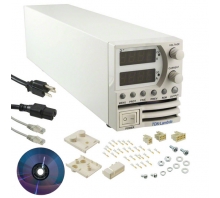
Z20-40-IEEE-U OverviewThis product is manufactured by TDK-Lambda Americas Inc. and belongs to the category of Equipment - Power Supplies (Test, Bench). The images we provide are for reference only, for detailed product information please see specification sheet Z20-40-IEEE-U or the datasheet in PDF format. As a professional electronic components distributor, Zeano has five million electronic components available. Additionally, we have over 500,000 electronic components in stock ready for immediate shipment. If you have requirements, you can send us a quotation form to get the price of Z20-40-IEEE-U. We attach great importance to our customers' purchasing experience and are willing to establish a long-term cooperative relationship with you. If you have any questions or requirements, please feel free to contact us.
Z20-40-IEEE-U More Descriptions
-Lambda Z20-40-IEEE-U DC Power Supply, Single Output 20 V, 40 A, 800 W, GPIB, Z Series
Programmable Power Supply, 20V, 40A, 800W, GPIB Interface, Bench, Z Series
Power Supply, Bench, Ac-Dc, 0-20V, 40A, 800W; Power Supply Output Type:Adjustable; No. Of Outputs:1 Output; Output Voltage Min:0V; Output Voltage Max:20V; Output Current Min:0A; Output Current Max:40A; Power Rating:800W; Plug Type:- Rohs Compliant: Yes |Tdk-Lambda Z20-40-IEEE-U