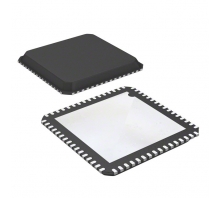
Factory Lead Time
20 Weeks
Lifecycle Status
ACTIVE (Last Updated: 20 hours ago)
Mounting Type
Mounting Type refers to the method by which an electronic component is attached to a printed circuit board (PCB) or other surface. Common mounting types include:
* Through-hole: Component leads are inserted into holes in the PCB and soldered on the other side.
* Surface-mount: Component is placed on the surface of the PCB and soldered in place.
* Press-fit: Component is pressed into place on the PCB without soldering.
* Socket: Component is inserted into a socket on the PCB, allowing for easy replacement.
The mounting type is determined by factors such as the component's size, shape, and power requirements.
Surface Mount
Package / Case
Package / Case refers to the physical housing or enclosure that encapsulates an electronic component. It provides protection, facilitates handling, and enables electrical connections. The package type determines the component's size, shape, pin configuration, and mounting options. Common package types include DIP (dual in-line package), SOIC (small outline integrated circuit), and BGA (ball grid array). The package also influences the component's thermal and electrical performance.
64-VFQFN Exposed Pad
Number of Pins
Number of Pins: Indicates the number of electrical connections available on the component. These pins are used to connect the component to other components or circuits on a printed circuit board (PCB). The number of pins determines the functionality and connectivity options of the component. It is important to ensure that the component has the correct number of pins for the intended application.
64
Operating Temperature
Operating Temperature is the range of temperatures at which an electronic component can function properly. It is typically specified in degrees Celsius (°C) and indicates the minimum and maximum temperatures at which the component can operate without experiencing damage or degradation. Operating Temperature is an important parameter to consider when designing electronic circuits, as it ensures that the components will function reliably in the intended operating environment.
0°C~70°C
Part Status
Part Status is an electronic component parameter that indicates the availability and production status of a component. It is typically used to inform customers about the availability of a component, whether it is in production, end-of-life, or obsolete. Part Status can also provide information about any restrictions or limitations on the component's use, such as whether it is only available for certain applications or if it has been discontinued.
Active
Moisture Sensitivity Level (MSL)
Moisture Sensitivity Level (MSL) is a measure of the susceptibility of a surface mount electronic component to moisture-induced damage during soldering. It is classified into six levels, from 1 (least sensitive) to 6 (most sensitive). MSL is determined by the materials used in the component's construction, including the solderability of its terminals and the presence of moisture-absorbing materials. Components with higher MSL ratings require more stringent handling and storage conditions to prevent moisture absorption and subsequent damage during soldering.
3 (168 Hours)
Number of Terminations
64
Voltage - Supply
3.135V~3.465V
Supply Voltage
Supply Voltage is the voltage required to power an electronic component. It is typically measured in volts (V) and is specified in the component's datasheet. The supply voltage must be within the specified range for the component to function properly. If the supply voltage is too low, the component may not function at all. If the supply voltage is too high, the component may be damaged.
3.3V
Frequency
Frequency, in the context of electronic components, refers to the rate at which an alternating current or voltage changes direction per second. It is measured in Hertz (Hz), which represents one cycle per second. Frequency is a crucial parameter for various electronic components, such as capacitors, inductors, and resonators. It determines the component's ability to store or release energy, filter signals, and resonate at specific frequencies. Understanding the frequency characteristics of electronic components is essential for designing and optimizing electronic circuits.
133MHz
Base Part Number
NB3W1200
Number of Outputs
Number of Outputs refers to the number of independent output signals or channels that an electronic component can provide. It indicates the capability of the component to drive multiple external devices or circuits simultaneously. A higher number of outputs allows for greater flexibility and connectivity in electronic systems.
12
Operating Supply Voltage
3.3V
Supply Voltage-Max (Vsup)
3.465V
Number of Circuits
Number of Circuits refers to the number of independent signal paths within an electronic component. It indicates how many separate circuits or channels the component can handle simultaneously. For example, an operational amplifier with a Number of Circuits of 2 can amplify two separate input signals independently. This parameter is crucial for determining the component's functionality and its suitability for specific applications.
1
Operating Supply Current
Operating Supply Current is the amount of current drawn by an electronic component when it is operating under normal conditions. It is typically measured in milliamps (mA) or microamps (µA). The operating supply current is important because it can affect the power consumption of the component and the overall system. A higher operating supply current will result in higher power consumption, which can lead to overheating and reduced battery life.
180mA
Nominal Supply Current
330mA
Quiescent Current
Quiescent current is the amount of current drawn by an electronic component when it is not actively performing its intended function. It is typically measured in milliamps (mA) or microamps (µA). Quiescent current is important because it can affect the overall power consumption of a circuit, especially in battery-powered devices. Components with high quiescent current can drain batteries more quickly than those with low quiescent current.
180mA
Output Characteristics
3-STATE
Ratio - Input:Output
1:12
PLL
PLL stands for Phase-Locked Loop. It is an electronic circuit that generates an output signal with a phase that is locked to the phase of an input signal. PLLs are used in a wide variety of applications, including frequency synthesis, modulation, and demodulation.
In a PLL, the input signal is compared to the output signal by a phase detector. The output of the phase detector is then used to adjust the frequency of the output signal until it is in phase with the input signal.
PLLs can be used to generate a wide range of output frequencies, from very low frequencies to very high frequencies. They can also be used to generate signals with a variety of different waveforms, including sine waves, square waves, and triangle waves.
Yes with Bypass
Differential - Input:Output
Yes/Yes
High Level Output Current
-1mA
Low Level Output Current
1mA
Same Edge Skew-Max (tskwd)
0.05 ns
Height
Height, in the context of electronic components, refers to the vertical dimension of the component. It is typically measured in millimeters (mm) or inches (in). Height is an important parameter to consider when designing and assembling electronic circuits, as it affects the overall size and form factor of the device. Components with a smaller height are often preferred for applications where space is limited, such as in portable devices or embedded systems.
950μm
Length
Length, in the context of electronic components, refers to the physical dimension of a component along its longest axis. It is typically measured in millimeters (mm) or inches (in). Length is a crucial parameter for determining the physical size and space requirements of a component on a printed circuit board (PCB) or other assembly. It also affects the component's electrical characteristics, such as inductance and capacitance, which can be influenced by the length of conductors or traces within the component.
9mm
RoHS Status
ROHS3 Compliant
Description
The NB3N1200K and NB3W1200L differential clock buffers are DB1200Z and DB1200ZL compliant and are designed to work in conjunction with a PCIe compliant source clock synthesizer to provide point-to-point clocks to multiple agents. The device is capable of distributing the reference clocks for Intel® QuickPath Interconnect (Intel QPI), PCIe Gen1/Gen2/Gen3, SAS, SATA, and Intel Scalable Memory Interconnect (Intel SMI) applications. The VCO of the device is optimized to support 100 MHz and 133 MHz frequency operation. The NB3N1200K and NB3W1200L utilize pseudo-external feedback topology to achieve low input-to-output delay variation. The NB3N1200K is configured with the HCSL buffer type, while the NB3W1200L is configured with the low-power NMOS Push-Pull buffer type.
Features
12 Differential Clock Output Pairs @ 0.7 V
HCSL Compatible Outputs for NB3N1200K
Low-Power NMOS Push-Pull Compatible Outputs for NB3W1200L
Optimized 100 MHz and 133 MHz Operating Frequencies to Meet The Next Generation PCIe Gen 2/Gen 3 and Intel QPI Phase Jitter
DB1200Z and DB1200ZL Compliant
3.3 V ±5% Supply Voltage Operation
Fixed-Feedback for Lowest Input-To-Output Delay Variation
SMBus Programmable Configurations to Allow Multiple Buffers in a Single Control Network
PLL Bypass Configurable for PLL or Fanout Operation
Programmable PLL. Bandwidth
2 Tri-level Addresses Selection (9 SMBUS Addresses)
Individual OE Control Pin for Each of 12 Outputs
Low Phase Jitter (Intel QPL, PCIe Gen 2/Gen 3 Phase Jitter Compliant)
50 ps Max Output-to-Output Skew Performance
50 ps Max Cycle-to-Cycle Jitter (PLL mode)
100 ps Input to Output Delay Variation Performance
QFN 64-pin Package, 9 mm x 9 mm
Spread Spectrum Compatible: Tracks Input Clock Spreading for Low EMI
0°C to 70°C Ambient Operating Temperature
These Devices are Pb-Free and are RoHS Compliant
Applications
PCIe Gen 2/Gen 3
Intel QPI
SAS
SATA
Intel SMI
-
Image
Part Number
Manufacturer
Factory Lead Time
Lifecycle Status
Mount
Mounting Type
Package / Case
Number of Pins
Weight
Operating Temperature
Packaging
Published
JESD-609 Code
Pbfree Code
Part Status
Moisture Sensitivity Level (MSL)
Number of Terminations
Terminal Finish
Voltage - Supply
Terminal Position
Number of Functions
Supply Voltage
Terminal Pitch
Frequency
Base Part Number
Number of Outputs
Operating Supply Voltage
Supply Voltage-Max (Vsup)
Number of Circuits
Operating Supply Current
Nominal Supply Current
Propagation Delay
Quiescent Current
Family
Logic Function
Output Characteristics
Input
Ratio - Input:Output
PLL
Differential - Input:Output
High Level Output Current
Low Level Output Current
Max Duty Cycle
Divider/Multiplier
Same Edge Skew-Max (tskwd)
Schmitt Trigger Input
Height
Length
Width
REACH SVHC
RoHS Status
Lead Free
Series
Output
Pin Count
Frequency (Max)
Halogen Free
Radiation Hardening
View Compare
-
NB3W1200LMNG
20 Weeks
ACTIVE (Last Updated: 20 hours ago)
Surface Mount
Surface Mount
64-VFQFN Exposed Pad
64
206.29948mg
0°C~70°C
Tray
2013
e3
yes
Active
3 (168 Hours)
64
Tin (Sn)
3.135V~3.465V
QUAD
1
3.3V
0.5mm
133MHz
NB3W1200
12
3.3V
3.465V
1
180mA
330mA
100 ps
180mA
NB3
Buffer
3-STATE
Clock
1:12
Yes with Bypass
Yes/Yes
-1mA
1mA
55 %
No/No
0.05 ns
No
950μm
9mm
9mm
No SVHC
ROHS3 Compliant
Lead Free
-
-
-
-
-
-
-
-
-
-
Surface Mount
Surface Mount
20-VFQFN Exposed Pad
-
-
-40°C~85°C
Tape & Reel (TR)
2012
e3
yes
Obsolete
1 (Unlimited)
-
Matte Tin (Sn)
2.97V~3.63V
-
-
-
-
-
NB3N49152
-
3.3V
-
1
110mA
-
-
-
-
-
-
Crystal
1:1
Yes
No/Yes
-
-
-
-
-
-
-
-
-
-
RoHS Compliant
Lead Free
PureEdge™
LVPECL
20
491.52MHz
Halogen Free
No
-
-
-
Surface Mount
Surface Mount
20-VFQFN Exposed Pad
-
-
-40°C~85°C
Tape & Reel (TR)
2012
e3
yes
Obsolete
1 (Unlimited)
-
Matte Tin (Sn)
2.97V~3.63V
-
-
-
-
-
NB3N62208
-
3.3V
-
1
110mA
-
-
-
-
-
-
Crystal
1:1
Yes
No/Yes
-
-
-
-
-
-
-
-
-
-
RoHS Compliant
Lead Free
PureEdge™
LVPECL
20
622.08MHz
Halogen Free
No