Factory Lead Time
10 Weeks
Mounting Type
Mounting Type refers to the method by which an electronic component is attached to a printed circuit board (PCB) or other surface. Common mounting types include:
* Through-hole: Component leads are inserted into holes in the PCB and soldered on the other side.
* Surface-mount: Component is placed on the surface of the PCB and soldered in place.
* Press-fit: Component is pressed into place on the PCB without soldering.
* Socket: Component is inserted into a socket on the PCB, allowing for easy replacement.
The mounting type is determined by factors such as the component's size, shape, and power requirements.
Through Hole
Package / Case
Package / Case refers to the physical housing or enclosure that encapsulates an electronic component. It provides protection, facilitates handling, and enables electrical connections. The package type determines the component's size, shape, pin configuration, and mounting options. Common package types include DIP (dual in-line package), SOIC (small outline integrated circuit), and BGA (ball grid array). The package also influences the component's thermal and electrical performance.
Radial
Number of Pins
Number of Pins: Indicates the number of electrical connections available on the component. These pins are used to connect the component to other components or circuits on a printed circuit board (PCB). The number of pins determines the functionality and connectivity options of the component. It is important to ensure that the component has the correct number of pins for the intended application.
2
Packaging
Tape & Box (TB)
Series
Series, in the context of electronic components, refers to the arrangement of components in a circuit. When components are connected in series, they form a single path for current to flow through. The total resistance of a series circuit is the sum of the individual resistances of each component. Series connections are often used to control the flow of current in a circuit, as the total resistance can be adjusted by changing the number or type of components in the series.
SLR-343
Part Status
Part Status is an electronic component parameter that indicates the availability and production status of a component. It is typically used to inform customers about the availability of a component, whether it is in production, end-of-life, or obsolete. Part Status can also provide information about any restrictions or limitations on the component's use, such as whether it is only available for certain applications or if it has been discontinued.
Active
Moisture Sensitivity Level (MSL)
Moisture Sensitivity Level (MSL) is a measure of the susceptibility of a surface mount electronic component to moisture-induced damage during soldering. It is classified into six levels, from 1 (least sensitive) to 6 (most sensitive). MSL is determined by the materials used in the component's construction, including the solderability of its terminals and the presence of moisture-absorbing materials. Components with higher MSL ratings require more stringent handling and storage conditions to prevent moisture absorption and subsequent damage during soldering.
1 (Unlimited)
Terminal Finish
Tin/Silver/Copper (Sn/Ag/Cu)
Max Operating Temperature
80°C
Min Operating Temperature
-20°C
Voltage - Forward (Vf) (Typ)
3.2V
Forward Current
Forward Current is the amount of electrical current that flows through a diode or transistor when it is in the forward-biased condition. In this condition, the positive terminal of the power supply is connected to the anode of the diode or the collector of the transistor, and the negative terminal is connected to the cathode or the emitter. The forward current is typically measured in milliamperes (mA) or amperes (A).
20mA
Lens Style
Round with Domed Top
Luminous Intensity
1.5 cd
Millicandela Rating
1500mcd
Lens Transparency
Lens Transparency is a measure of the amount of light that can pass through a lens. It is expressed as a percentage, with 100% being perfect transparency. The higher the lens transparency, the more light can pass through the lens and reach the sensor. This can result in brighter images and better image quality.
Clear
Lens Color
Lens Color refers to the color of the lens used in an optoelectronic component, such as an LED or photodiode. It indicates the wavelength range of light that the lens is designed to transmit or receive. Different lens colors correspond to different wavelengths, allowing for specific applications. For example, red lenses are used for long-wavelength light, while blue lenses are used for short-wavelength light.
Colorless
Wavelength - Dominant
525nm
Height
Height, in the context of electronic components, refers to the vertical dimension of the component. It is typically measured in millimeters (mm) or inches (in). Height is an important parameter to consider when designing and assembling electronic circuits, as it affects the overall size and form factor of the device. Components with a smaller height are often preferred for applications where space is limited, such as in portable devices or embedded systems.
5.6mm
RoHS Status
ROHS3 Compliant
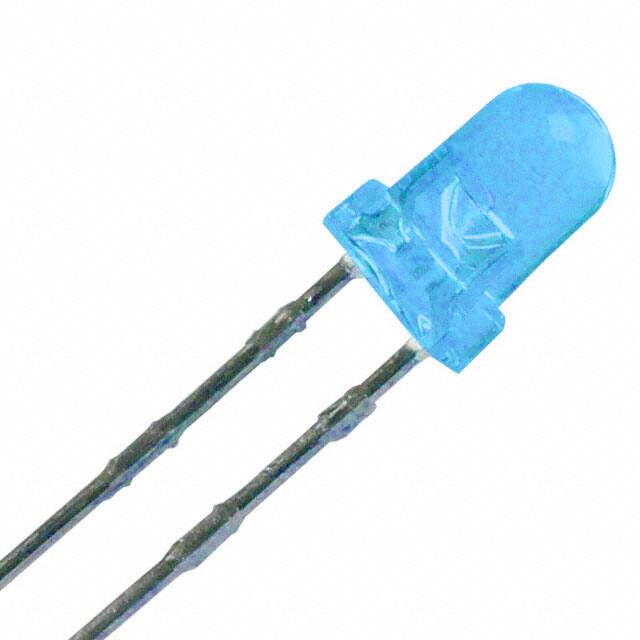
SLR343EC4TT32 OverviewThe Rohm Semiconductor brand offers a high-quality LED Indicator - Discrete electronic component that belongs to the LED Indicator - Discrete category. This product features a Mount type of Through Hole and comes in a Radial Package or Case. It was published in 2012 and has been certified under JESD-609 Code e1. The Terminal Finish is made from Tin/Silver/Copper (Sn/Ag/Cu) and the Configuration is standard. The Millicandela Rating stands at 1500mcd, indicating its brightness level. Additionally, it has a Lens Color of Colorless, making it visually appealing. Its Height is 5.6mm, providing a compact design for your application.
SLR343EC4TT32 More Descriptions
LED Uni-Color Blue Green 2-Pin T-1 T/R
LED BLUE-GREEN CLEAR T-1 T/H
LED CIRCULAR TYPE GREEN